Two grand ladies of the sea: The original Queen Mary and Queen Mary 2

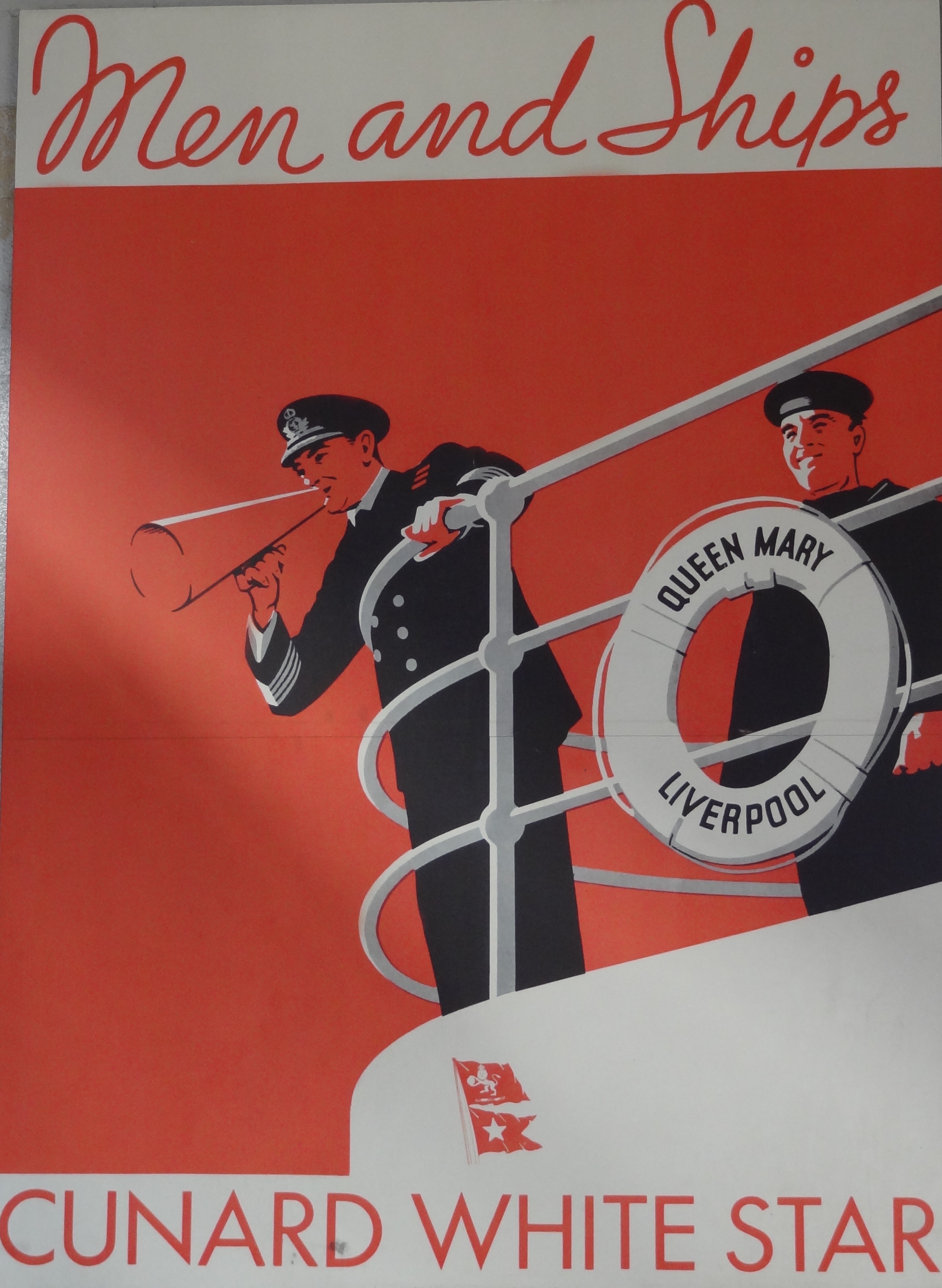
A poster for the combined Cunard White Star brand aboard the original Queen Mary.

When we crossed a trans-Atlantic voyage on a grand ocean liner off our bucket list last summer, we were hooked by the nostalgia of the grand ocean voyages of yesteryear. On board Cunard’s Queen Mary 2 with us on that voyage was a lecturer named William H. Miller (aka “Mr. Ocean Liner”) whose standing-room-only presentations that week were so mesmerizing that we bought one of his books.[1] When we read his description of the original Queen Mary as the most “beloved” of the ocean liners, we wondered whether her “daughter” the new Queen Mary 2 might in some ways resemble her earlier incarnation. Then, several synchronicities happened.

First, our son said, “I’m going to be in Los Angeles in February. Why don’t you two come and meet me before you go to Hawaii?”

Second, we started to explore activities in the LA area and discovered that the original Queen Mary is docked in Long Beach, California, a 20-minute drive from where we’d be staying in Costa Mesa.

Finally, Patty’s 89-year-old mother said, “You know, I’m sure your father came home from Europe [after fighting in WW II] on the Queen Mary.”

…so we knew we’d have to visit her…and we did.

When the Queen Mary was launched in 1936, she was considered to be the grandest liner ever built, and over her long and storied career, she not only carried passengers back and forth across the Atlantic from Southampton, England to New York City, but was also refitted as a troop carrier during the second World War, ferrying some 800,000 troops from the UK, through Halifax, Nova Scotia (where Patty’s father disembarked), to NYC. Today, she’s a hotel and a point of interest if you’re ever in the Long Beach area.
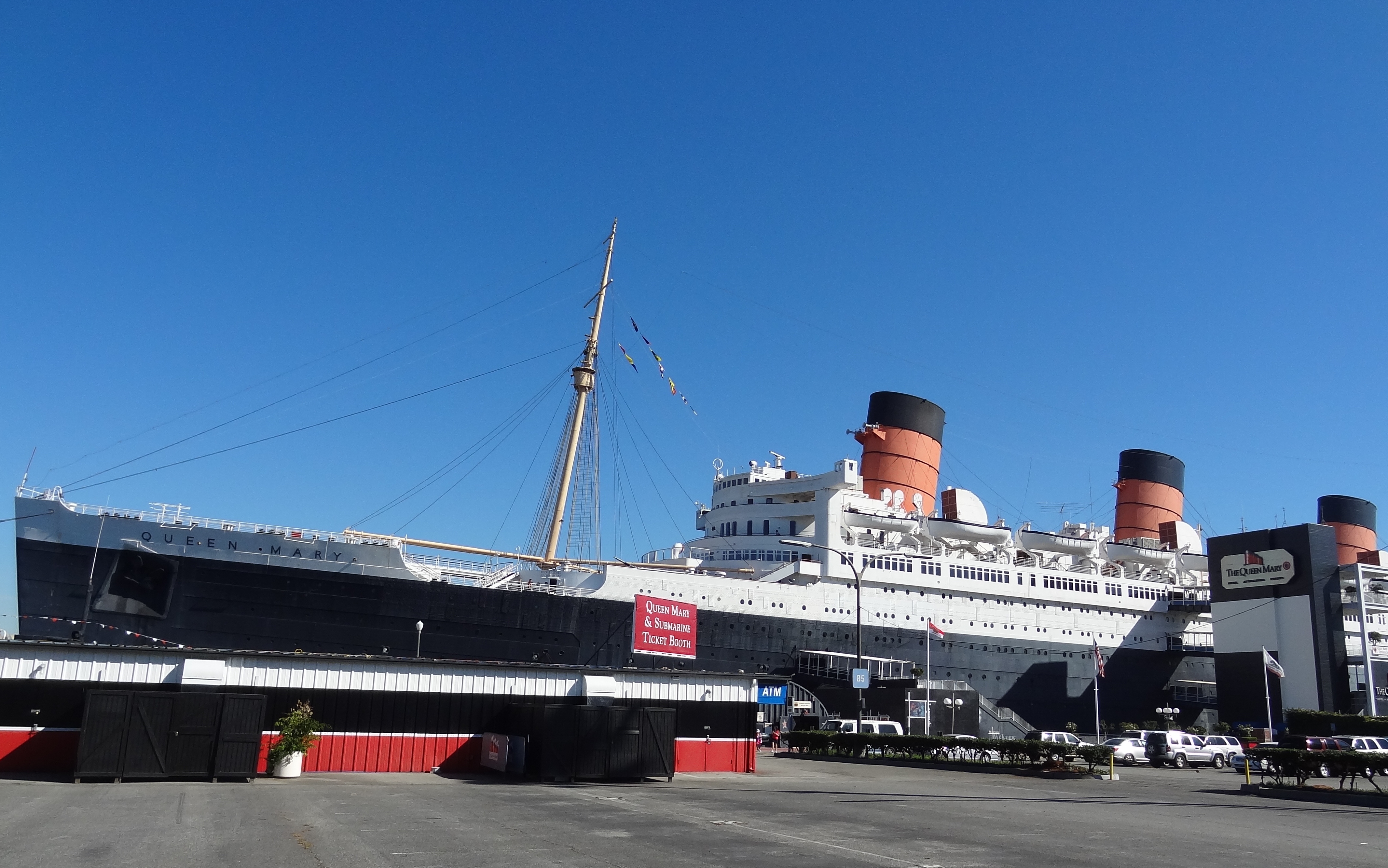
The Queen Mary as she sits alongside today in Long Beach, California.

Stepping aboard the ship is like taking a walk back in time. Our visit was timed perfectly it seemed since the crowds were thin and our pre-arranged tour consisted only of three of us (Art, Patty and daughter Amanda who accompanied us to LA to see her brother dance) and two others who dropped out after the first five minutes lacking sufficient English skills to understand the guide (who was quite an actor). So we had a private tour.

Our guide explained the way the three classes of passengers were divided – a notion that has (almost) entirely gone the way of the dodo on modern cruise ships. (We explained how Cunard still maintains this partially in an earlier post). The classes were not segregated by level, such as one deck for first class, another for second etc. Rather the first-class passengers’ accommodations and public spaces were in the center of the ship – where a ship is most stable. The second-class passengers populated the stern (rear) and the poor third-class passengers were all the way forward, a portion of the ship that, as the guide explained, often took a nose-dive under the waves in bad weather. Those were the days before modern stabilization. There must have been a lot of nausea in the bow!

The QM's atrium as it is today, restored to its earlier grandeur.

As we moved through the large public spaces on the Queen Mary, we tried to imagine what those grand balls must have been like and couldn’t help but make comparisons to the Queen’s Room (the ballroom), the champagne bar and the theater on the Queen Mary 2.

Perhaps, though, it was in the engine room below decks in the stern that harbored the most ghosts. As we walked through the darkened passages, just the three of us (we did this part without a guide), we could almost hear the crew as they toiled away. Then as we walked into the cubicle that had been created through a cut-out area on the ship’s super-structure, we were confronted by the eerie underwater sight of one of the original propellers, still in place under the water. That sent us flying toward the light!

The ship is also used as a floating hotel these days, although, according to the guide, the walls are so thin you can hear everything going on in your neighbor’s stateroom. When we reached the end of the tour, since there were only three of us, we asked if it would be possible to see a first-class suite. They are usually not part of the tour since they are part of the hotel. The guide humored us and went to procure permission. Success! Taking our time in the suite, our guide invited us to sit in the sitting room to try to conjure images of who might have spent time in this room in the 1930’s, ‘40’s & ‘50’s.

The bedroom of the first-class suite.

The suite consisted of a master bedroom, two bathrooms with hot and cold running fresh and salt water choices, a sitting room and a maid’s room that was outfitted with its own sink but she would have gone down the hall for the toilet and a bath. The burled wood built-ins (vanity table, desk, dressers, and bedside tables) are all original to the suite – although the flat-screen TV’s are not! There is no doubt they’ve done a remarkable job of restoration to provide an experience that takes you into another era.

After the tour we repaired to one of the dining rooms for fish and chips for lunch while we overlooked a marina filled to overflowing with modern sailboats. All in all, one of the great tourist experiences for people who love the ocean. The Queen Mary’s web site says: “The ship no longer sails, but she can still take you away.” Amen!

The corridor evokes a sense of history.

[FYI: They offer a variety of tours from self-guided audio tours, through WW II tours to a Ghosts & Legends Tour. You should take at least one of the guided tours, and try to go when the crowds are thinnest for the best experience.]

Come with us on our tour…


[1] Miller, William. 2010. Floating palaces: The great Atlantic liners. Chalford, UK: Amberley Publishing.
La Mansion Inn, Costa Rica: Wonderful memories in the dead of winter

Pura vida!  That’s Costa Rica’s tag line and it truly does give you a taste of a pure life.  With its myriad outdoor sights and adventures, we thought that we’d have to spend another post on the delights that it holds.

At this very moment, we’re in Hawaii which is giving us many wonderful memories to share with you on our return.  In the meantime, we have a new YouTube channel [but don’t tell anyone!  We’ll launch on our return!].  On that channel we’ve begun to create videos for a more on-the-scene kind of information for those who are sharing these experiences with us.

So, until we return home full of stories about the Hawaiian Islands for you, welcome to La Mansion Inn in Manuel Antonio, Costa Rica!

Albert’s Cars & Charlene’s Dress: Imagining a royal life

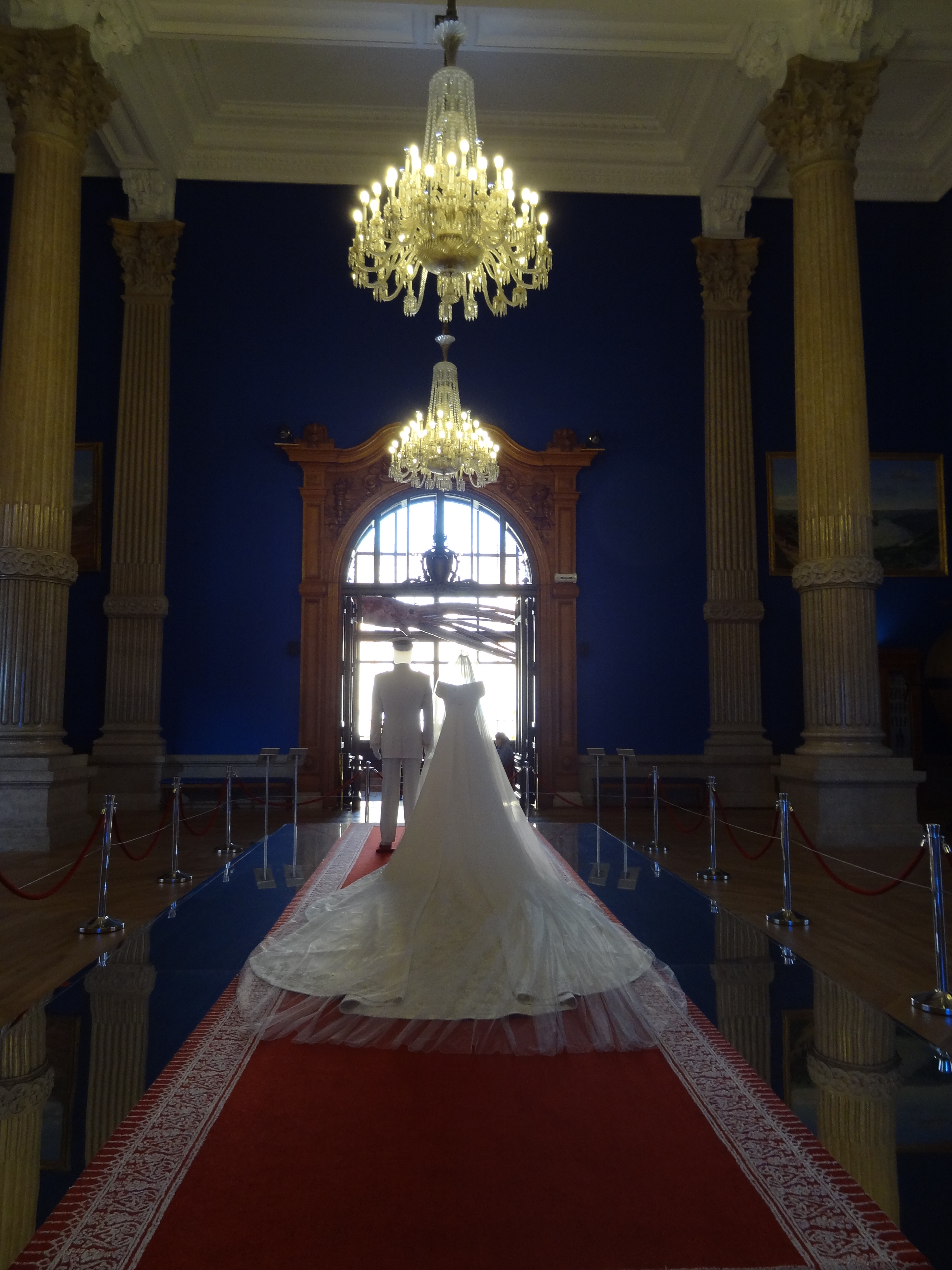
It is as if the royal couple is really there...

We are not that smitten with celebrity.  Celebrity news makes us yawn – especially if those celebrities are Hollywood royalty – and we have ignored every bona fide celebrity we’ve crossed paths with.  Michael Douglas on a street in Toronto; Judy Dench on an airplane.  So, what were we doing at the Oceanographic Institute of Monaco in December gawking at Princess Charlene’s wedding dress and then Prince Albert’s collection of vintage and modern cars?  We were being tourists.  And like any self-respecting discerning traveler, we were taking advantage of the opportunity to be tourists at a time of year when there were few others about.

We were walking in the old city of Monaco near the palace when on impulse we decided to buy a ticket for the exhibit.  Yes, the Oceanographic Institute seems an odd place for such an exhibit, but it’s one of the few large exhibition spaces in Monaco and it’s close to the palace.

The Armani dress was stunning!

We had been there before, but this time it was quiet – so quiet that we had an opportunity to get up close and personal with the myriad gigantic photos of both the civil and the religious ceremonies that took place last year.  We have never seen a bride who looked sadder, but her dress, designed by Giorgio Armani, was spectacular – in fact a work of art, and as we have discussed before, searching out works of art while traveling is a singular pleasure.

Just to balance the fashion foray, we decided to then visit the Prince’s cars.  We had walked by the door of the exhibit housed in a building above Carrefour (a humongous super-market) in Fontvieille and had never thought that it would be worth visiting.  But we were beginning to run out of things to do so decided to give it a ry.

Princess Grace's little green car

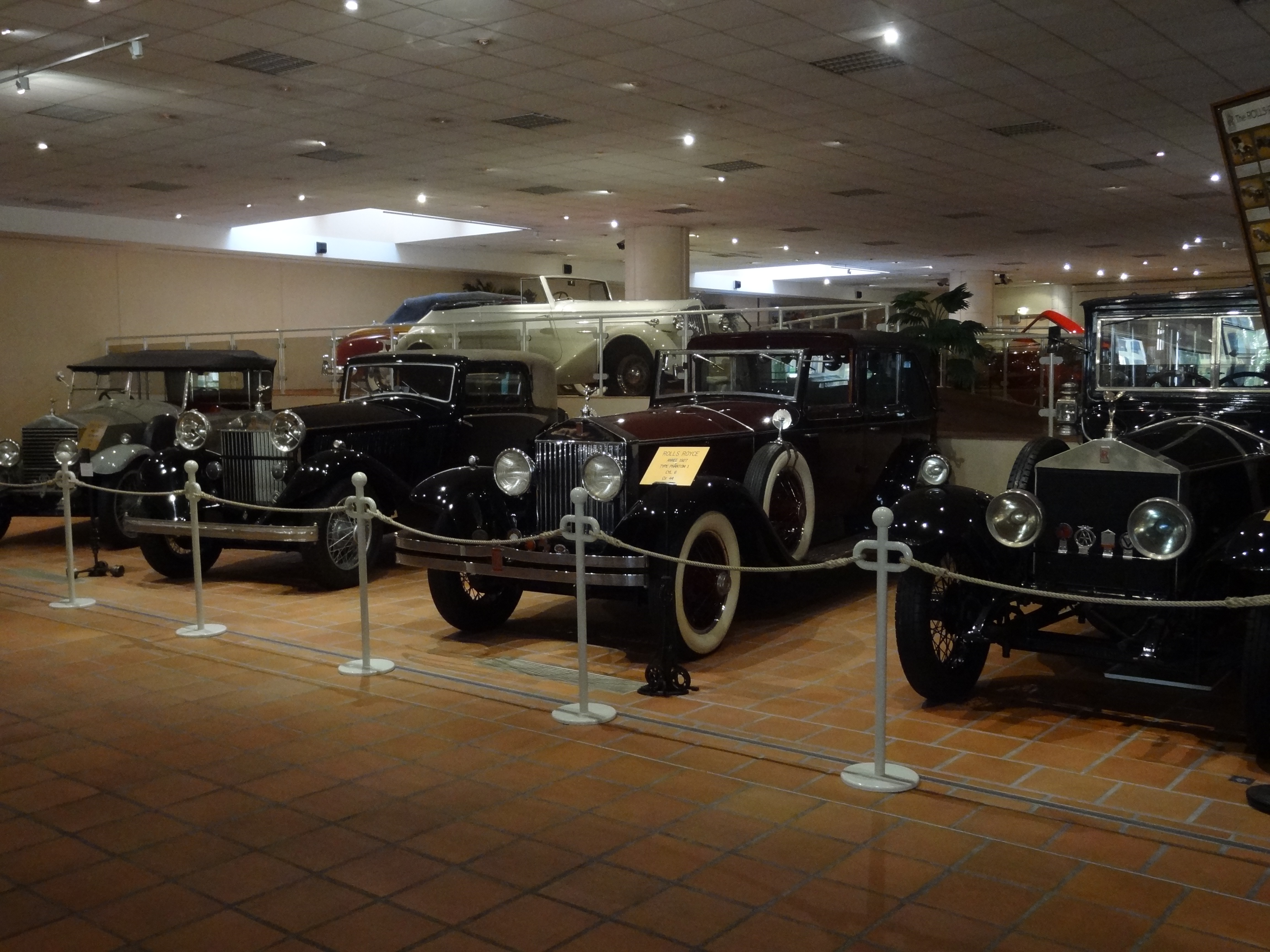
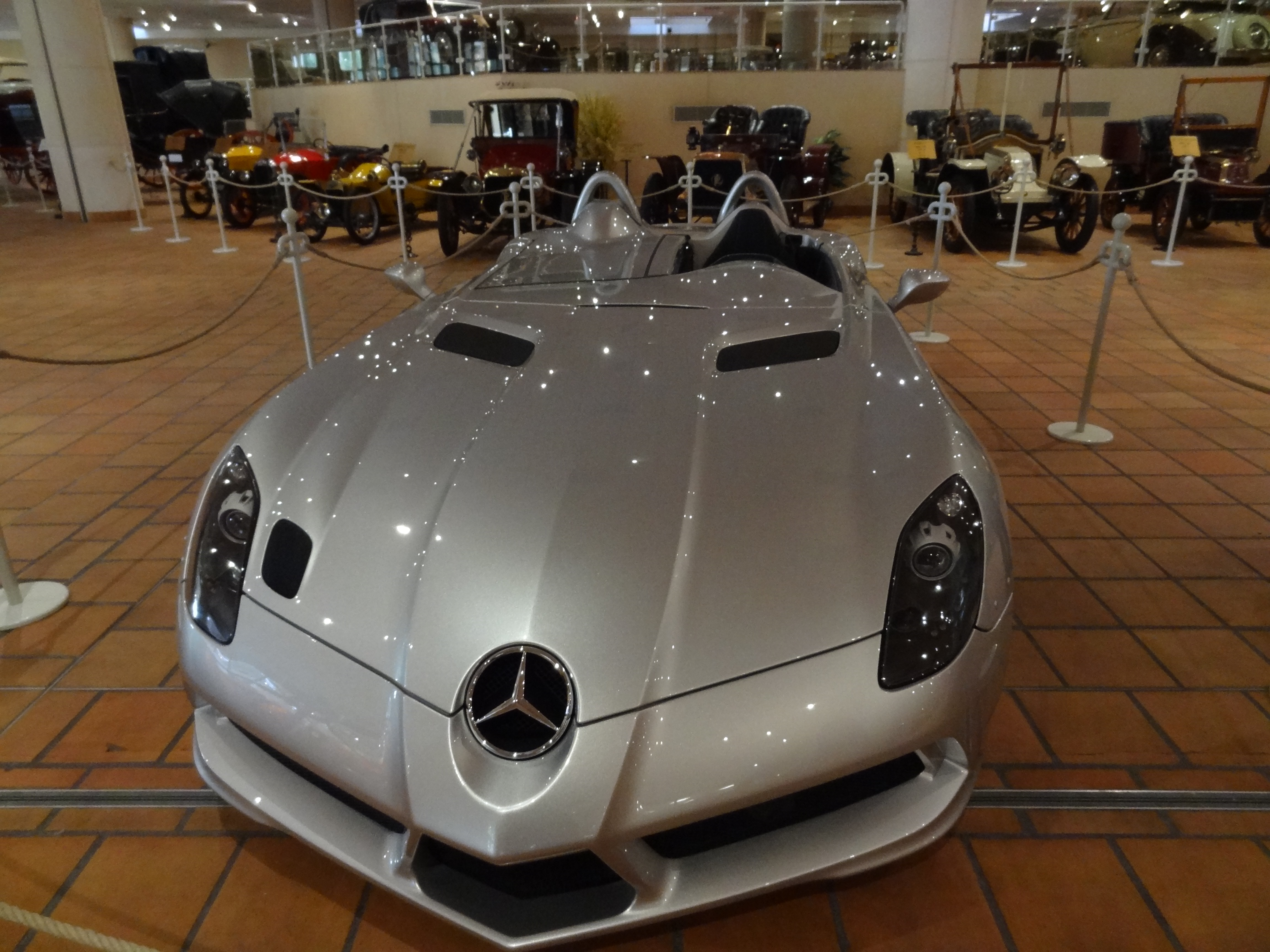
With the place all to ourselves, we had a chance to take a trip through history and imagine what it must have been like in Monaco in the late 19th and early 20th century.  We imagined what it must have been like to see Princess Grace flying along in her little green car; we could practically see Prince Rainier driving the Rolls through the streets of Monte Carlo.  And of course, there was the current Prince Albert’s Mercedes McLaren which sells for about half a million dollars (!)– it made us wonder if he ever takes it out for a spin.  We know we would!

Part of the Rolls collection
The McLaren

The Crane, Barbados: A promise kept

2005
Our brief glmpse of The Crane in 2005.

It was 2005 and we were on our way to Antigua for a week of relaxation at the St. James’s Club.  Who knew that even in the early 21st century the airport on this beautiful Caribbean island didn’t have a landing guidance system that would safely land an aircraft in the fog?  In fact, who knew that Caribbean islands had fog?

After the third attempt and pull-up, it was clear to us that there was a problem.  The first stop after that was the island of Guadeloupe for fuel.  Sitting at the front of the aircraft, we got as far as the top of the steps to look out the open door and breathe in the warm, tropical air – and then we were off to Antigua again.  But to no avail.  The weather was just too bad so we would have to spend the night in Barbados.  We could hear the groans all around us.  Well, we thought, an adventure.

It was a credit to Air Canada that they were able to find overnight accommodation for everyone on a Saturday night in February within an hour or two.  We were among the lucky – or at least we chose to think that!

We were taken to The Crane, a residential (read: condo) resort on the rugged east coast of the island.  Since it was so late, the restaurant was closed – but the manager on duty roused the cook who got out of his bed and came to make hamburgers for the dozen or so of us who hadn’t eaten in so long we couldn’t quite remember at that point.  In the dark it was difficult to tell what the resort was like – but the next morning, it was clear that this was a place we would want to return to at some later date.  We made a promise to ourselves and kept it.

Overlooking the rugged Atlantic

Last winter’s cold temperatures here on the east coast of Canada sent us fleeing once again to a Caribbean cruise, and this time it was one that would leave from Bridgetown, Barbados.  So, before we boarded the Silver Cloud, we spent three days exploring The Crane.

Built on a rugged bluff above an extraordinary white sand beach, The Crane is billed as the oldest resort in the Caribbean.  Don’t be fooled, though.  The old mansion that was expanded into a hotel that opened in 1887 is still part of its charm and houses the spa and a few rooms.  But the rest of the place is a series of charming new buildings housing extraordinary suites/apartments – just the kind of place discerning travelers would love.

We booked ourselves into a one-bedroom suite because we had remembered the junior suite we had been housed in that fateful night years before.  And the rooms were just as lovely as we remembered with their four-poster mahogany beds, breathtakingly spacious bathrooms, breezy white cotton-covered sofas, dining room, kitchen, laundry and the list goes on.

Grand Jetee

The property itself has several wonderful pools. The oldest pool overlooks the beach and is just the kind of place where, if you squint just a little, you can picture early 20th century guests sitting about with parasols, fanning themselves daintily.  Throughout the property there are several wonderful pieces of sculpture.  One is a life-size bronze statue called Grande Jetee and if you know anything about ballet, you’ll recognize the form.  As parents of a son who is a ballet dancer, we were quite taken with it the first time we saw it and even more so the second time around.

There is a series of little shops and restaurants around a kind of town square within the complex and it houses, among other boutiques, a convenience shop.  We noted that many of the guests seemed to be buying stapes no doubt to use for their own meals in their residences.  As a result, the restaurants were practically empty most of the time.

One of the restaurants on the property, Zen, offers a Japanese-Thai menu and was the #1 Zagat-rated restaurant in Barbados in 2009 and 2010.  Its setting overlooking the Crane Beach, often counted among the world’s most beautiful, is something not to be missed.   But don’t forget the pizzeria onsite as well!

A series of connected pools

The pool area was practically deserted – many of the ground floor suites have their own plunge pools and it seemed that many guests simply stayed on their own lovely lanais.  We had a sense of privacy and luxury everywhere we looked.

We truly enjoyed our three days at The Crane, but did think that a longer visit would be a bit too laid back for us.  The resort isn’t within walking distance of anything and we do get a bit bored sitting around a pool all day!  That said we could use a few pool days right about now and certainly would go back to the Crane if we ever take another cruise out of Barbados. We kept our promise to return – and The Crane kept its promise – the promise it offered on one brief encounter.

Crane Beach from the resort above (there is an elevator and a staircase leading down — an up!)

Some photos of our suite…

Part of the wonderful bathroom in the suite
The bedroom of our suite at The Crane, Barbados