When fact & fiction collide: La Source, Grenada

The serenity of the yoga pavilion at La Source, Grenada

In the mid-1990’s Herman Wouk wrote a novel (which subsequently became a Jimmy Buffet musical) called Don’t Stop the Carnival about a displaced advertising exec who finds himself on a Caribbean Island managing a beachfront hotel.  If you ever thought that you’d just like to escape the northern climes to move permanently to the tropics, and perhaps manage a little hotel, you need to read this novel first as a bit of a cautionary tale – or so said one of the managers of the spa-hotel La Source who recommended the book  to us when we spent an eventful week on the idyllic island of Grenada.

A few years ago, we decided that we wanted to experience a spa vacation of sorts.  We had never been to the Caribbean island of Grenada, and it looked like a place we might really enjoy.  So, on closer inspection, we noticed that the hotel La Source billed itself as a place where those spa-like activities were all part of the package.  The place looked like exactly the sort of place a discerning traveler might spend a relaxing week being pampered in gloriously tropical surroundings.  So, with the full knowledge that the property was just re-opening a month before our arrival after having been closed for a couple of years (it was hard-hit by hurricane Ivan), we set out for a week of relaxation and spa treatments.

When we arrived, everything looked wonderful – the newly planted vegetation in the central courtyard was just starting to take root, and our beachfront room with its mahogany four-poster bed and high-pitched ceiling was lovely.

Our accommodation at La Source from the beach

We did note, however, that the building directly behind ours was not quite renovated.  The pool looked inviting and the beach dazzling.  The resort’s two boats (one to take us water-skiing or biscuiting, and one to take us on dives) were moored in the cove.  But where were the people?  Well, they were there – all 50 or so of them, but the place seemed deserted.  Being lovers of seclusion, we thought that was just fine.

The first evening there we happened to meet a member of the management team over drinks in the bar.  This was just as we were listening to other guests regale us with their stories of what had occurred the week prior to our arrival.  Their two-week sojourn had begun with a week where the pool was empty as a result of lack of water on the premises and – you guessed it – no water for several days in the rooms.  We were appalled!  During the week that we were there, we had only one day when there was no hot water, but at least there was water.  This all sparked off the conversation with the manager who told us that running a high-end spa in the Caribbean, especially one that had been devastated by a hurricane, was not for the faint of heart.

There had been personnel issues, construction woes, water difficulties, materials deficiencies – just the sort of story that Wouk’s book detailed.  But that had been fiction.

Patty with the aquatics director facing her fear!

We had been well aware that the place had just reopened.  We went with our eyes wide open, which is more than can be said for some of the people we met that week.  However, most seemed to take it all in stride.  We found the people who worked at the property all polite and personable in a reticent kind of way.  It’s part of the culture, and as slightly reserved Canadians, we understood this kind of cultural approach.  We enjoyed the lack of people and wondered what it would be like with 200 – the capacity – rather than the 50 or so who were there the week we were.

Art looks out over St. George's from the fort.

We both wonder now if Patty would have been as inclined to go in a biscuit with Stanley, the head of water sports (since she has a fear of the water) if there had been more people around.  And we wonder if Art would have been inclined to make his way to the spa for his daily treatments wearing a spa robe, as everyone did.  Neither activity is within our individual personalities – but La Source just seemed to bring it out in us!

The view from the Ocean Grill in Grenada

We happened to be in Grenada again last winter during a day trip when we were cruising the Caribbean.  We got off the ship and hired a taxi to take us back to La Source.  When we arrived we found an amenable front-office staff person who gladly took us onto the property (after assuring herself that we were presentable and would not accost the guests) so that we could see the finished renovations.  What had been newly planted gardens were now lush and full, and there was a new boutique in the spot where an empty building had stood.  It still seemed to us that there were few people around, although she assured us that the resort was full.  Ahhh, we thought.  It would still be a great place to take a spa vacation week.  We then headed back into St. George’s for a beer at our favorite water-front bar, The Ocean Grill.

After our week in Grenada the first time, we did read Don’t Stop the Carnival and it was as if we were on holiday again.  Bottom line: if you’re planning a winter escape this year and are looking for a great beach read, this is it.  Bon voyage!

The Ocean Grill -- the perfect place for a cold beer!

Monaco’s ‘jardin exotique’ – An unexpected pleasure

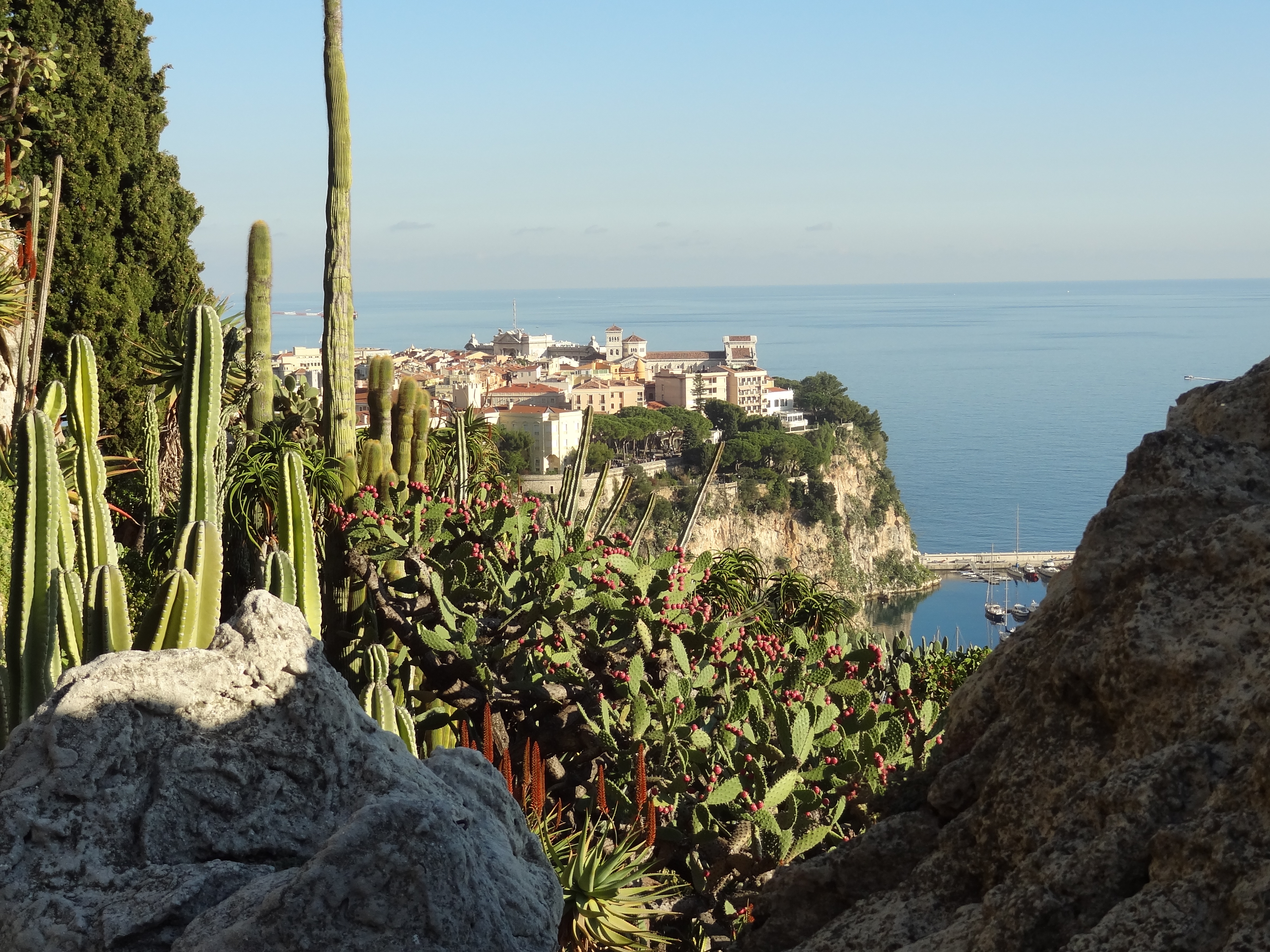
A view from Monaco's 'Jardin Exotique'

In the grand scheme of travel plans for enjoying Monaco, visiting a garden probably doesn’t rate near the top.  But it should.  Casinos, yachts and Ferrari’s go without saying, but Monaco’s gardens may just take your breath away.

We’ve just returned from another Christmas season in Monaco (with a son living in the area, it’s just where we go!), and despite having visited the tiny principality a number of times before, we had never been to its Jardin Exotique.

After Christmas shopping in Nice, we headed to our home base at the Riviera Marriott Hotel in Cap d’Ail and proceeded to figure out how we’d spend our days in this tiny country once again – we thought we had seen it all.  So, after a browse through the over-priced shops, a poke through the Monte Carlo Christmas market and a gawk at a Lamborghini or two, the discerning travelers will find themselves at the garden.

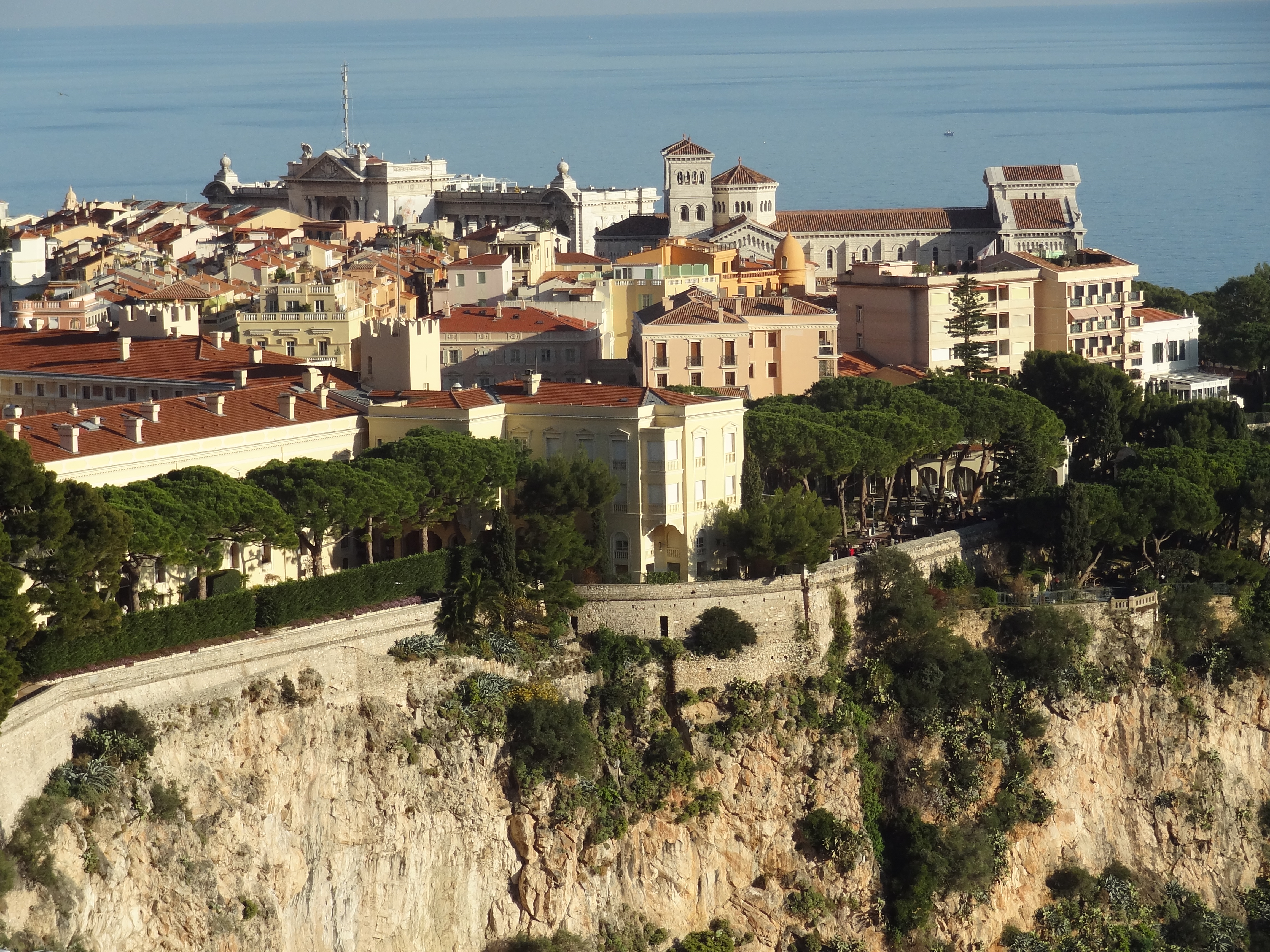
The truth is that if you never visit the garden, you will leave the principality without truly understanding it as a place in time.  That’s because from the vantage point of the garden at the top of everything else that is built upward toward it, you can see the old city of Monaco as it was in years gone by as a fortification topped by the palace and the homes and businesses of the Monegasques – before the frightening influx of the über-rich to condo-city that now surrounds the old city.  If you squint past the ubiquitous construction cranes that dot Monaco, you might just be able to imagine what it must have been like here in the 12th century atop the battlements.  Enemies would have some difficulty scaling those walls to penetrate your tiny country that was for centuries confined to that old city – Monaco-Ville.

Monaco-Ville, the old city on its fortifications

We eschewed all forms of transportation but our pieds to get there, making our way to the top via a series of winding streets, dizzying staircases, the public ascenseurs (elevators) and a public escalator or two.  Since it was the week between Christmas and New Year’s, the tourists were few, so we had much of the sun-filled garden of succulents to ourselves.  To say the experience was breath-taking would be an understatement.  Apart from the acrophobia-inducing vertiginous views of the city, the Mediterranean, and both the French and Italian Riviera’s, the cliffside garden is filled with over a thousand species of cacti and succulents native to areas as diverse as the USA, Mexico and Africa.  Even if you’re not a fan of these plants (which we aren’t usually) you cannot help but be impressed by both their size and numbers.

Patty enjoying the late December sunshine in the garden.
Art among the flowering cacti.

[The garden is open from 9am to 7 pm from May 15 to September 15, but closes at dusk or 6 pm other months.  It is closed on only two days each year: November 19 and December 25.  The entrance fee is €7 for adults with discounts for children and seniors. Visit their web site.]

Christmas shopping in Nice: It’s better on the Riviera!

Nice dressed for the festive season

Travel memoirist Bill Bryson once wrote: “We used to build civilizations.  Now we build shopping malls.”  And for many of us who celebrate the festive season by exchanging gifts, the shopping mall becomes a second home at this time of year.

But for us discerning travelers who would rather save our money for an Executive-first class ticket than buy one another something that will end up at the Salvation Army thrift shop in six months, we take a slightly different approach.  The fact that we rarely spend Christmas at home (as discussed earlier in reference to a Christmas cruise!) does give us a bit of a distraction.

Leaving the house in the good hands of our house-sitter, we take very little in the way of gifts with us: we’ll do our shopping when we are on the ground in the south of France, and that shopping will be minimal.  It’s the experience of shopping in Nice that we really like!

Nice is the closest thing to a ‘city’ that is within a reasonable taxi drive of where our son works in Monaco.  About 30 minutes by cab from Monte Carlo, Nice has a population of fewer than 400,000 making it large enough to have shops, services and hotels in abundance, and small enough to be happily walkable.  Add on to that its charming old quarter (Vieux Nice), its Christmas market and its fabulous festive decorations, and you end up with an experience that puts you in the Christmas spirit like nothing else can.

Le Palais de la mediteranee: Our home base in Nice

When we arrive in Nice, we’ll check into the hotel Palais de la mediteranée on the Promenade des Anglais that stretches about six kilometers along the beachfront.  Then we’ll spend a day wandering the shopping streets and lunching at a pizzeria near the market.  We’ll watch the Nice residents stroll on the boardwalk (it’s actually paved) and we’ll visit the local Galleries Lafayette, the famed department store.  It’s not quite like its Parisian sibling, but it has three floors of ‘stuff’ that isn’t readily available in North America.

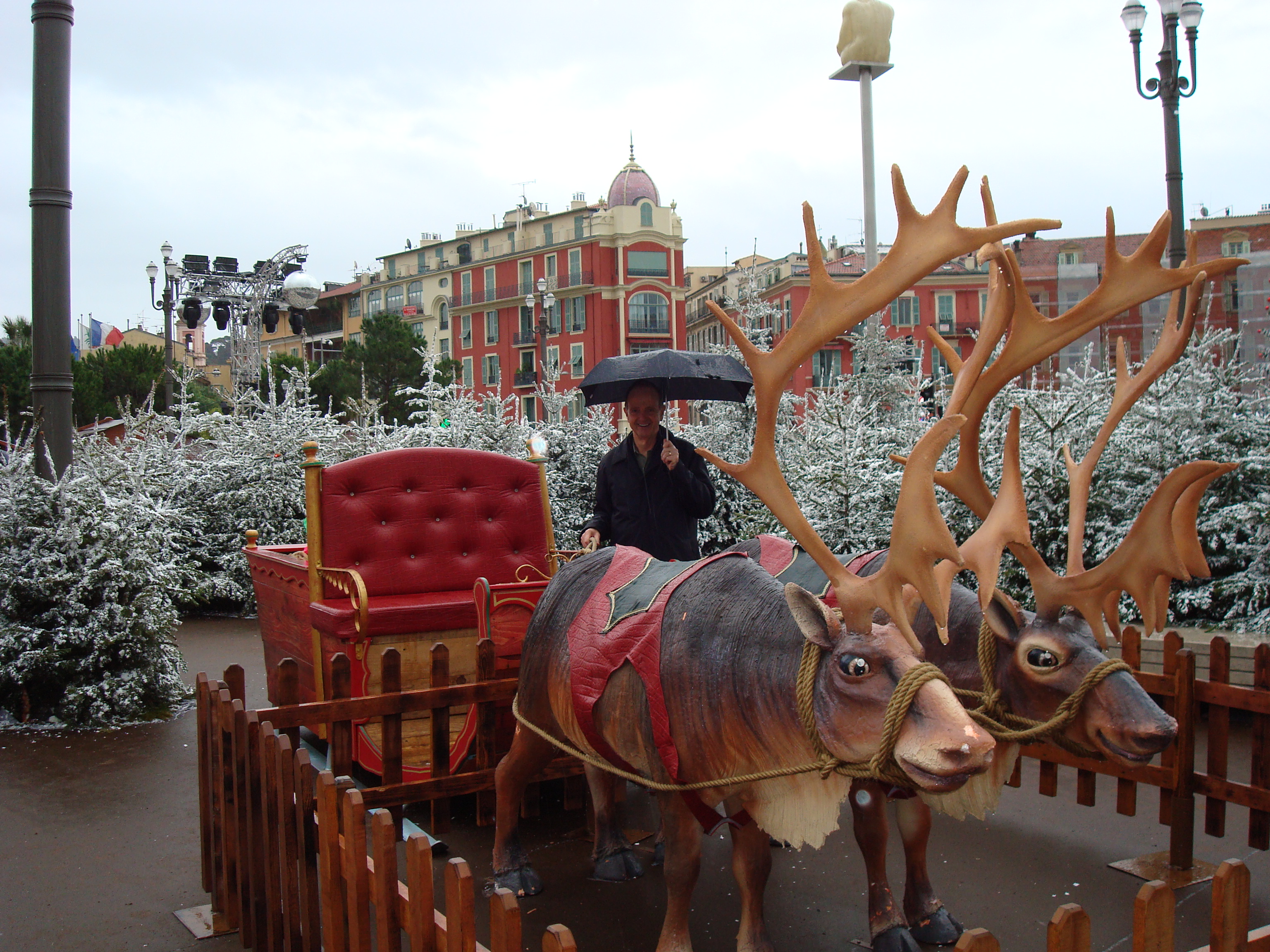
Then we’ll do some strolling of our own and watch the local residents pick up their Christmas trees from the lot on the waterfront, and wander among the snow-covered trees all around the place.  Does it snow in the south of France at Christmas, you ask incredulously?  No, it actually doesn’t.  The snow is fake; those of us who reside in more northern climes always find it hilarious how snow seems to be worshipped as the very essence of Christmas.  It’s clear no one along the French Riviera has ever had to spend a morning shoveling to get a car out of the garage.

After we pick up one present for each other and a few for the son, we’ll leave Nice behind us to head to Monte Carlo and a ballet premiere.  When we get back, no doubt we’ll have more stories to tell!

Christmas tree lot along the Promenade des anglais
Art surrounded by "snow" covered evergreens in Nice.

Costa Rica: It really is as terrific as they say!

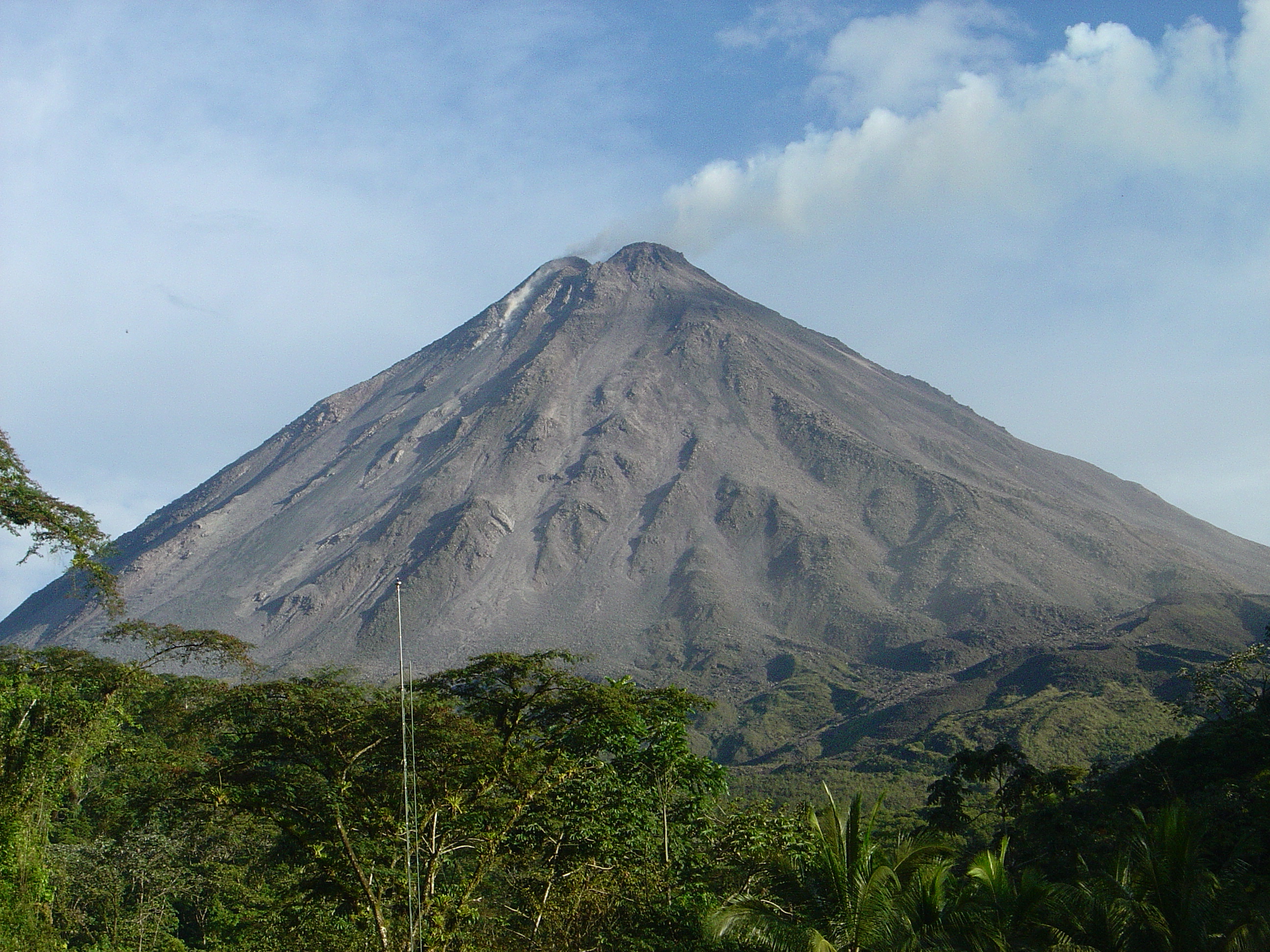
Arenal Volcano puts on a light show every night it's not shrouded in cloud & mist.

Just mention to someone that you’re headed to Costa Rica or that you’ve just been to CR and inevitably they either gush about their own trip or lament that they have yet to check it off their list.  Either way, it seems that Costa Rica lives up to its tourism promotion.  That isn’t to say that there are not – how can we put this delicately?—some “issues” like bridges that would be condemned on this part of the North American continent and let’s not forget those crocodiles lounging below.  But those are small points.  The trick for the discerning traveler is to find a balance between truly getting the experience and having a luxurious experience.  We think we found the balance.

Our first stop in planning the trip was to our trusty travel agent – did we say how much we adore Angela?  Well, we do.  Angela recommended one of her colleagues who is a Costa Rica expert to help us create the perfect, personalized tour.  Maxine, the expert, suggested that we book a private guide to take us to a variety of places in the country – one who would pick us off and drop us off, sometimes for a several day stay, but every time he would return for the next leg.  And so we planned 12 days starting and ending in San Jose, the capital of Costa Rica.

We flew in to the very modern airport in San Jose and were whisked by our guide and driver Senõr Mezza to the Marriott Hotel Costa Rica.  A Latino-themed oasis not far from the airport in the middle of a massive coffee plantation area, the hotel provided us with a great place to begin to get acclimatized.  The next day was off to the Pacific coast – to Manuel Antonio.  Although it looks like it would be a short drive (it would be in this part of the world), the driving conditions mean that it will take hours to get there.  Not to worry, the countryside is picturesque and our guide seemed to know everyone along the way, taking us to lunch at places that tourists never see.  Wonderful!  He even warned us when to close our eyes.  That would be when crossing a river on a bridge whose road-bed one could see through to the crocodiles below.  The planks would hold, he told us!

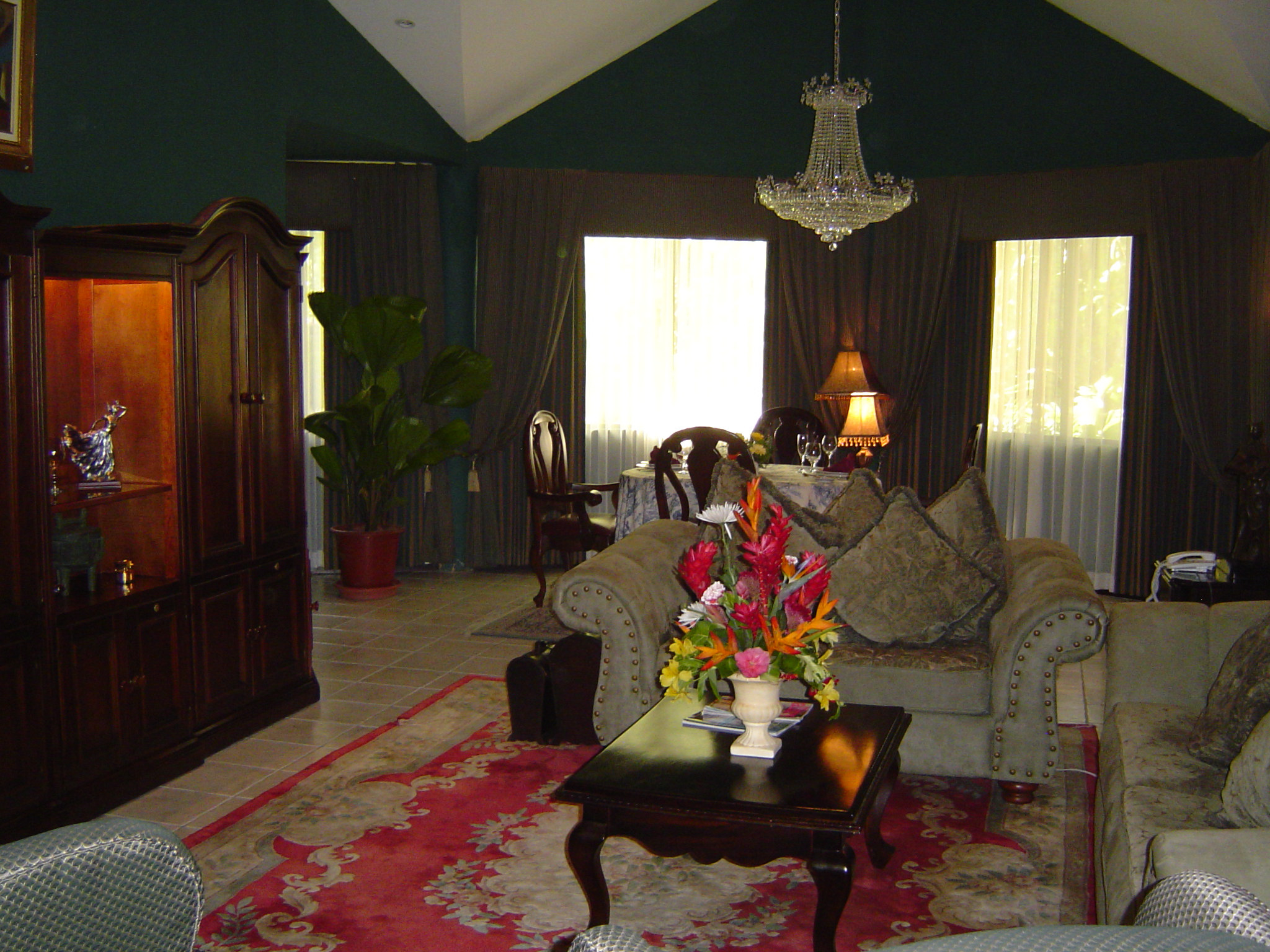
The living room of our suite at La Mansion Inn

Manuel Antonio is like no other place we’ve been.  The national park is breathtaking with its rainforest and its seemingly endless miles of unspoiled beaches.  We checked into our mini-suite at La Mansion Inn to find that we had been upgraded to the largest suite in the place.  It was four days of bliss – even when the power went out as we readied ourselves for dinner one night.  We found ourselves the only guests in the small dining room now completely candle-lit, and with one wall open to the garden, with the chef working feverishly with electricity from his generator.  It was extraordinary.

We hired a guide to take us hiking into Manuel Antonio national park where we spied sloths, monkeys, miles of beaches and, surprisingly, very few other people.  It was fantastic!

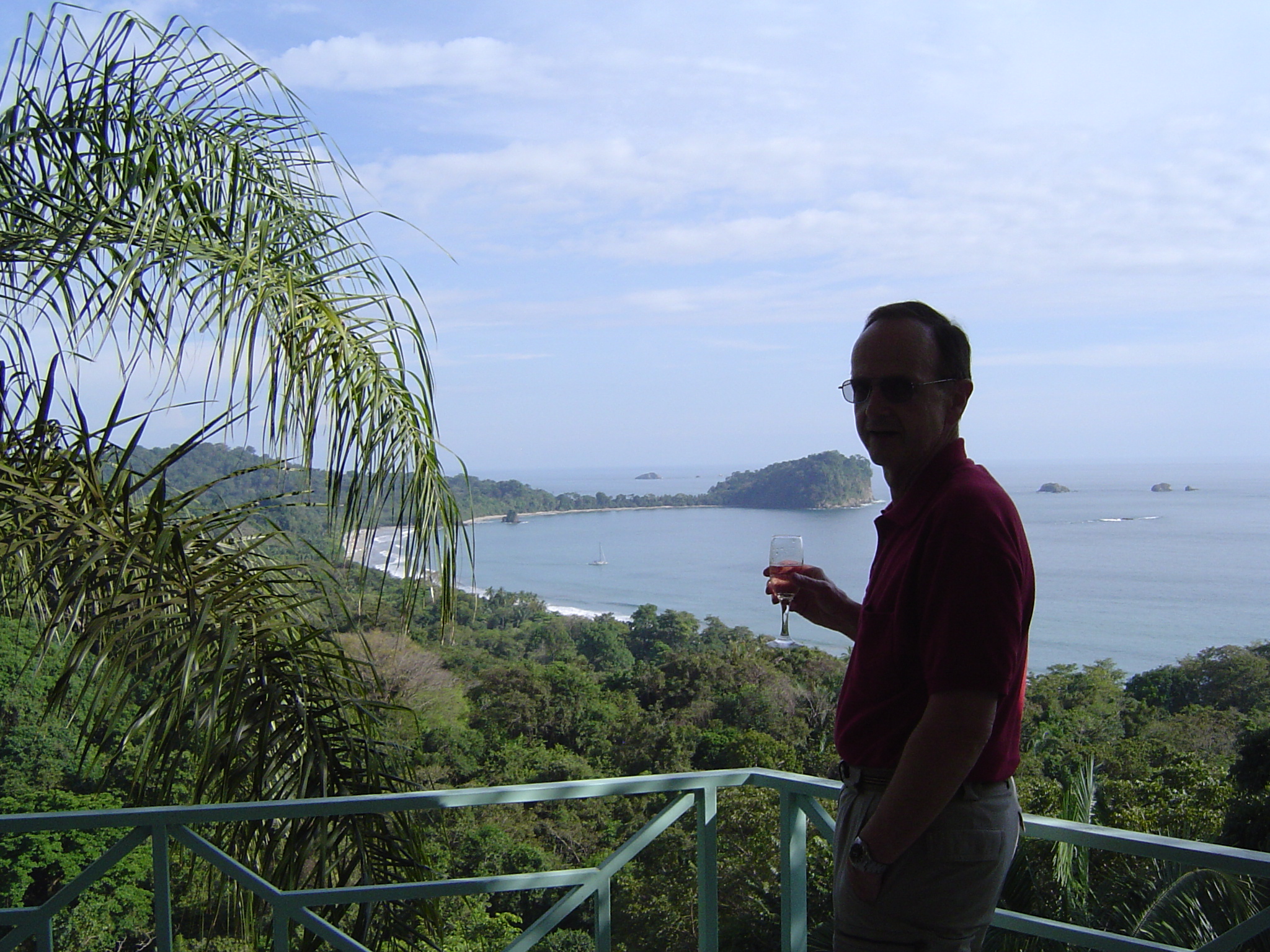
The view toward Manuel Antonio National Park from the balcony of our suite at La Mansion Inn.

When we left the Manuel Antonio area on the Pacific Cost, we headed inland and north to Arenal volcano where we checked into the Tabacon Spa and Resort for three days.  We experienced the thermal springs and hiked in the rainforest – again with a guide who was also our guide for a small group tour by boat to the northern border where Costa Rica meets Nicaragua.

Our next stop was Los Suenos on the Pacific coast for one night at the Marriott resort there.  A beautiful hotel on a wide, muddy beach, the Marriott here is less a Costa Rican adventure than an American refuge.  It is very nice, but we could have been in any warm spot in the US.  Comfortable but perhaps not quite the Costa Rican experience we were seeking.  One night there was enough and then we were off again.
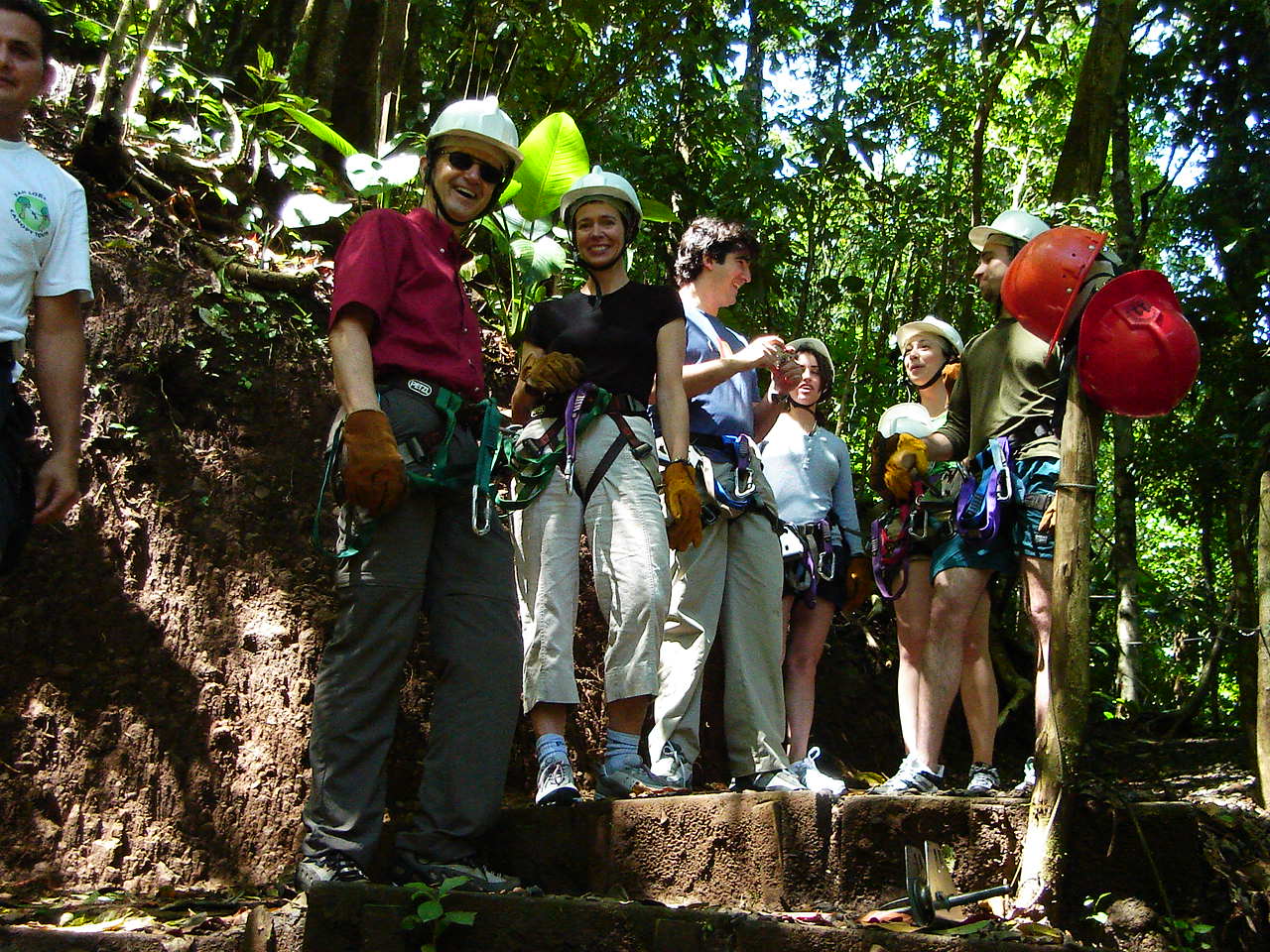
Before we headed back to San Jose, Senõr Mezza, our guide, insisted that we couldn’t leave until we had zip-lined across the canopy of the rain forest so he deposited us at one his favorite establishments.  It was something that we had wanted to do, but were just a bit hesitant.  Given his insistence that we would enjoy the experience, we could hardly decline.   After being fitted out with the ‘gear’ including harness, gloves and helmet, we joined a small group of young Americans and began our tour, zipping from one platform to another.
Ziplining in the rainforest Costa Rica

When we reached the first platform, I noticed a young woman hugging the tree, now many meters above the ground.  I asked her if she was afraid of heights.  “Yes,” she said, “I’m terrified.”

But there was no going back.  She had to zip-line from this platform ever onward – which she did.  At the end, she was very relieved, but had faced her fear.  Our fear had been less of heights (although Art does have that tendency and I’m just sensible enough to avoid them most of the time), and more of the “are we too old for this?” variety.  Being over 50 (and one of us over 60), it seemed relevant.  However, it is an experience that you must have, regardless of your age.  If you’re fit enough to travel to Costa Rica at all, then you’re fit enough to try zip-lining.  The views cannot be matched through any other experience.  And there’s just something about having done it.

Back in San Jose, we toured the city – and if there is one point not to be missed it has to be the opera house, Teatro Nacional.  Yes, the opera house.  It is reminiscent of the opulence of the Opera Garnier in Monte Carlo, which was designed by the same architect as the Paris Opera (Garnier), so you can imagine its magnificence.  Just sitting there in the orchestra, we could imagine the opera fans of a bye-gone era resplendent in their finery, horse-drawn carriages outside awaiting the final curtain.

Teatro Nacional, San Jose

Yes, Costa Rica is rich in history – but even more, it is rich in natural grandeur.  They do live up to their tourist slogan: Pura vida!