Kaua’i by helicopter: Working down that bucket list!

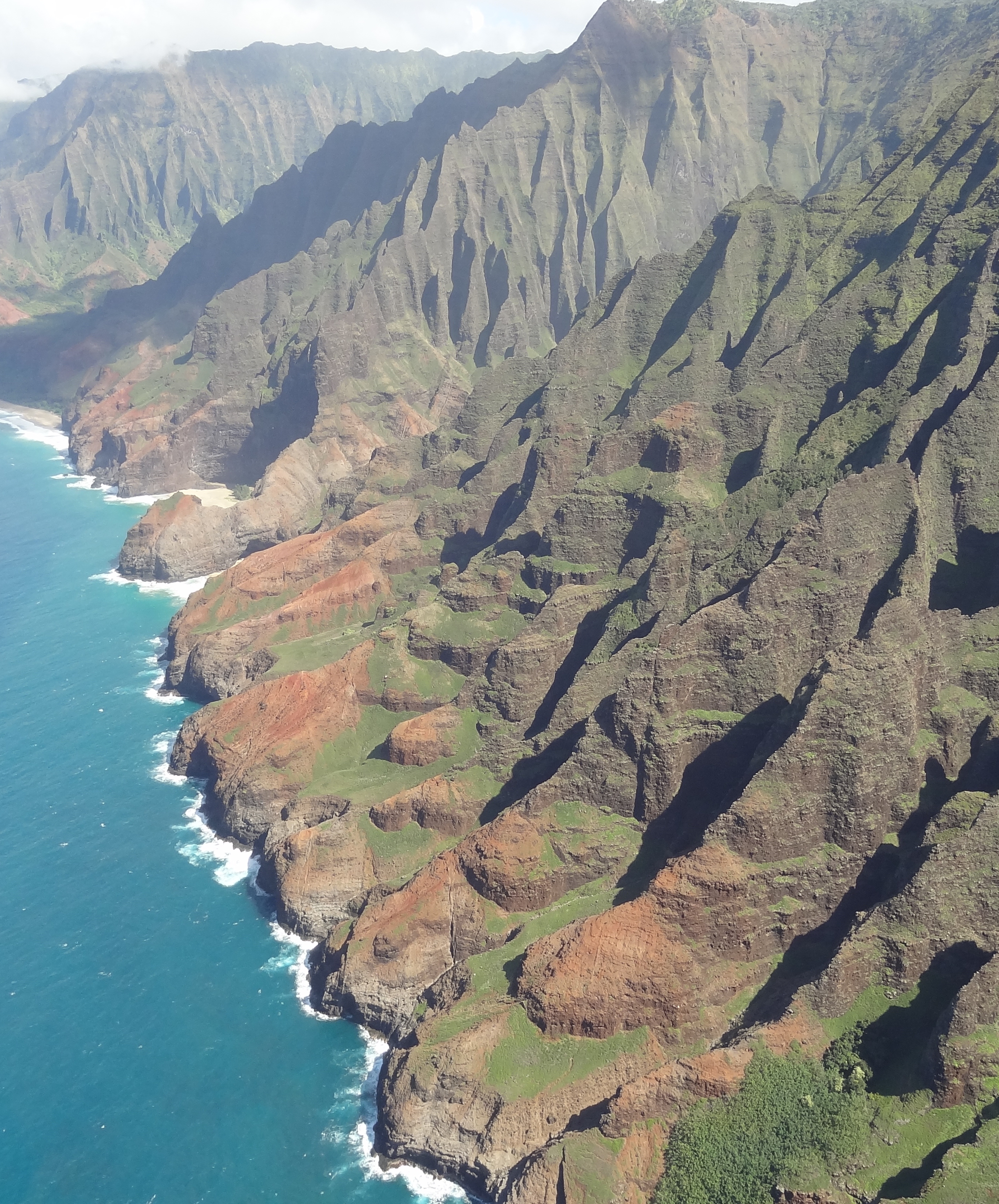
A helicopter is the only way to experience the magnificence of the Napali Coast in Kauai in this expansive way.

The lure of the Hawaiian Islands was never stronger than when Patty was nine years old.  Her grade five teacher returned from Christmas vacation with slides and stories from her Hawaii trip, and one awe-struck little girl was hooked.  So began a childhood obsession with travel advertisements and brochures.  In those days – long before we could click our way to information – Patty filled out those little forms that were invariably included in travel advertising.  In due course the brochures and posters arrived, and Patty began her collection – all the while creating a kind of childhood bucket list.  These days, as we move ever closer to those retirement years (a few years yet, though), together we’ve created our own list of places to go and things to do.  Hawaii was on Patty’s early bucket list – and seeing the islands by helicopter was on our current one.  Check off Kaua’i by helicopter!

Up in the clouds over Kauai, the 'garden island'

This was our second trip to Hawaii.  The first one was some fifteen years ago when we whisked ourselves and our then eight-year-old son Ian off to celebrate our tenth wedding anniversary.  Oahu (Waikiki and Honolulu) and Maui were our destinations then – Oahu, Kaua’i and the ‘Big Island’ (Hawaii) were on the agenda this year.

When you head to the islands, you usually have some things that are must-do’s on the list.  Fifteen years ago a luau was on the list (we accomplished that and found our little family threesome to be the only ones not on their honeymoons at a table of some 20 or so revelers that evening!).  As more seasoned and discerning travelers at this point in our lives, we decided to forego the pig roast this time in favor of a few other delights – among them was the desire to do Kaua’i and the Big Island by helicopter.
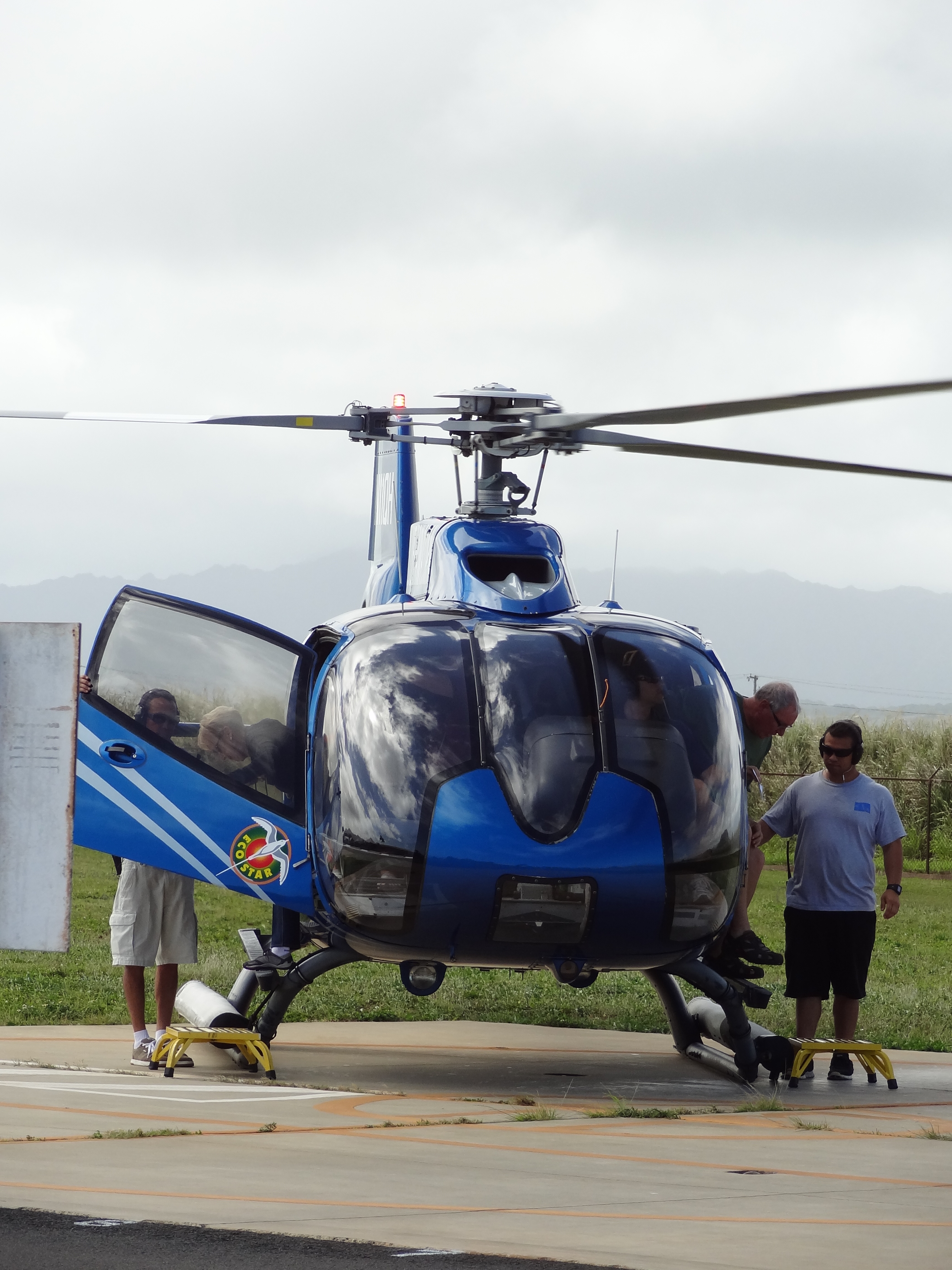
The Blue Hawaiian staff prepare the helicopter for our embarkation! Yikes, they're not even turnng off the rotors!

Art has been in the offshore medical business for almost thirty (!) years at this stage.  That means that over the years he has been required to undergo helicopter-ditching training.  Among other things, this involves being strapped into a chopper’s seat while the training cockpit simulates an emergency landing on water.  The general course of events in that kind of scenario is that when the blades touch the water, the helicopter flips so that the passengers are now under water.  The situation is simulated in the training, but the water is very real.  Art was actually required to be able to unfasten a seatbelt and shoulder harness and push open a window while the cockpit rapidly filled with dark, murky water, and then swim to the surface.  It would be enough to make most people run screaming from offshore activities all together.  But he didn’t, although he never did have to put this part of the training to use (thankfully).  He did have occasion to fly in choppers to remote locations, however.  Patty on the other hand, had never set foot inside a chopper.  Blue Hawaiian Helicopters was to provide her with her first experience.

Like a well-oiled machine (pun intended), the Blue Hawaiian folks have their system down to a science.  For us it started with buying the tickets (yes, it’s expensive) through the hotel’s concierge who asked us our weights.  “They need it to calculate fuel etc.,” said the concierge.  “Then they’ll weigh you again when you get there.  It’ll flash up on a screen…”  What horror!

She laughed and told us that she was joking.  But when we arrived at the Blue Hawaiian office a few days later, they did, indeed, weigh each of us.  It did not, however, flash up anywhere much to everyone’s relief.  We’re an odd bunch about our weight, aren’t we?  It’s a bit like asking someone how much money he or she makes – but we digress.

The weights were used to determine total weight for the individual choppers and the seating arrangements so that weight could be distributed.

We chose the bigger and nicer of the two types of choppers they offered.  We flew in an Eco-Star that takes a pilot and six passengers with individual seats rather than bench seating.  After the weigh-in, we watched a safety video and were then helped with our inflatable life vests that we were required to wear around our waists.  Then, we were off to board the helicopter.

In Kaua’i (the office is in Lihue) we were loaded into a van and driven the five minutes to the airport where we awaited the return of the helicopters and were assigned our numbers.  We would board without the helicopters even turning off their rotors and we each needed to be in the right place for boarding.   We followed the instructions and were off.

The Discerning Travelers came home from Kauai with some extraordinary memories etched in their brains!

The Blue Hawaiian pilot was extremely capable and personable as he expertly lifted the chopper from its pad and began his narration of the tour.  It was clear that he loved his job and we were the happy beneficiaries.

They call Kauai the ‘garden isle’ and as you soar above the magnificent Napali Coast the reasons are clear: breathtaking mountains, verdant valleys, awe-inspiring waterfalls.  There really is no other way to get any real sense of the island.

If you have five minutes, join us on our tour…
Two grand ladies of the sea: The original Queen Mary and Queen Mary 2

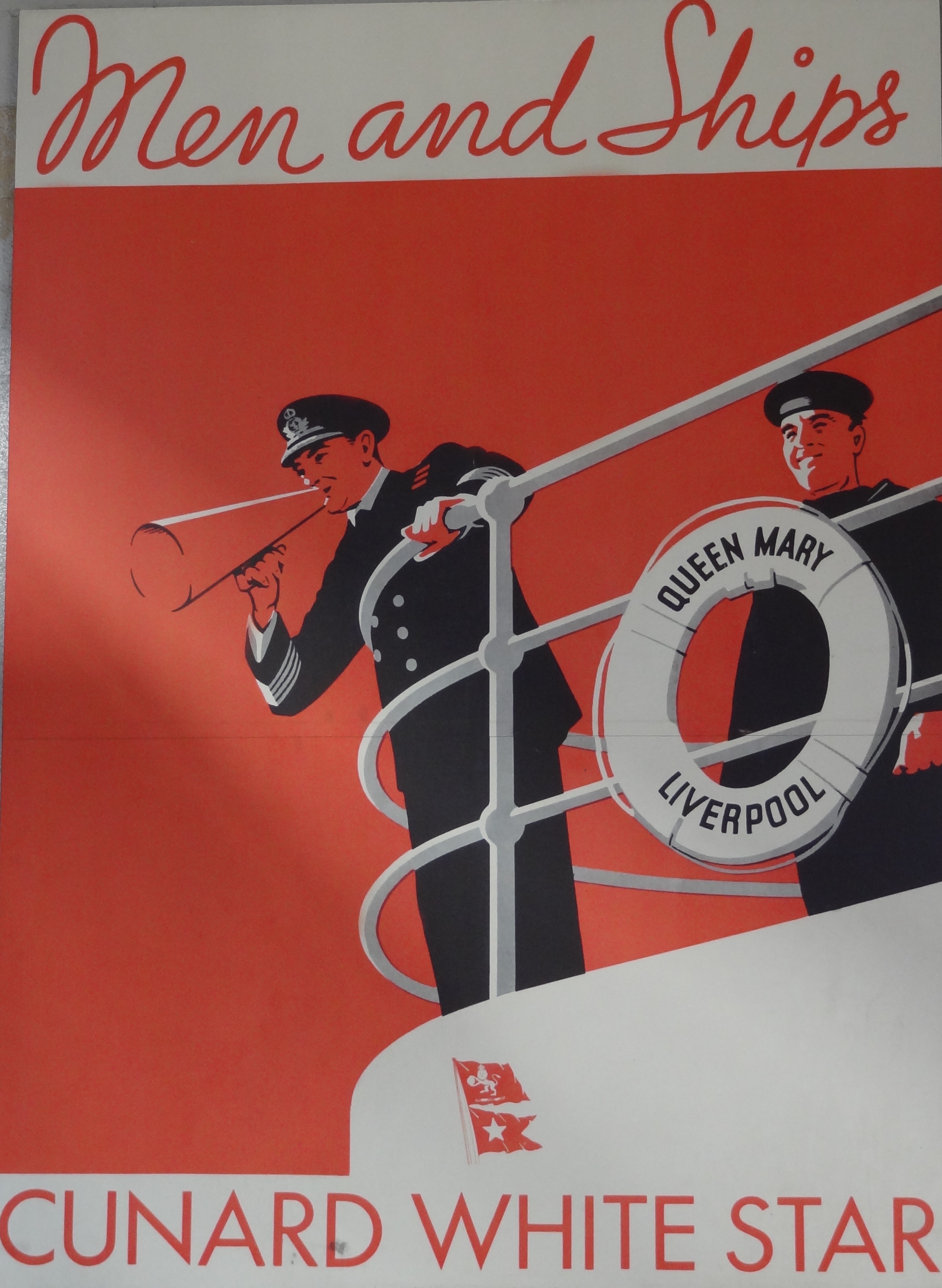
A poster for the combined Cunard White Star brand aboard the original Queen Mary.

When we crossed a trans-Atlantic voyage on a grand ocean liner off our bucket list last summer, we were hooked by the nostalgia of the grand ocean voyages of yesteryear. On board Cunard’s Queen Mary 2 with us on that voyage was a lecturer named William H. Miller (aka “Mr. Ocean Liner”) whose standing-room-only presentations that week were so mesmerizing that we bought one of his books.[1] When we read his description of the original Queen Mary as the most “beloved” of the ocean liners, we wondered whether her “daughter” the new Queen Mary 2 might in some ways resemble her earlier incarnation. Then, several synchronicities happened.

First, our son said, “I’m going to be in Los Angeles in February. Why don’t you two come and meet me before you go to Hawaii?”

Second, we started to explore activities in the LA area and discovered that the original Queen Mary is docked in Long Beach, California, a 20-minute drive from where we’d be staying in Costa Mesa.

Finally, Patty’s 89-year-old mother said, “You know, I’m sure your father came home from Europe [after fighting in WW II] on the Queen Mary.”

…so we knew we’d have to visit her…and we did.

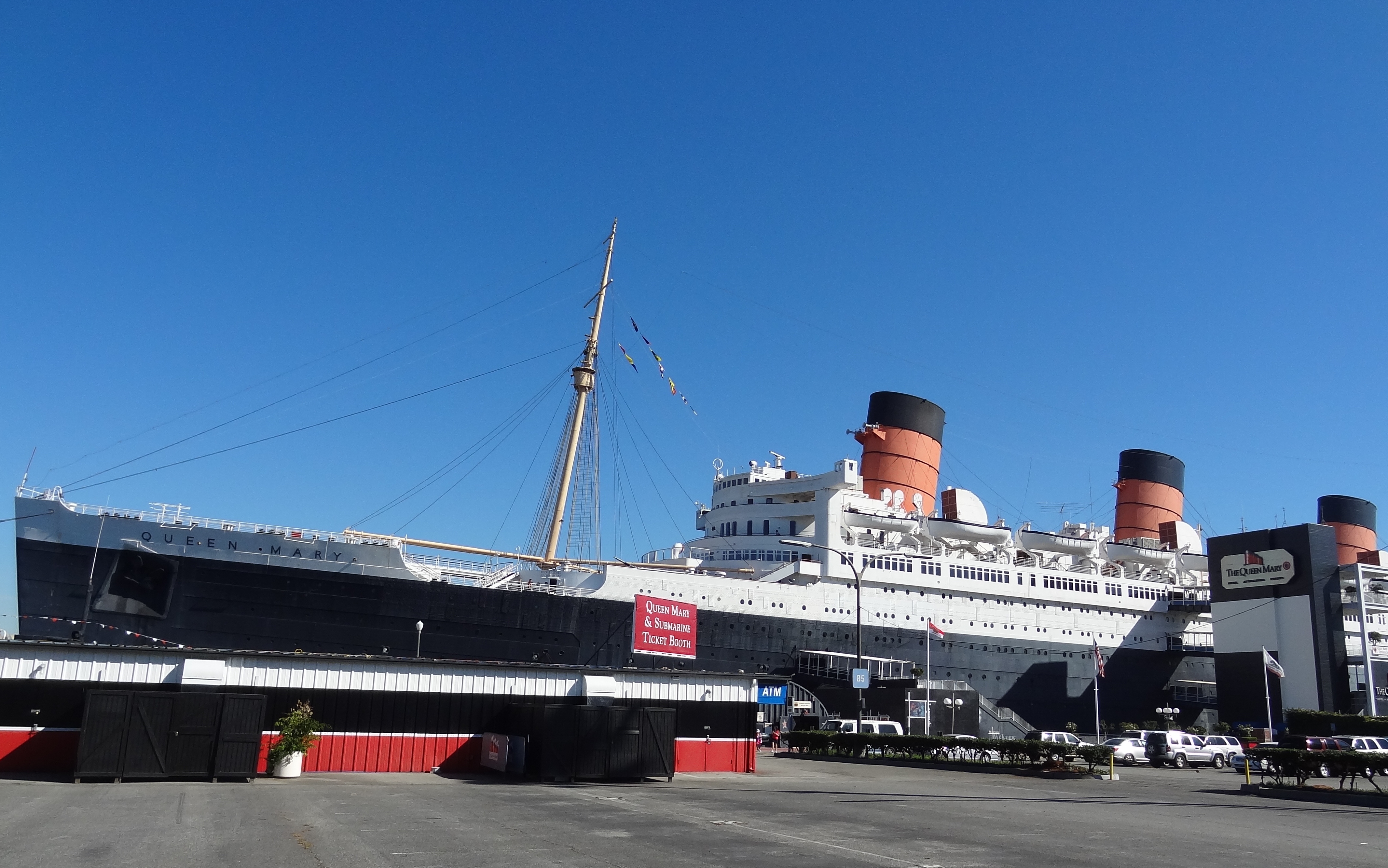
When the Queen Mary was launched in 1936, she was considered to be the grandest liner ever built, and over her long and storied career, she not only carried passengers back and forth across the Atlantic from Southampton, England to New York City, but was also refitted as a troop carrier during the second World War, ferrying some 800,000 troops from the UK, through Halifax, Nova Scotia (where Patty’s father disembarked), to NYC. Today, she’s a hotel and a point of interest if you’re ever in the Long Beach area.

The Queen Mary as she sits alongside today in Long Beach, California.

Stepping aboard the ship is like taking a walk back in time. Our visit was timed perfectly it seemed since the crowds were thin and our pre-arranged tour consisted only of three of us (Art, Patty and daughter Amanda who accompanied us to LA to see her brother dance) and two others who dropped out after the first five minutes lacking sufficient English skills to understand the guide (who was quite an actor). So we had a private tour.

Our guide explained the way the three classes of passengers were divided – a notion that has (almost) entirely gone the way of the dodo on modern cruise ships. (We explained how Cunard still maintains this partially in an earlier post). The classes were not segregated by level, such as one deck for first class, another for second etc. Rather the first-class passengers’ accommodations and public spaces were in the center of the ship – where a ship is most stable. The second-class passengers populated the stern (rear) and the poor third-class passengers were all the way forward, a portion of the ship that, as the guide explained, often took a nose-dive under the waves in bad weather. Those were the days before modern stabilization. There must have been a lot of nausea in the bow!

The QM's atrium as it is today, restored to its earlier grandeur.

As we moved through the large public spaces on the Queen Mary, we tried to imagine what those grand balls must have been like and couldn’t help but make comparisons to the Queen’s Room (the ballroom), the champagne bar and the theater on the Queen Mary 2.

Perhaps, though, it was in the engine room below decks in the stern that harbored the most ghosts. As we walked through the darkened passages, just the three of us (we did this part without a guide), we could almost hear the crew as they toiled away. Then as we walked into the cubicle that had been created through a cut-out area on the ship’s super-structure, we were confronted by the eerie underwater sight of one of the original propellers, still in place under the water. That sent us flying toward the light!

The ship is also used as a floating hotel these days, although, according to the guide, the walls are so thin you can hear everything going on in your neighbor’s stateroom. When we reached the end of the tour, since there were only three of us, we asked if it would be possible to see a first-class suite. They are usually not part of the tour since they are part of the hotel. The guide humored us and went to procure permission. Success! Taking our time in the suite, our guide invited us to sit in the sitting room to try to conjure images of who might have spent time in this room in the 1930’s, ‘40’s & ‘50’s.

The bedroom of the first-class suite.

The suite consisted of a master bedroom, two bathrooms with hot and cold running fresh and salt water choices, a sitting room and a maid’s room that was outfitted with its own sink but she would have gone down the hall for the toilet and a bath. The burled wood built-ins (vanity table, desk, dressers, and bedside tables) are all original to the suite – although the flat-screen TV’s are not! There is no doubt they’ve done a remarkable job of restoration to provide an experience that takes you into another era.

After the tour we repaired to one of the dining rooms for fish and chips for lunch while we overlooked a marina filled to overflowing with modern sailboats. All in all, one of the great tourist experiences for people who love the ocean. The Queen Mary’s web site says: “The ship no longer sails, but she can still take you away.” Amen!

The corridor evokes a sense of history.

[FYI: They offer a variety of tours from self-guided audio tours, through WW II tours to a Ghosts & Legends Tour. You should take at least one of the guided tours, and try to go when the crowds are thinnest for the best experience.]

Come with us on our tour…


[1] Miller, William. 2010. Floating palaces: The great Atlantic liners. Chalford, UK: Amberley Publishing.

The value of luxury: The “six-star” experience

For several years now, we’ve been grappling with the question of what constitutes luxury.  As discerning travelers, we are interested more in refinement than luxury per se since most people seem to think if something is expensive, it constitutes luxury.  But that isn’t necessarily so.

A couple of years ago, we embarked on our first “six-star” (their marketing literature said it – we didn’t) luxury cruise.  While on board, we thought it might be a good opportunity to ask a few of these very well-heeled travelers what constitutes luxury for them.  Not one of those we asked mentioned anything about expensive items; rather they were focused on  experiences that for them were luxurious. For example, one of the women who could buy and sell the best of us, said that for her, luxury would be having someone to wash her hair for her every day.  Another said that to have fresh sheets on her bed every day is a luxury.  Others had similar opinions.  What all of these had in common was sensuality, if you must know.   More importantly it gave us a notion of what luxury means these days: a luxurious  experience.  In that spirit, we decided to embark on a journey of finding those luxurious experiences.

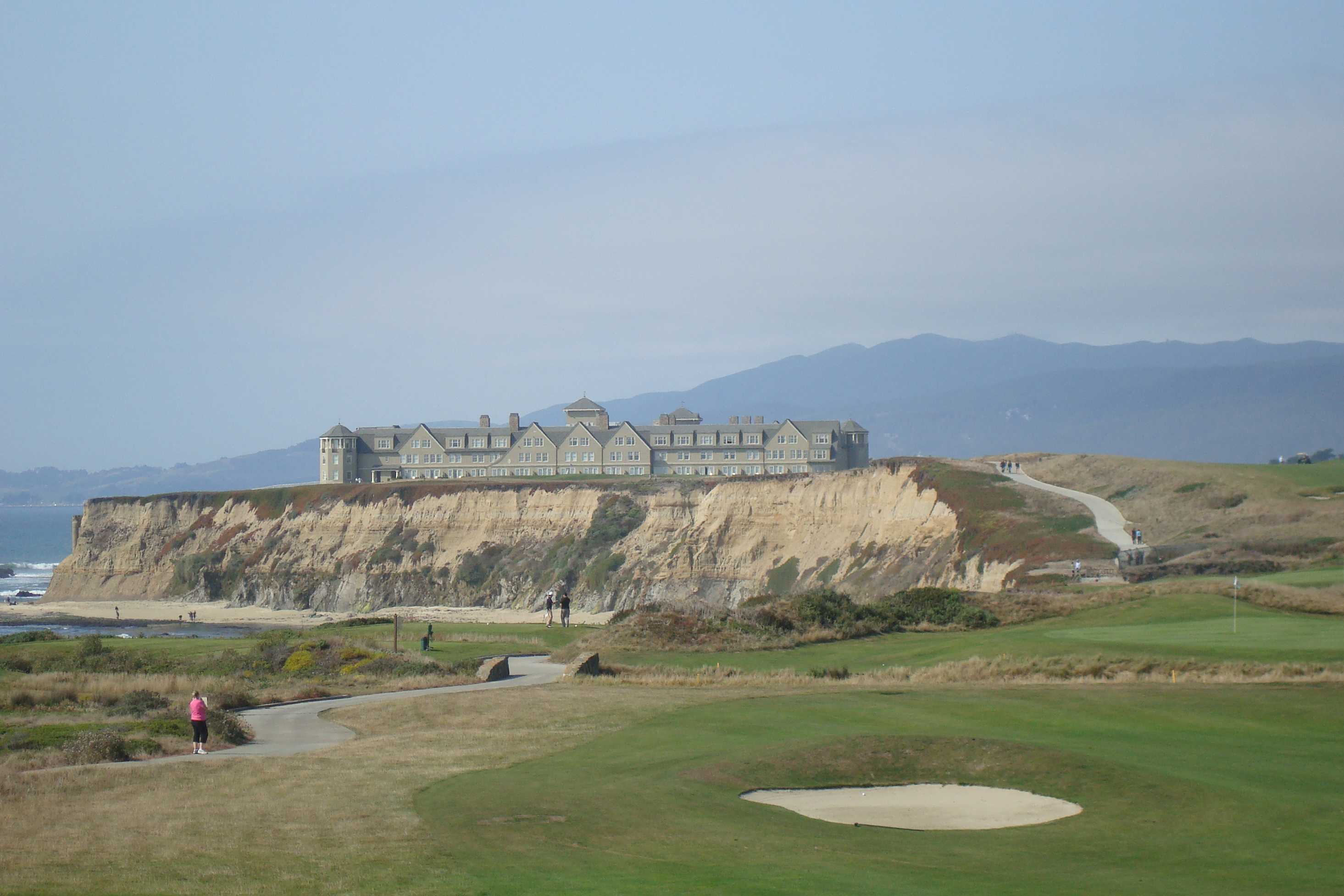
The Ritz Carlton at Half Moon Bay in California is set on a rugged bluff overlooking the Pacific.

A September wedding in San Francisco this year inspired us to take a few days afterwards and head down the coast for a road trip.  Our first stop was the Ritz Carlton at Half Moon Bay.

This hotel is a quick hop from San Francisco and we decided that its ocean front location and rugged coastline beauty might make it worth the splurge.  It was (sort of).

There is no doubt that the hotel is beautiful but we’ve been to many beautiful hotels.  What would make this a luxurious experience for us?

Would it be the resort grounds? They are very nice, but no nicer than any other nice resort has to offer in a lower price range. How about the restaurants?  The restaurants on the property have wonderful ocean views and the food is well-prepared and served – but perhaps not earth-shattering.  The rooms?  The room was beautifully appointed but no more than what we come to expect.  The bathroom started veer into the luxurious – marble from top to bottom, a spacious walk-in shower, a fabulous Jacuzzi.  Rooms on the ground floor have fire pits which are nice, and for some might constitute a luxurious experience.

For us, the thing that made this a luxurious experience wasn’t the bricks and mortar, though.  The most outstanding feature of this Ritz Carlton property is their staff.   Every single one of them we encountered from the outdoor bar staff to the valets who parked our car were terrifically well trained and made it their business to learn our names.  It was one of those little touches that makes you feel special – and if an experience doesn’t make you feel special, then in our books it isn’t luxury.  The Ritz Carlton motto is “Ladies and gentlemen serving ladies and gentlemen”, and this experience drove home to us that it is more than a motto: it is a way of life for their staff.  For example, it was also such a nice touch to find the valets had cleaned the windshield of our rental vehicle, and there were two bottles of water already in the cup holders awaiting us when we got in the next morning to continue our road trip down the California coast.

The experience made us wonder, though, about the “value” of this luxury hotel.  We concluded that its price tag, exactly twice what we had paid a night at the Stanford Court (Marriott Renaissance property) in downtown San Francisco the night before, was perhaps not worth it.  Marriott staff around the world are well-schooled in hosptiality as well.  All we can say is that our gut impression of the relative value is that the Ritz Carlton name may imply luxury; you don’t necessarily have to pay this much for a luxurious experience.