On the Road: São Paulo to Rio

On the Road: São Paulo to Rio

Part 1 of The Discerning Travelers’ Marvellous Adventure in Brazil and the Amazon series

After all these years, you might think there were no places left on our travel bucket list. You would be wrong. Art had always wanted to do two things: visit the Christ the Redeemer statue soaring high over the city of Rio de Janeiro and take a cruise into the Amazon River. We have done all of that and more. Here is where we began our most recent adventure: in the mega metropolis of Sao Paulo, the gateway to our adventure.

After a ten-hour non-stop flight from our home in Toronto to the city of São Paulo, we were ready for our adventure. As usual, we treated ourselves to Signature Class, so we began our holiday the minute we arrived at Pearson International Airport with a lovely dinner in the Signature Class Suite.

Then we settled ourselves in our pods, watched a few movies, slept, had breakfast, disembarked and were greeted in the jetway by a host from AssistAnt, the international company we’ve used before to whisk us through customs and immigration in major international airports. Well worth the $$$.

We had arranged with Tours-by-Locals, our go-to tour company for day trips, to have a guide pick us up at the airport on the morning of our arrival and give us the day-long tour of the city, taking us to the highlights.

We had only two days and wanted a taste of Sao Paulo, the mega-metropolis of over 20 million people. Yes, it’s that mega.

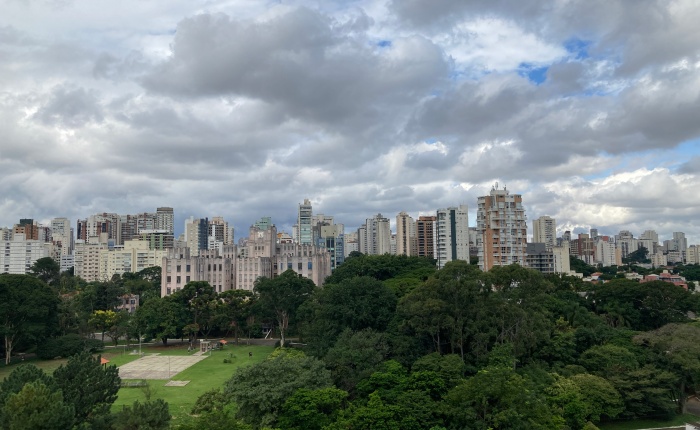
Our guide hit the highlights, even providing us access to points where we could get a view of the spread of the city. He also introduced us to mortadella sandwiches that we enjoyed as we perched ourselves at a table in a bustling city market.

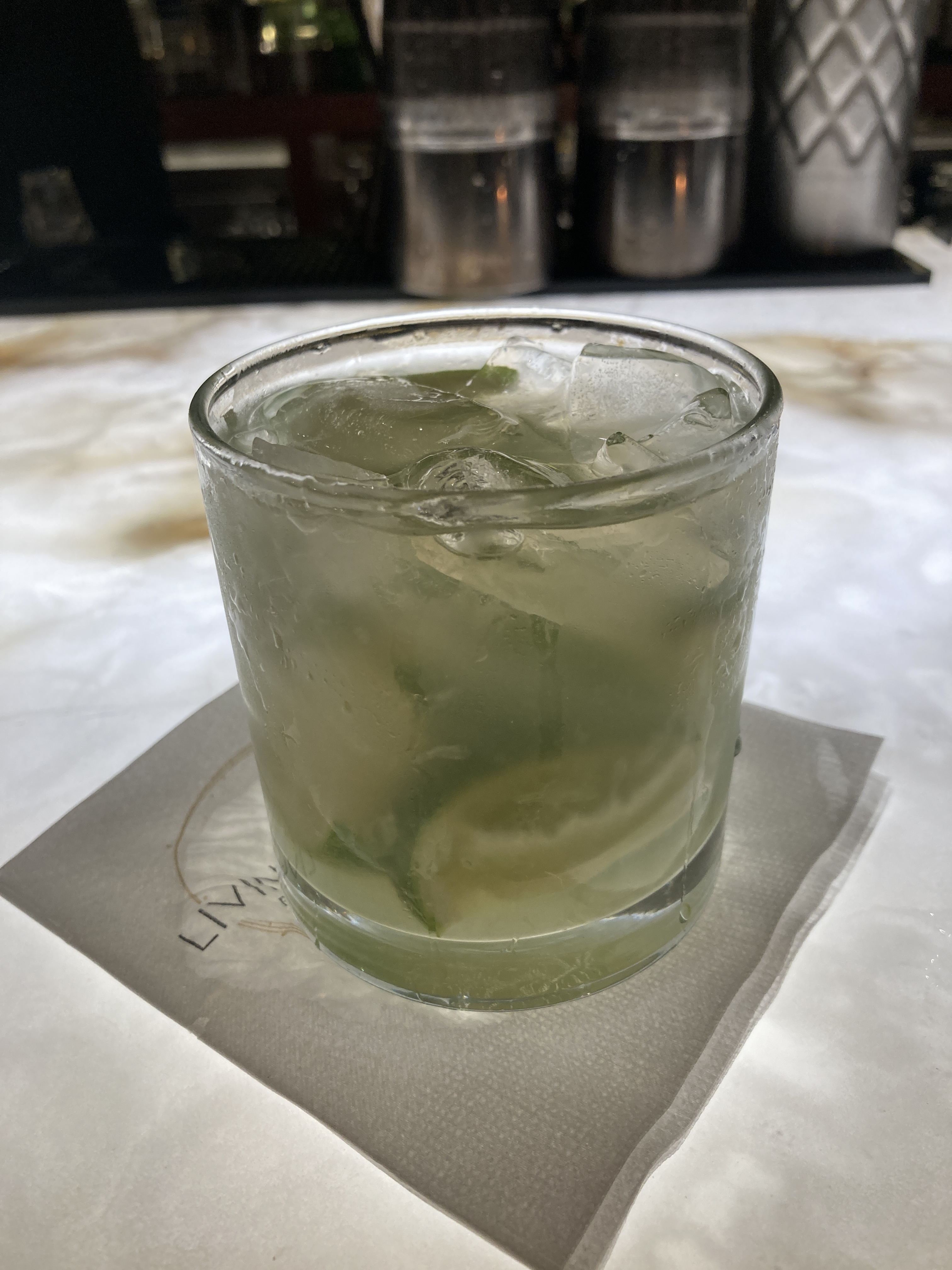
When he dropped us at the São Paulo Renaissance Hotel in the Jardins district of the city, we were ready to relax. Of course, what does one drink on one’s first night in Brazil? A Caipirinha—Brazil’s most famous drink (cachaça, lime juice and superfine sugar).
Before we‘d even left home, we’d been warned by anyone who had ever been to the cities of Brazil that we should be extra careful about safeguarding our belongings—no visible signs of money such as expensive watches, rings, jewellery, and cell phones hidden as much as possible. We also checked to see
that the district where our hotel was located was a relatively safe one. It was. And the Jardins district is a bit like what the French name says: gardens. A lovely place to walk, which we did—without jewellery or expensive watches.

Language is a bit of a barrier in Brazil since their Portuguese is so difficult for us to pronounce and understand. Patty speaks enough French to get by in a French-speaking country, and we’ve acquired a bit of travel Spanish. Brazilian Portuguese, though, was something else entirely. However, although English is not widely spoken outside the most touristy establishments like hotels, the people are warm and understanding. Patty even managed to do a bit of shopping, making herself understood by a lovely young sales associate.

On our second day, we walked—for twenty kilometres or so and saw as much as we could of the area where we were staying. The following day, another guide that we had arranged from a company called Day Trip picked us up at the hotel promptly at eight in the morning, and we began our journey to Rio de Janeiro.

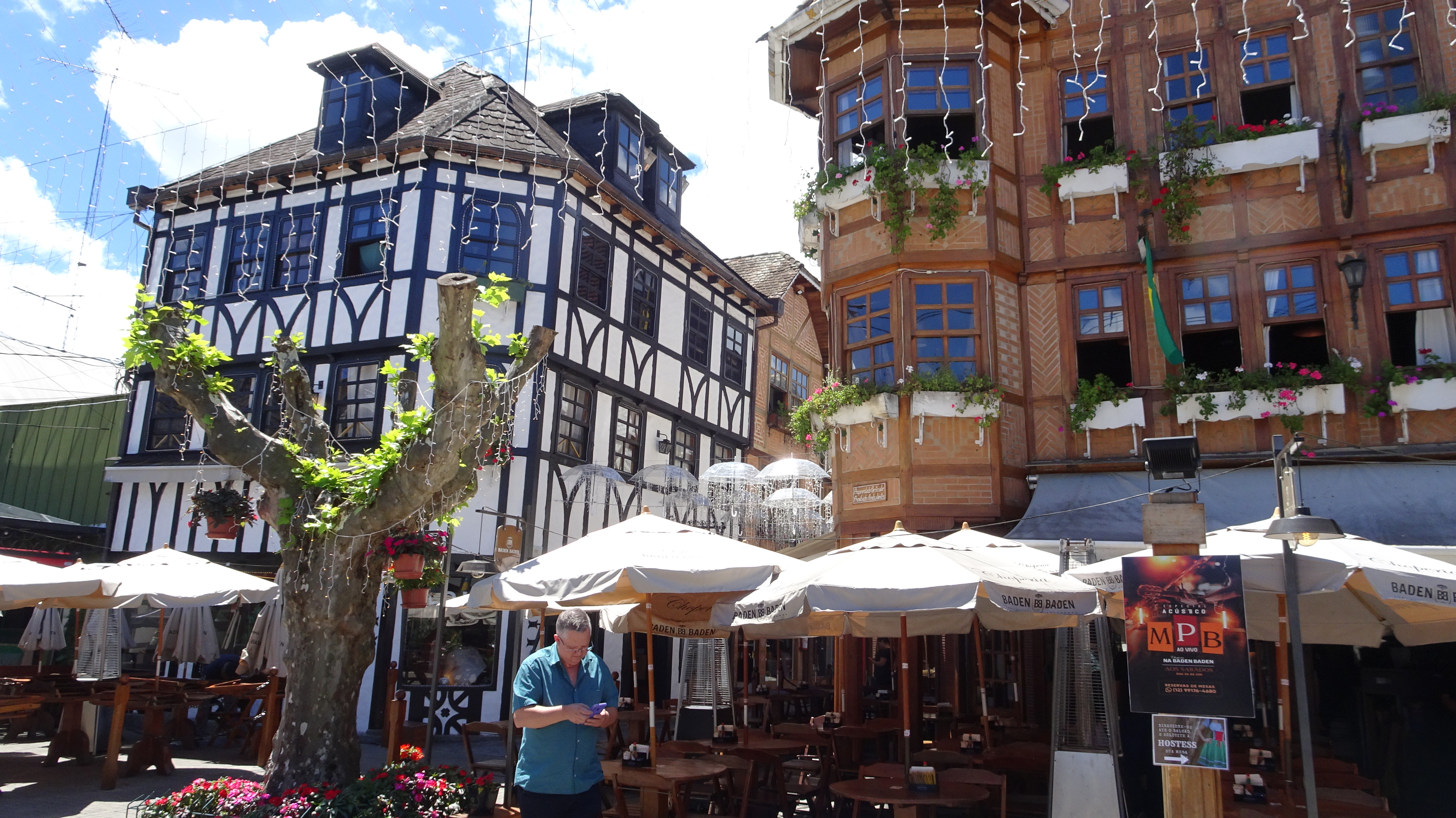
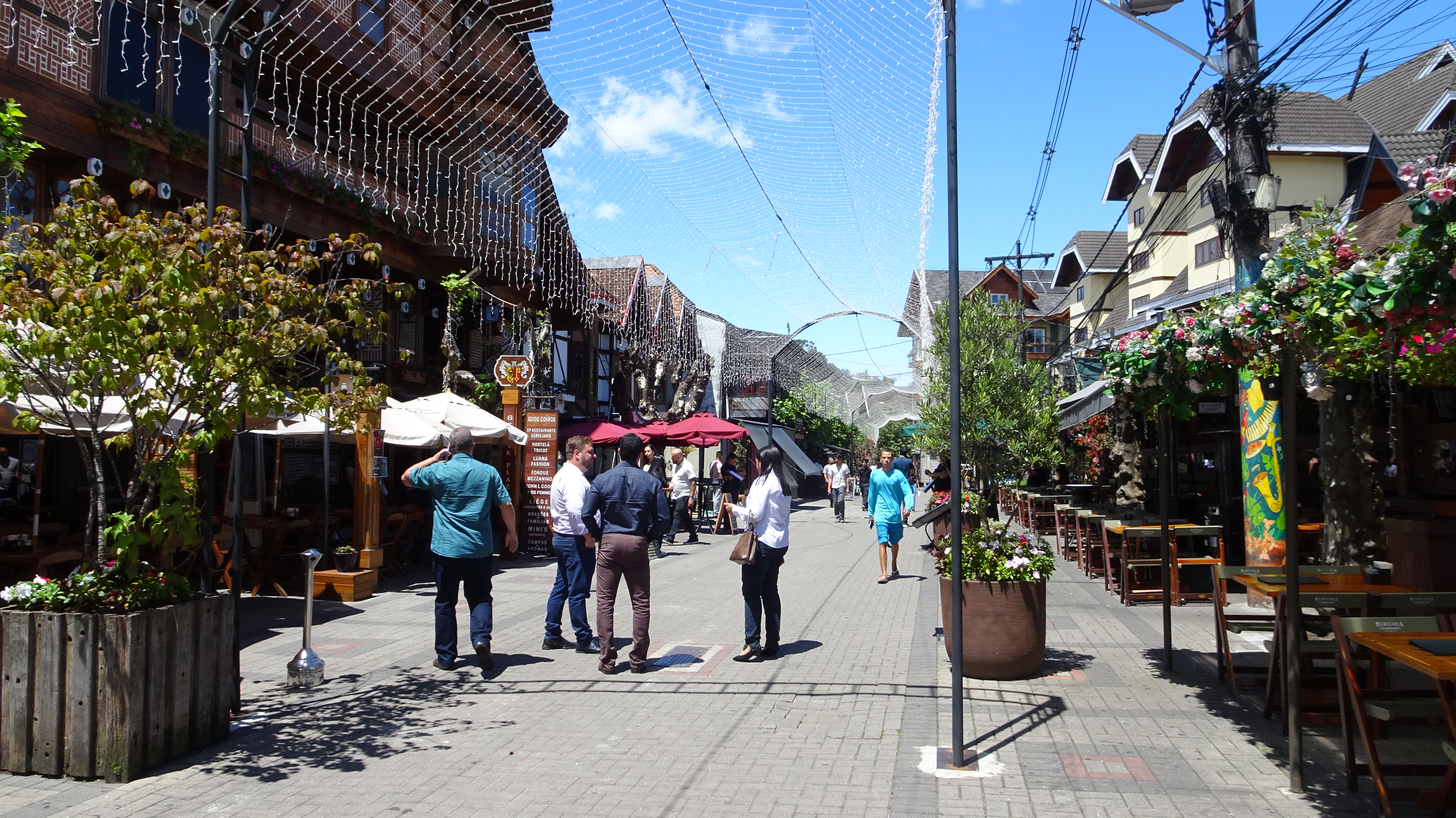
We decided that rather than go directly to Rio, we would add a trip into the mountains to a unique village called Campos do Jordão. Our driver dropped us off, and we walked around this odd little place in 35-degree Celsius heat along streets that looked like they had been plucked out of an Alpine village. The place seemed to be almost entirely made up of restaurants with massive outdoor patio areas. We were soon ready to continue on to Rio.
We arrived on the outskirts of Rio just at rush hour. Our driver pulled over on the highway to change from Waze as his GPS guide to Google Maps because, as he told it, Waze would take us through the favelas, a situation he wasn’t interested in. Darkness had already fallen when we pulled onto Avenida Atlantica.
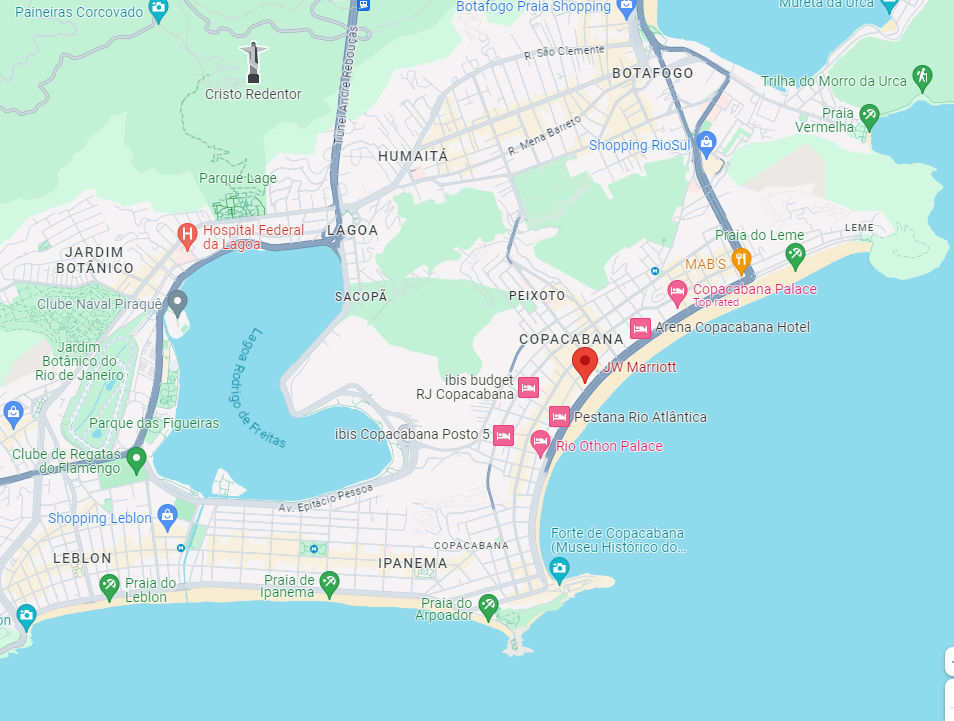
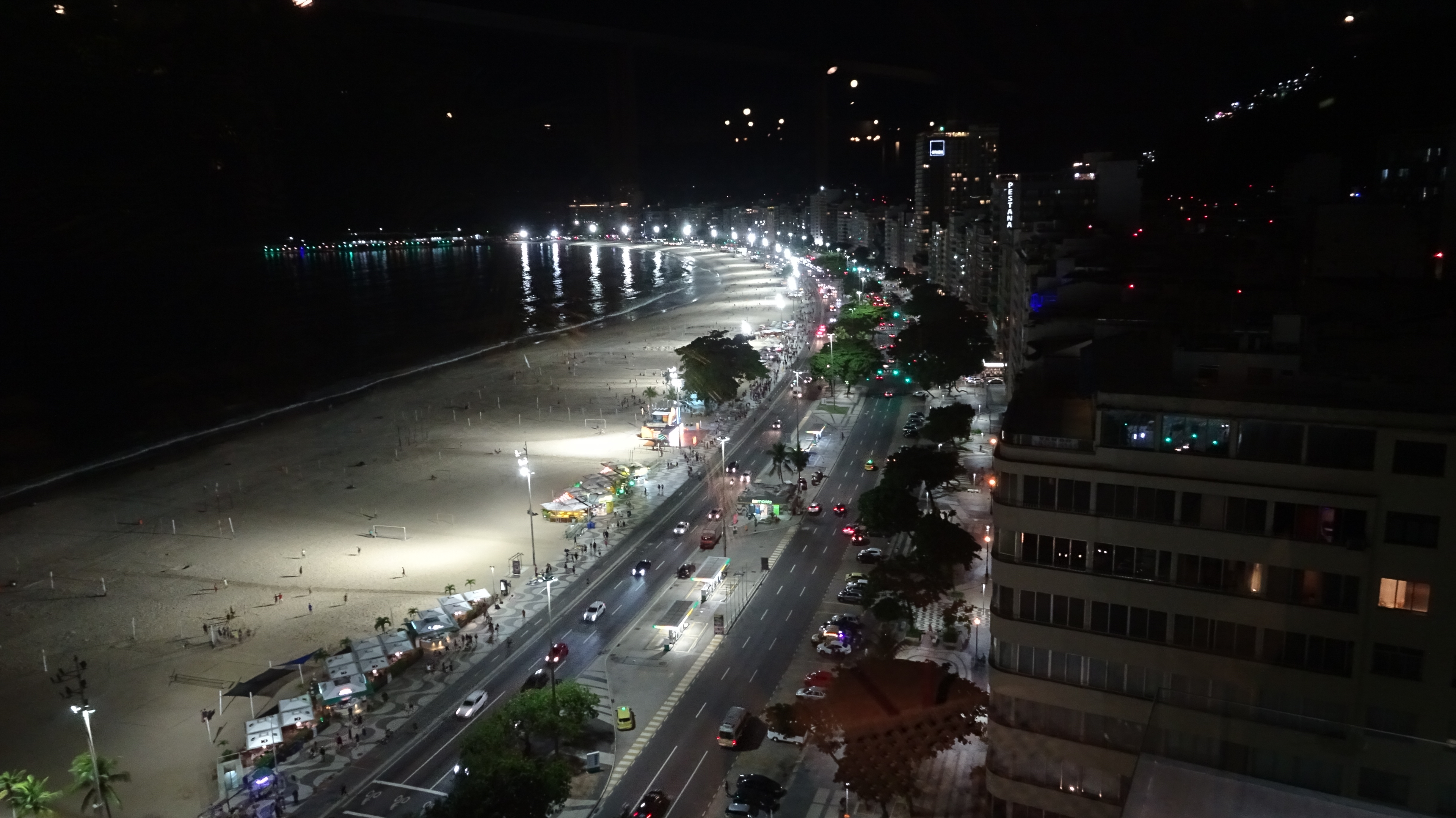
This street in Copacabana runs parallel to the beach, which is the location of our hotel, the JW Marriott Hotel on Copacabana Beach.

Once we got settled, we took this photo from our hotel room. Copacabana at night.
We had three days ahead of us with plans to see Christ the Redeemer and go to the top of Sugarloaf Mountain.


We’ll tell you about that in Part 2 of our Brazil and Amazon River Adventure Series.

Our Resources

AssistAnt: https://assist-ant.com/airport-vip-services/gru-sao-paulo-brazil/

Tours-by-Locals: https://www.toursbylocals.com/

Day Trip (International): https://bit.ly/3X4QkIz
A Private Tour of Newfoundland: The Only Way to Go!

A Private Tour of Newfoundland: The Only Way to Go!

Anyone who reads our travel stories knows we are fans of private touring. We’ve hired private tour guides in France, Turkey, Chile, Costa Rica, Ireland, and the list goes on. Why, then, would we do a Newfoundland tour any differently? Exactly!

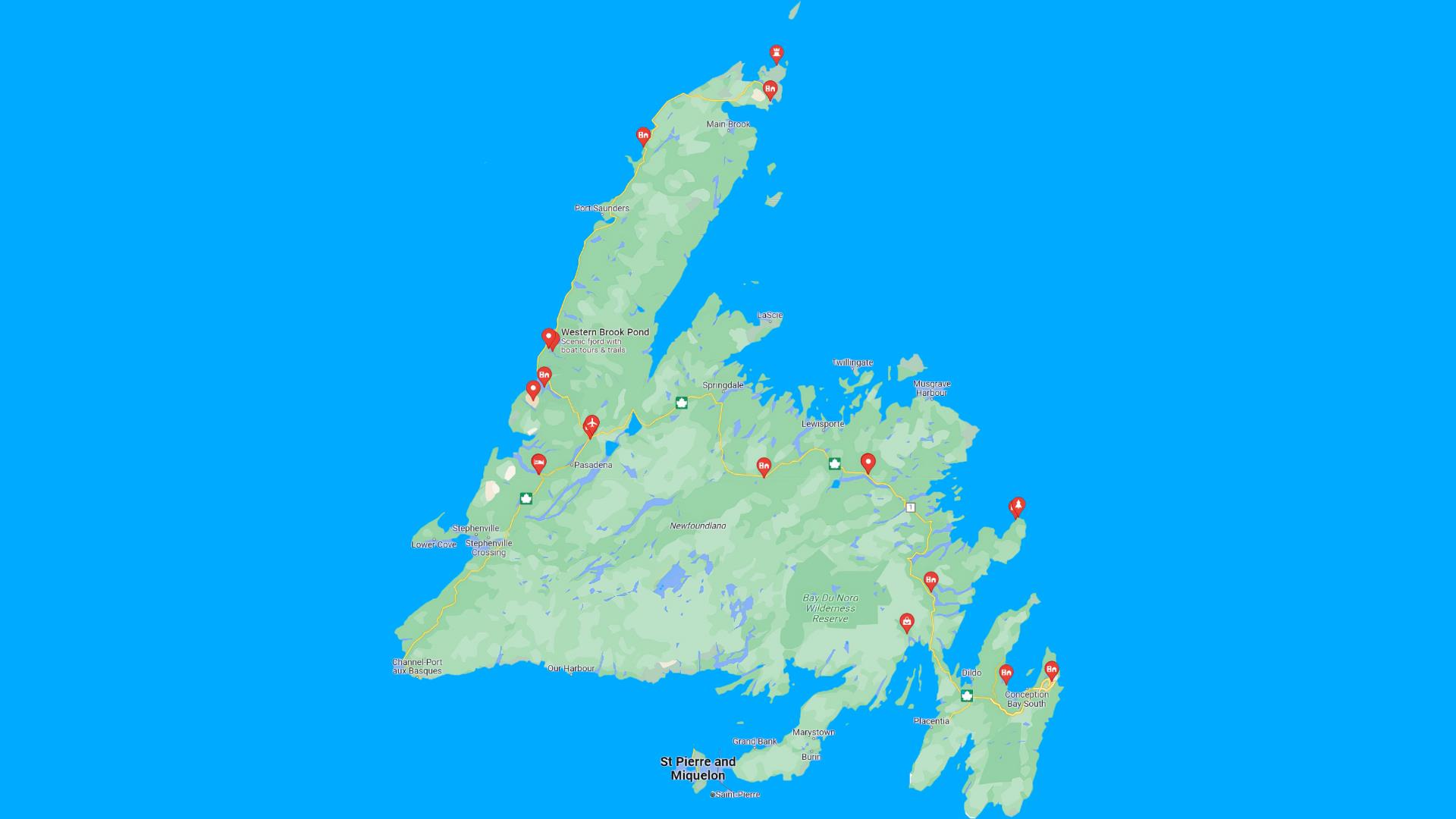
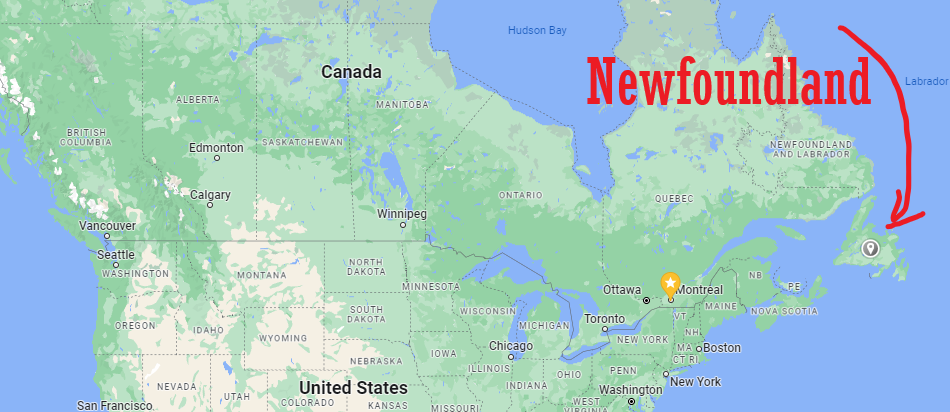
This summer’s travel took us to the island of Newfoundland on Canada’s east coast. As it happens, Art was born in the province’s capital city, St. John’s, and lived there until he was seventeen, but he had never seen the western part of the island. Patty had been only to the Avalon Peninsula, where St. John’s is located. But we knew there was so much more to see. So, we embarked on some research to figure out who might be doing private touring in the area.

Of course, several companies in Newfoundland do group tours—the dreaded bus tour. That’s okay for someone who likes to travel in groups, but it is not our thing. We finally discovered that McCarthy’s Party, one of the largest tour companies in Newfoundland, would consider developing a customized itinerary, arranging accommodation along the way, transportation and a private guide.

So, after a bit of back and forth on the itinerary, we booked our tour and were off.

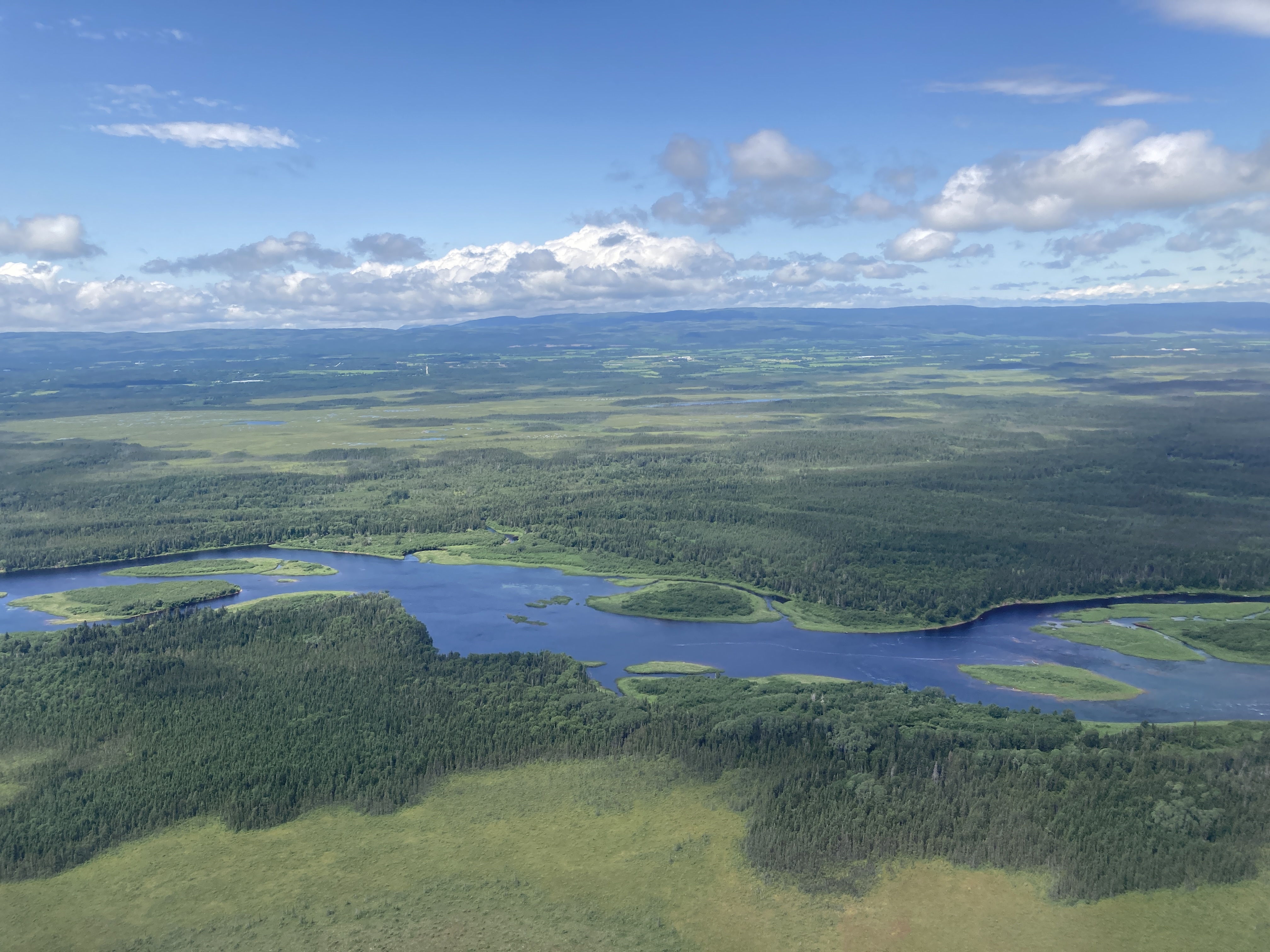
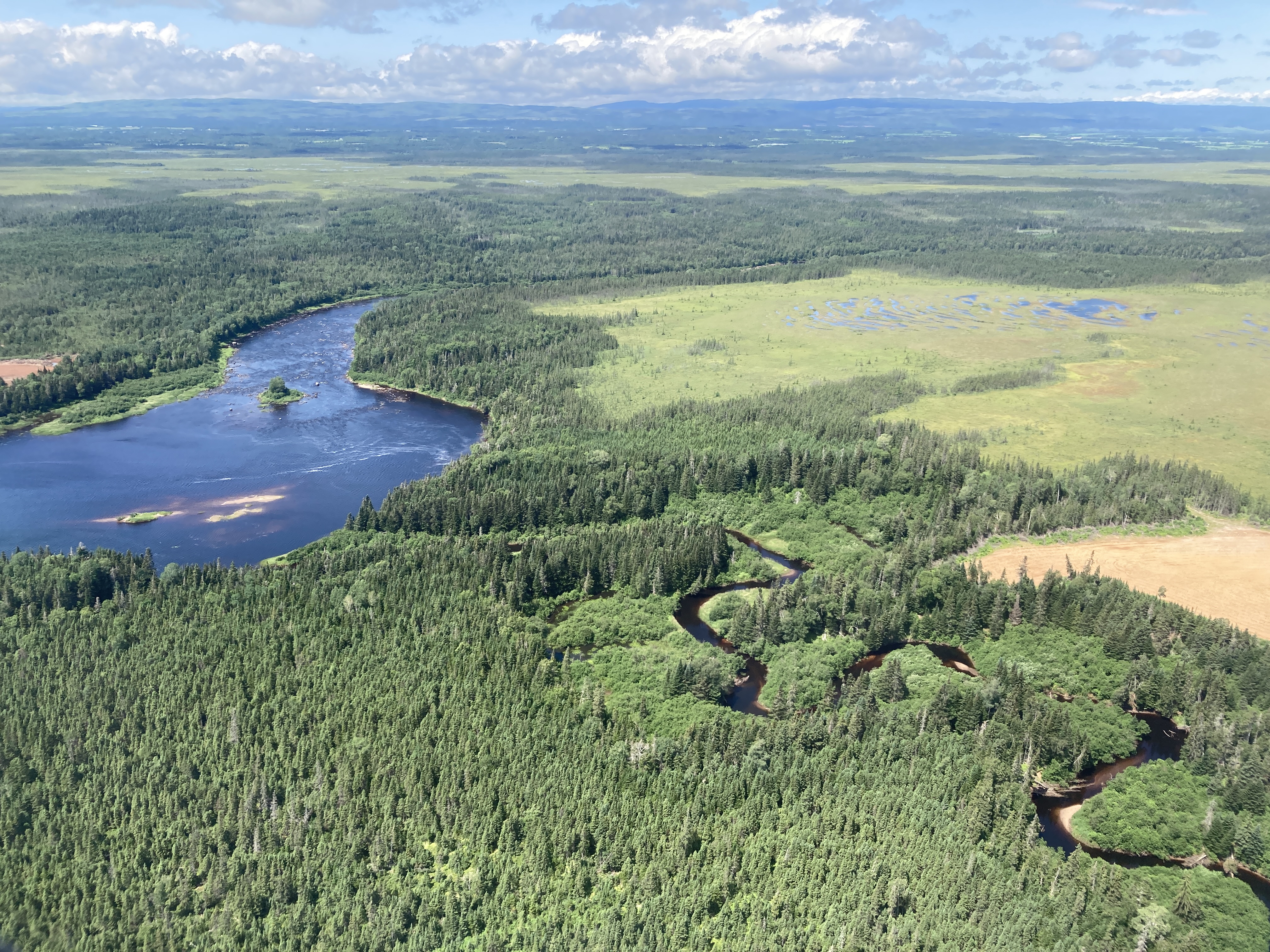
We flew from Toronto to Deer Lake in western Newfoundland, where our guide, Carl, met us at the baggage area. See the terrain as our plane descends into Deer Lake.

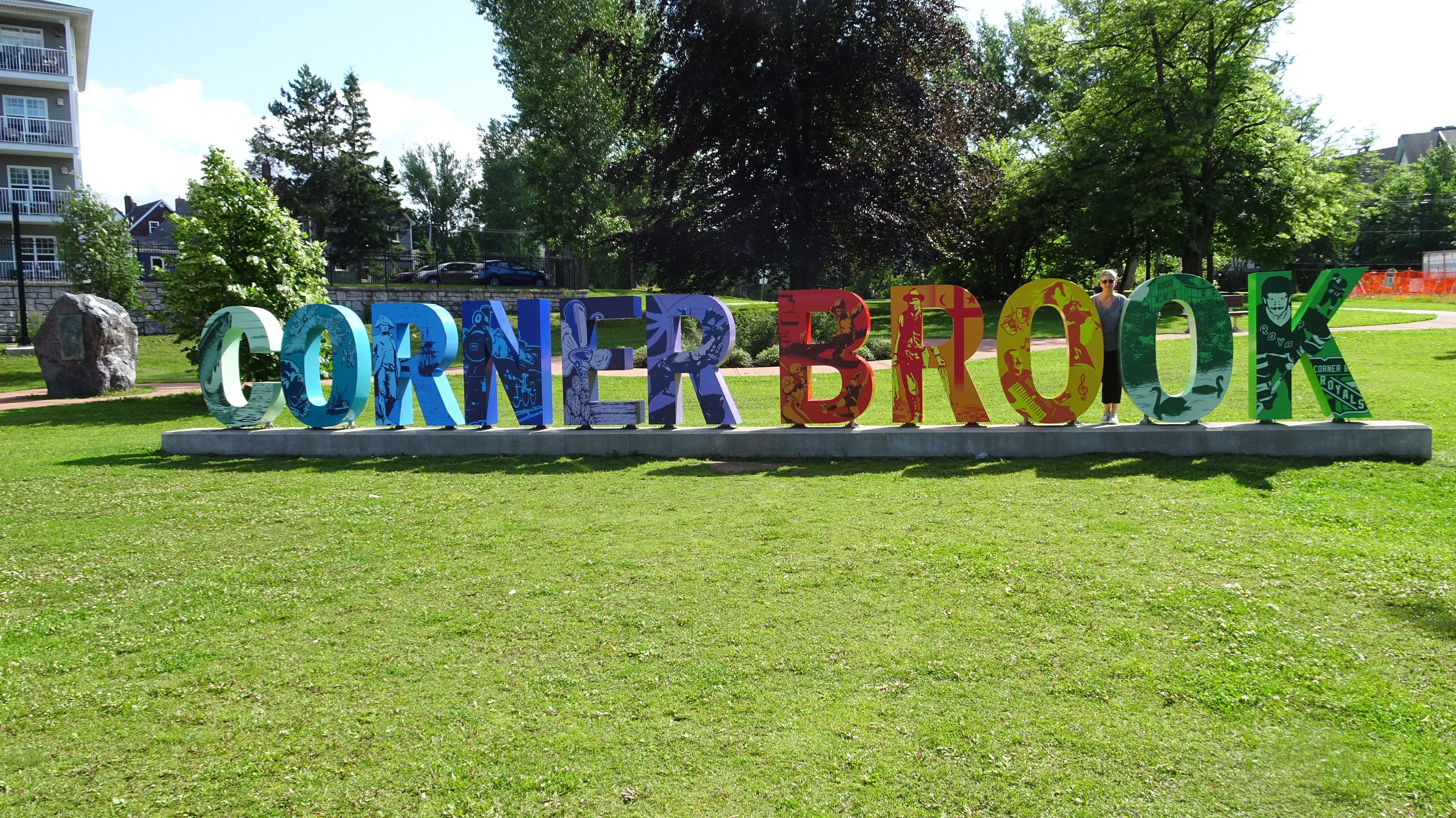
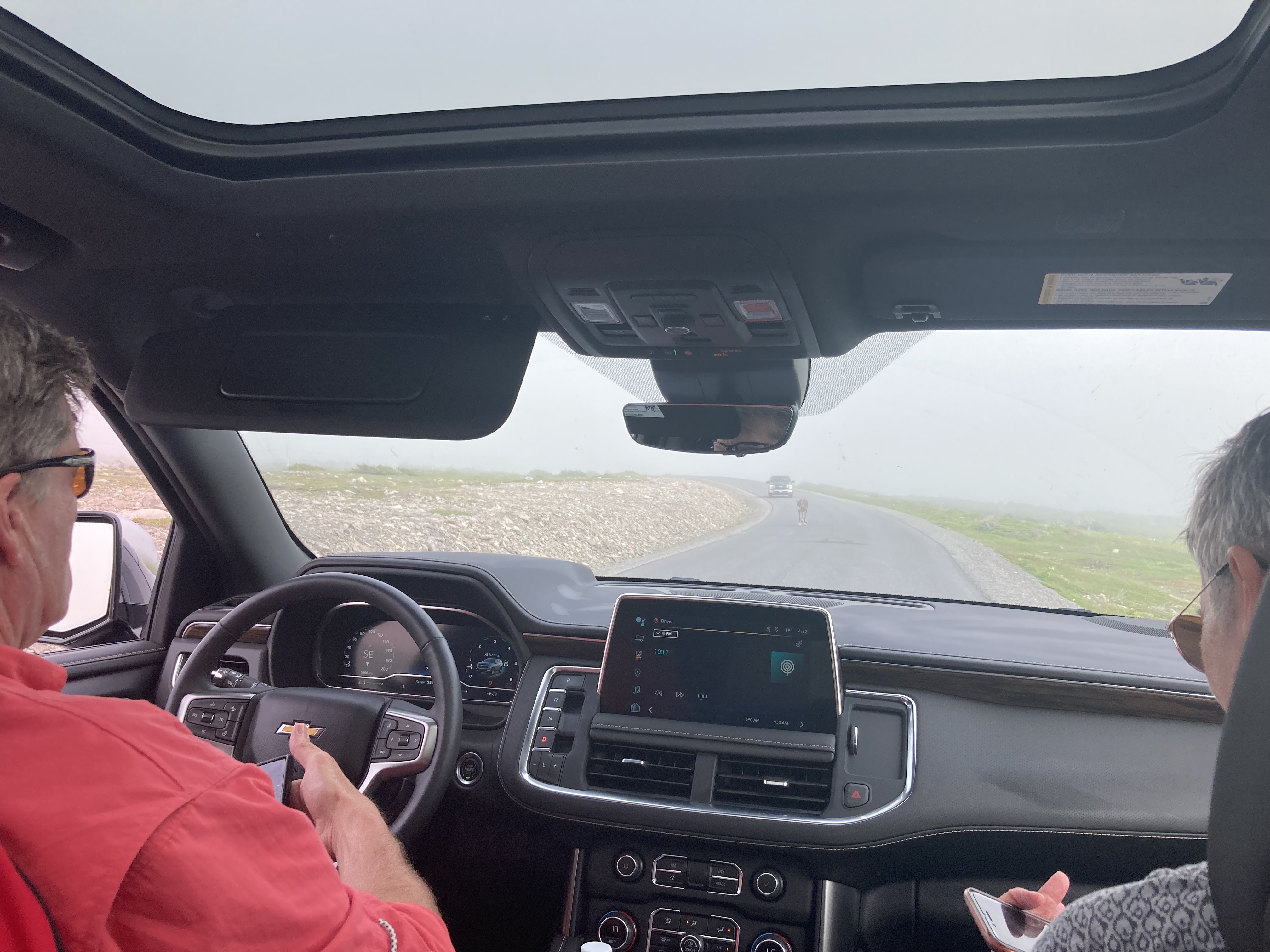
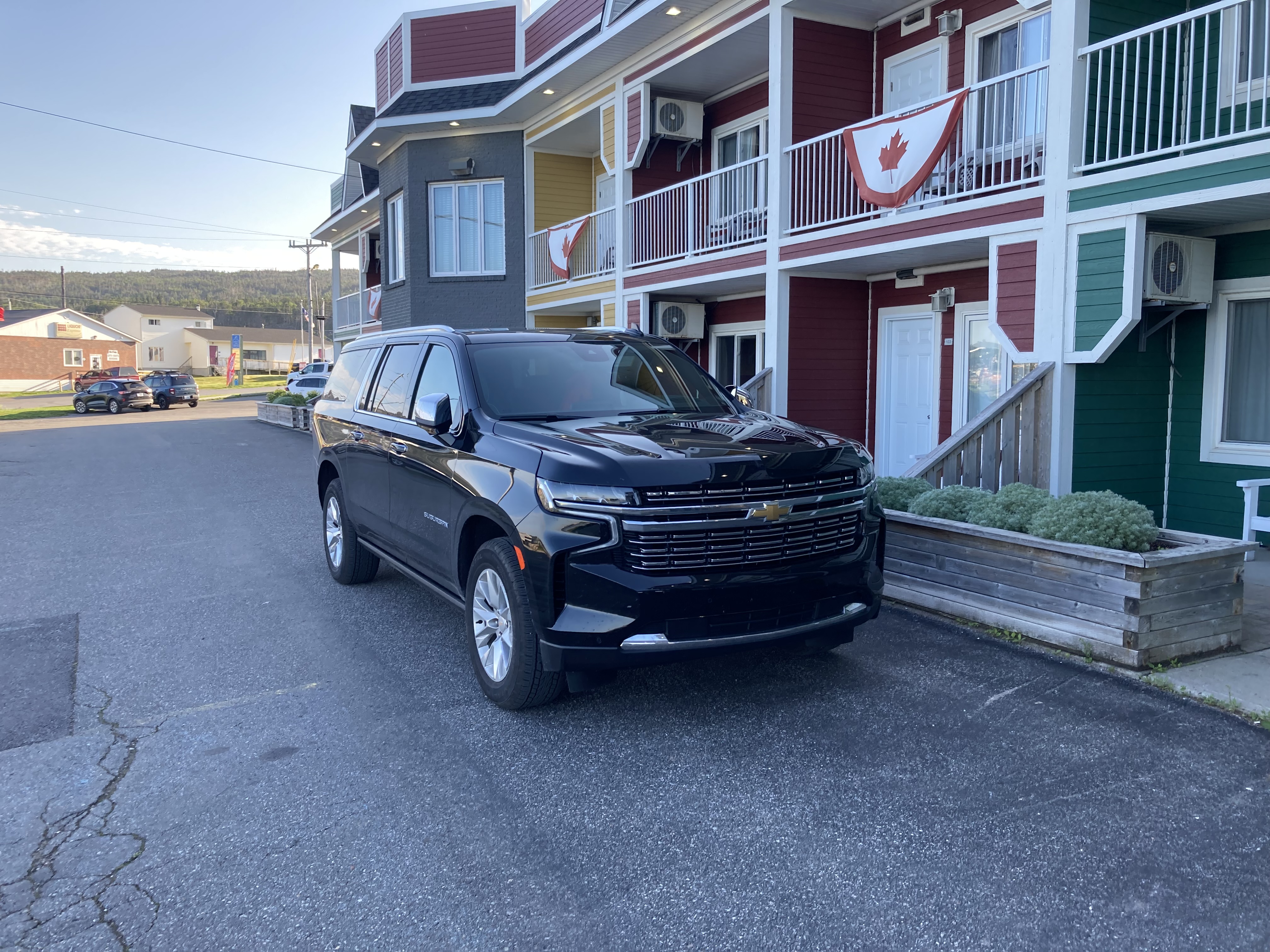
Then, we boarded our private “truck” (a black 2023 Chevrolet Suburban Premier) and were off to Cornerbrook, where we began our immersion into the Newfoundland culture and terrain.

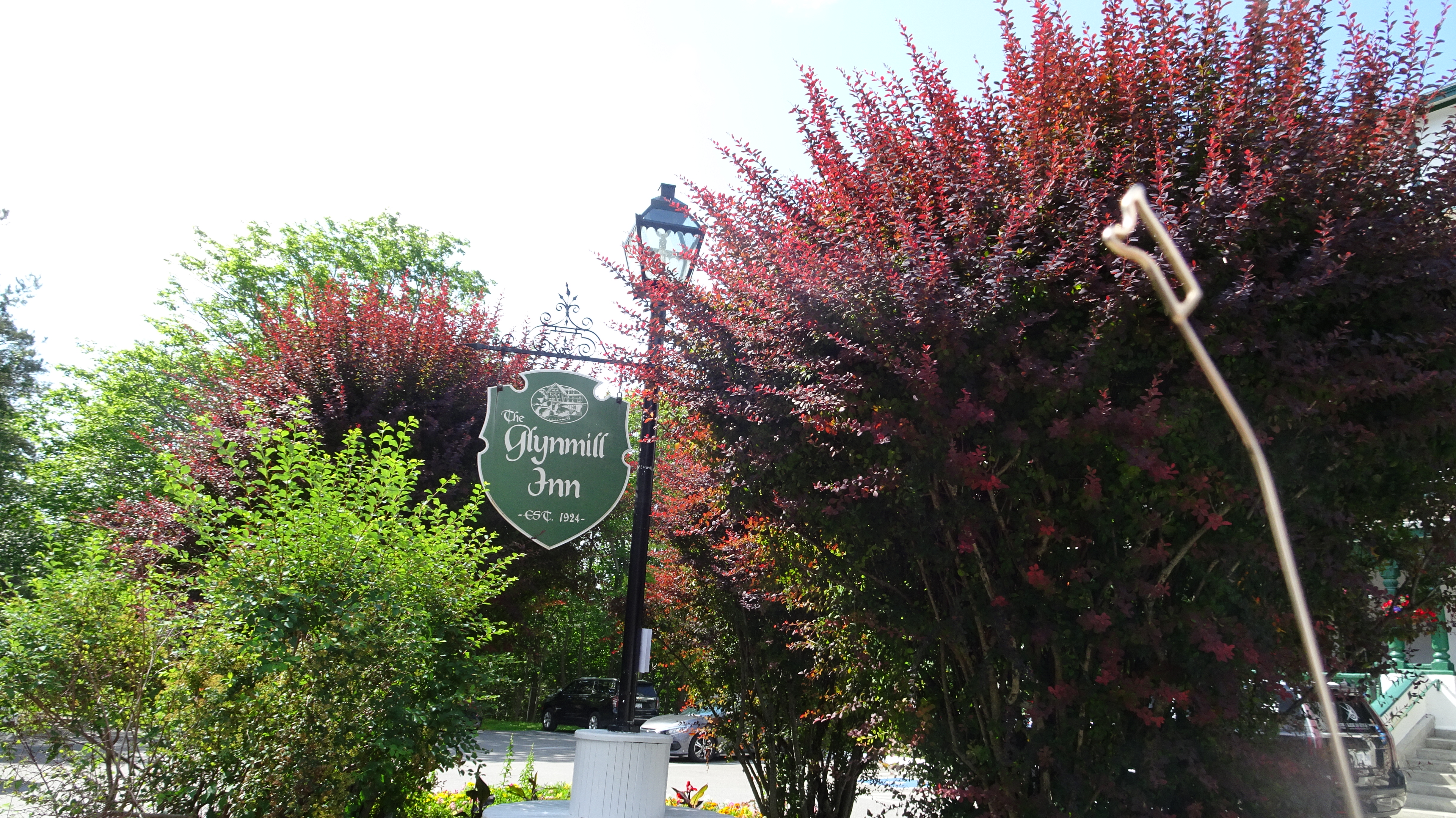
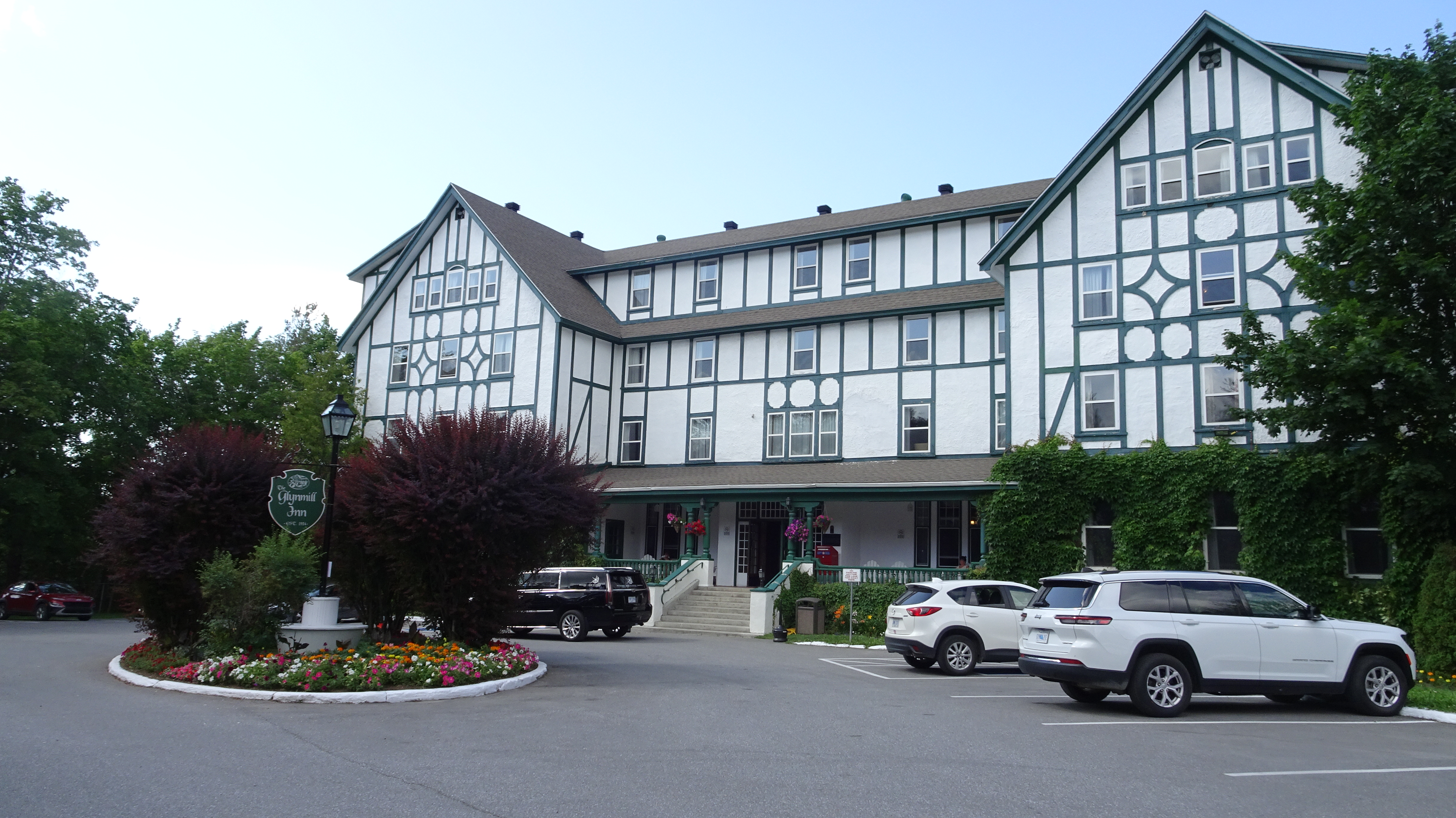
We knew that five-star accommodation wasn’t in the cards in that part of the world, but the hotels, motels and inns where McCarthy’s put us were the best in the area, and we knew what to expect. That first night, we stayed at the one-hundred-year-old Glynmill Inn.

We were off along the Viking Trail to Gros Morne National Park the next day.

It was a spectacular day for a three-kilometre hike into Western Brook Pond, a landlocked fjord where we spent a few hours on the water admiring the breathtaking scenery. (We wrote about that day in a previous post.)

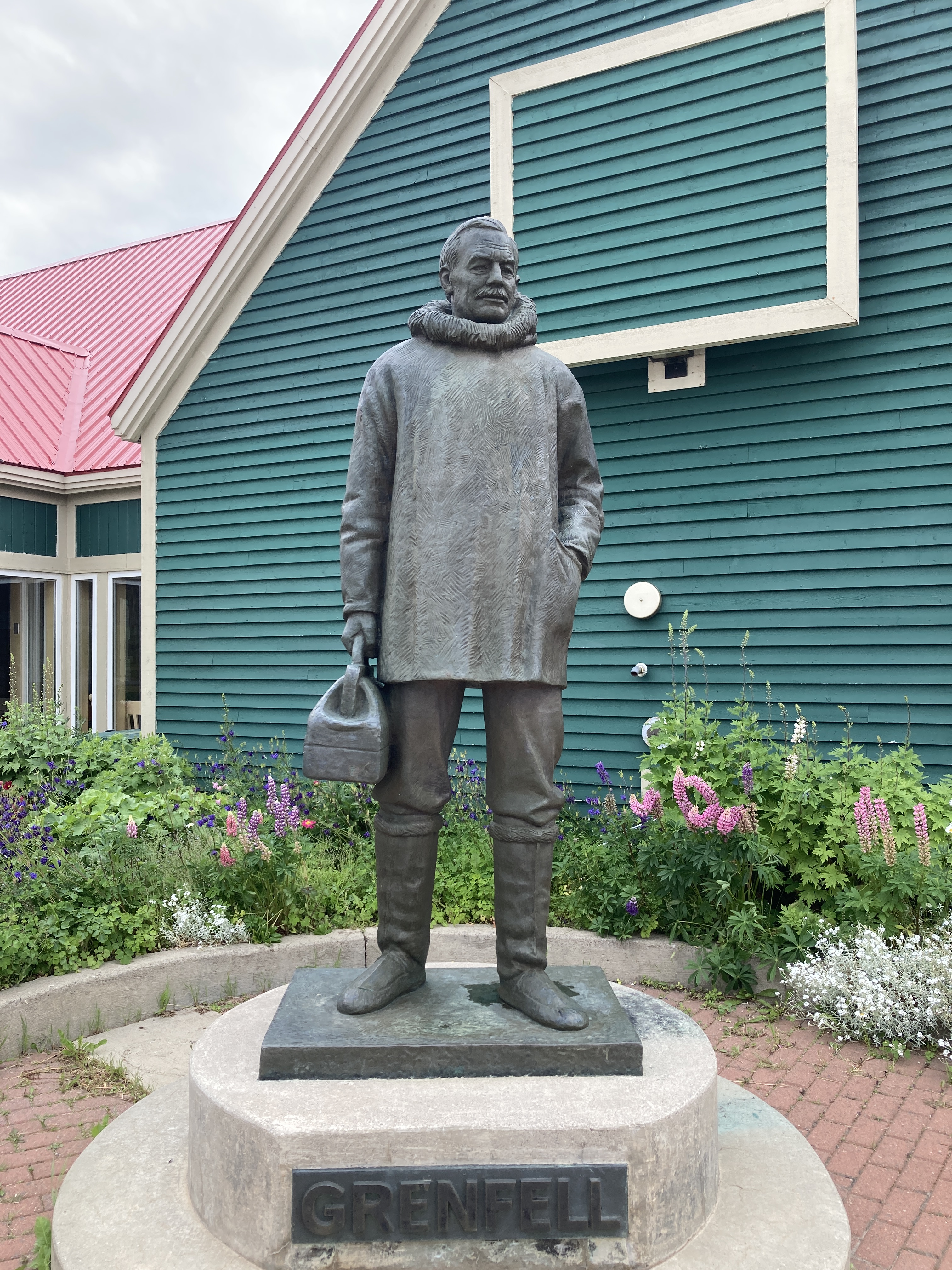
We spent overnight in the tiny village of Plum Point at the Plum Point Motel (two nights there)…and the next day, we travelled farther north to the Viking settlement at L’Anse aux Meadows with a stop in St. Anthony to visit the world-renowned Grenfell mission. (See our private transportation below.)

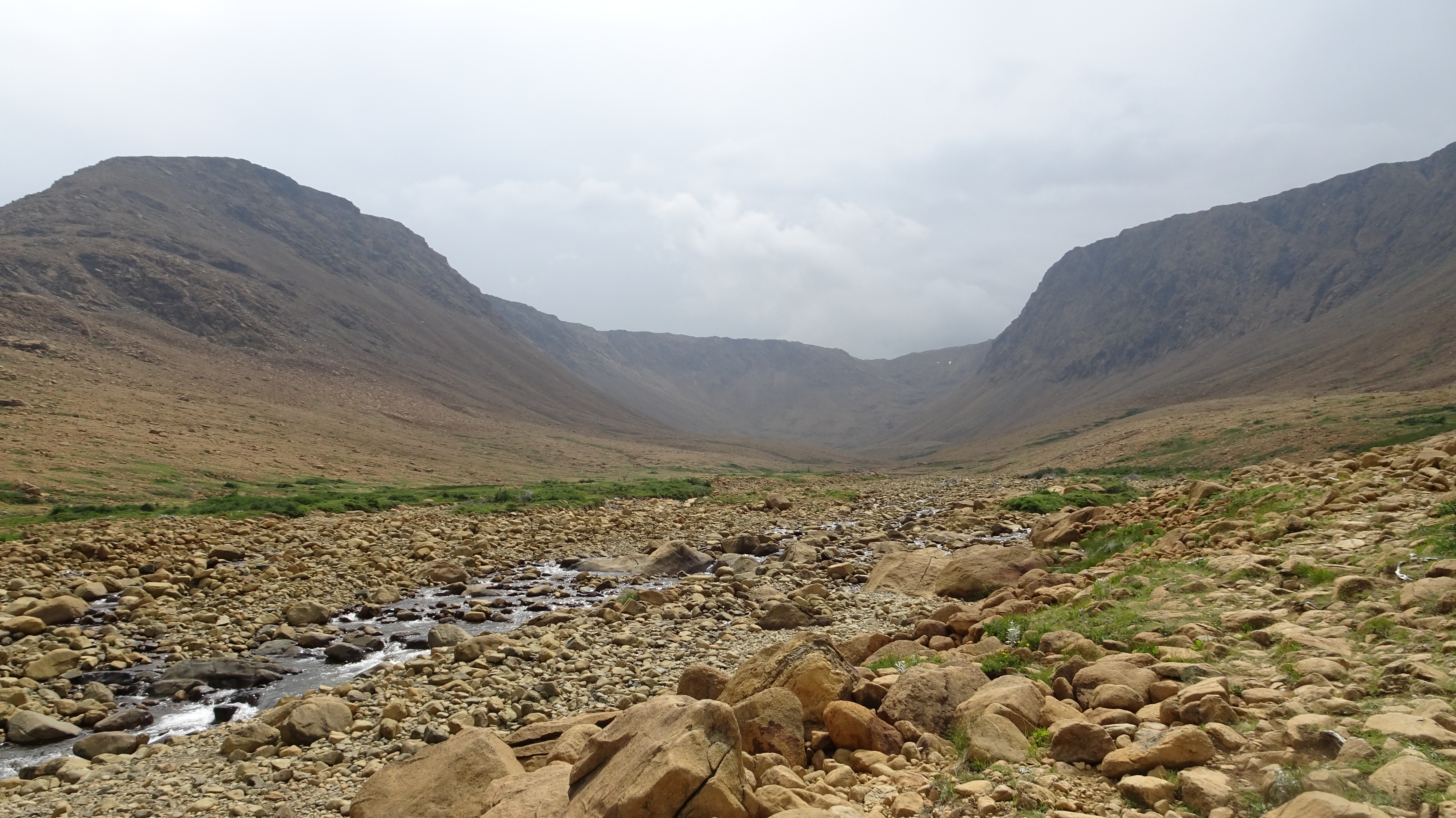
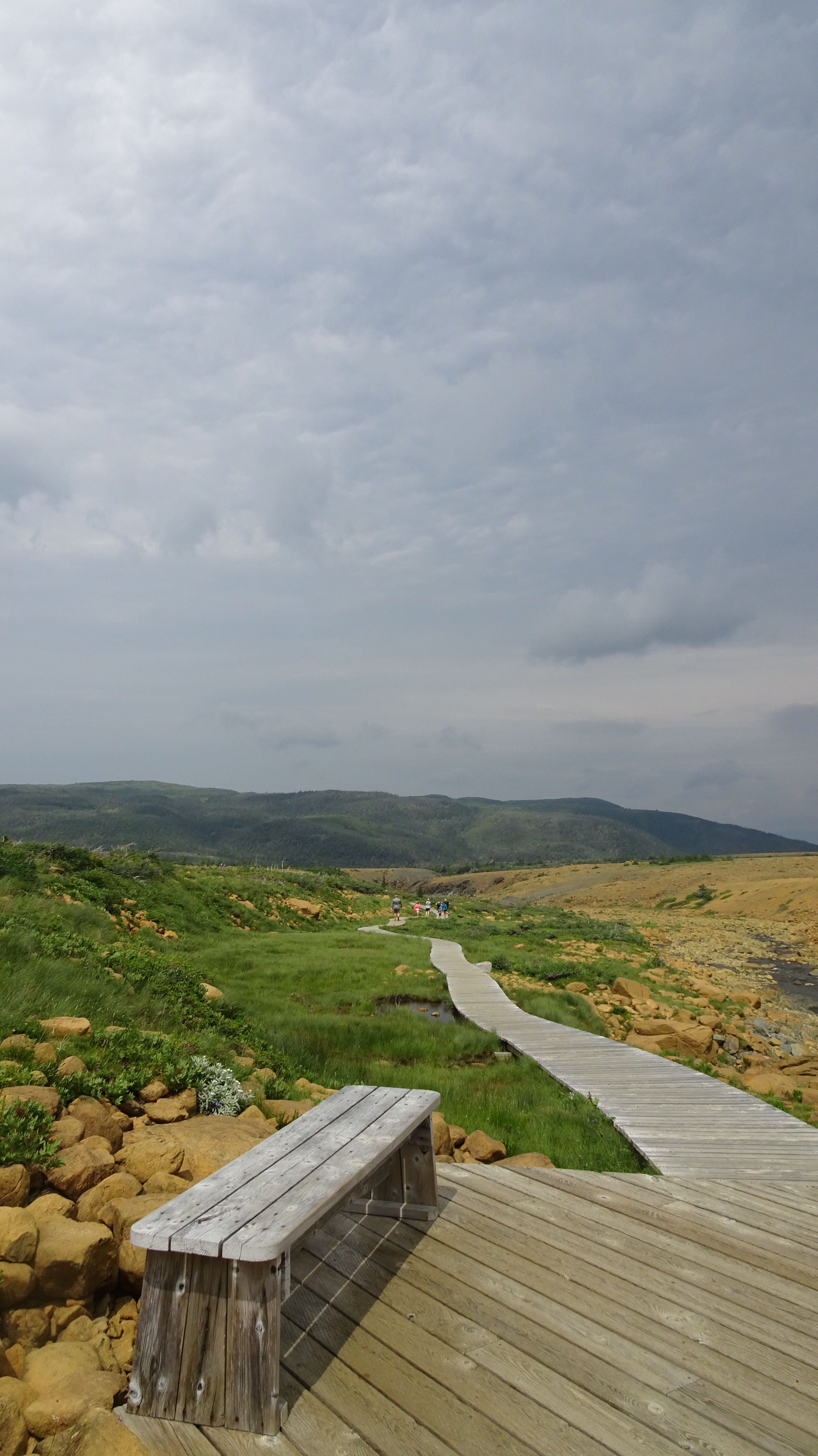
We spent the next day back in Gros Morne, exploring Bonne Bay and hiked the Tablelands.

After overnight in Rocky Harbour, we were off to the centre of the island to Gander. You might recall Gander as the centrepiece of the Broadway musical “Come From Away” because this is where so many of the 9-11 airliners had to take shelter for a week after the World Trade Center disaster in 2001.

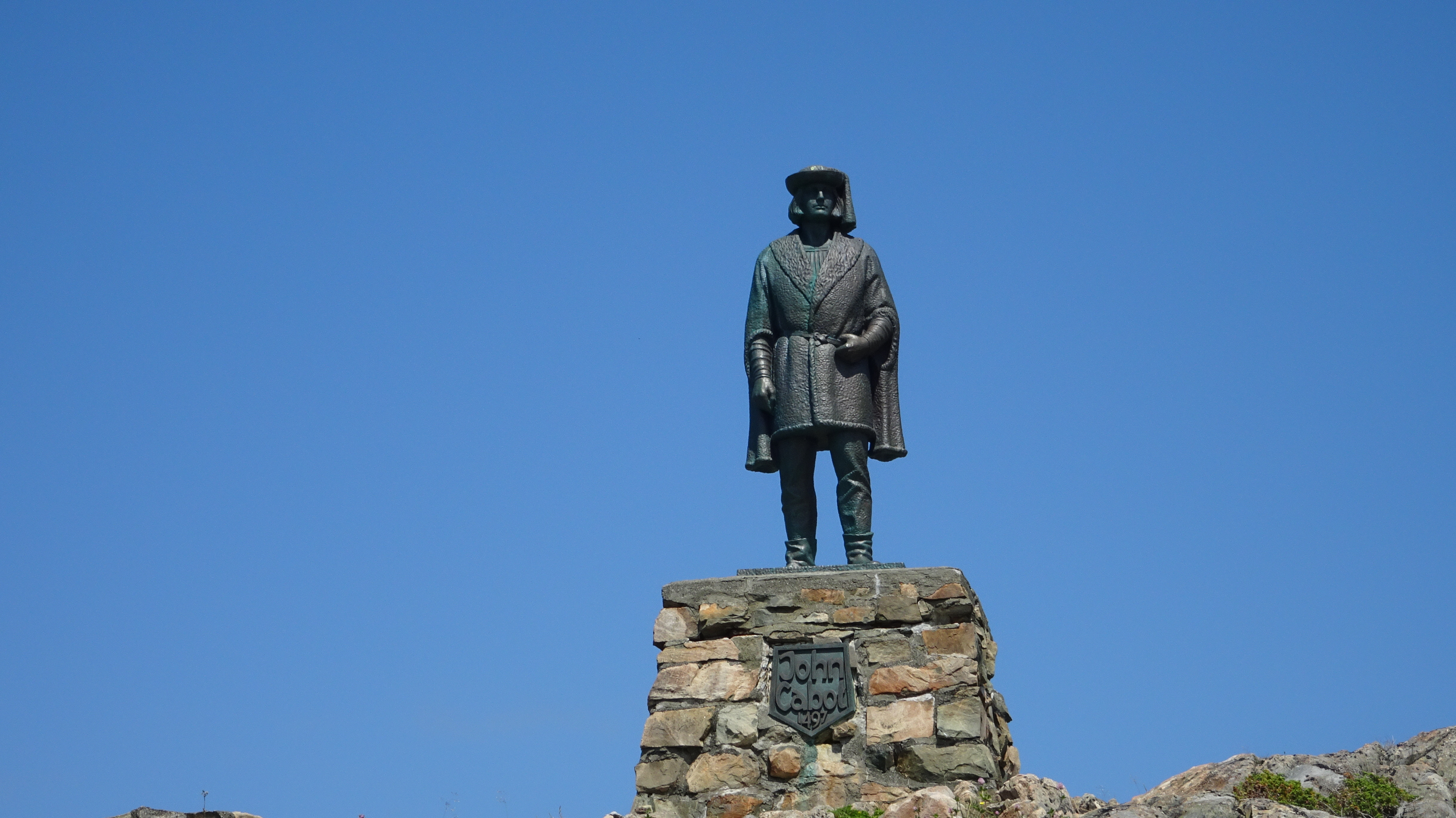
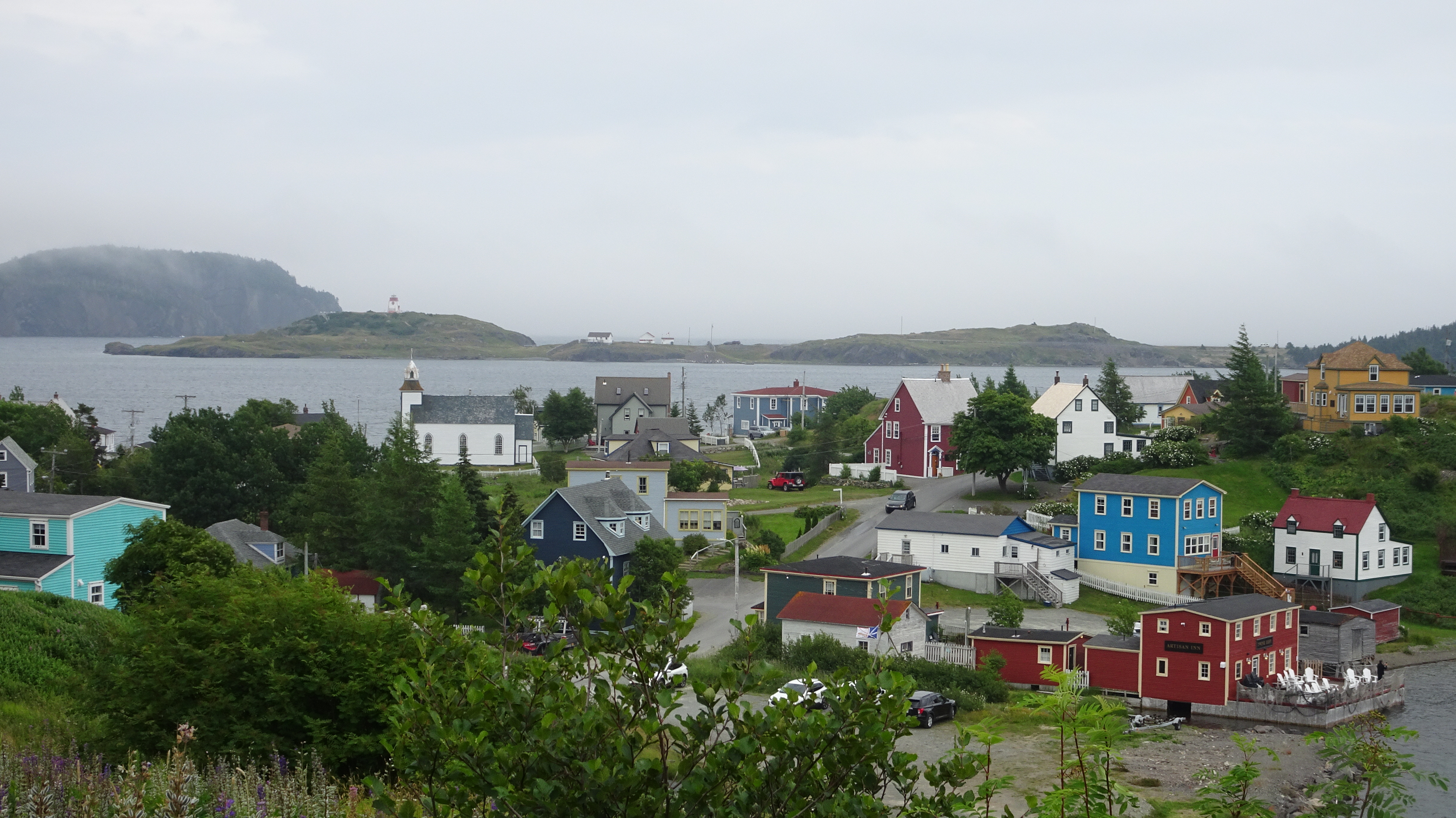
Our next day took us to the stunning Bonavista peninsula, where we visited the spot where John Cabot allegedly landed in 1497 and the charming village of Trinity.

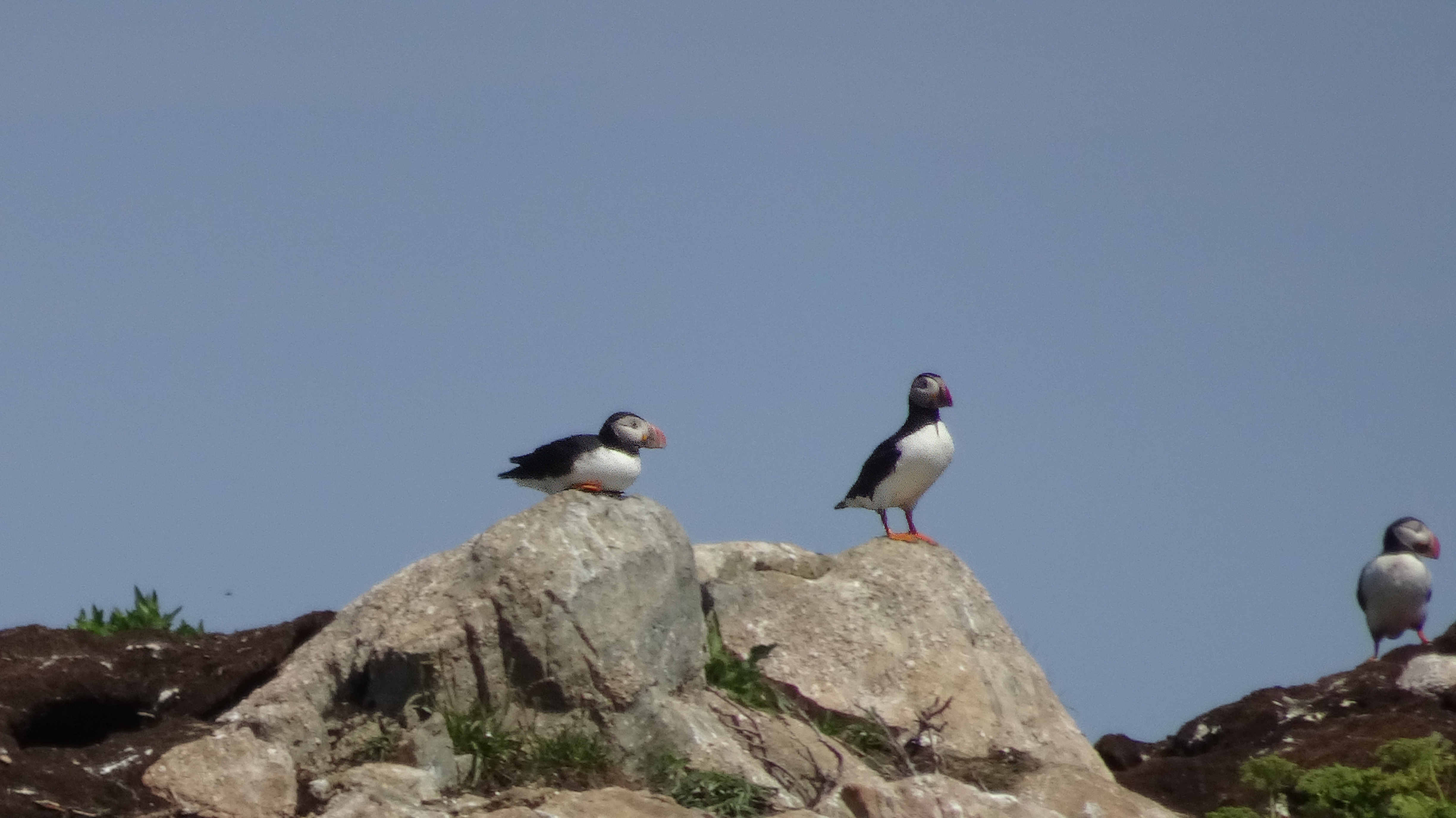
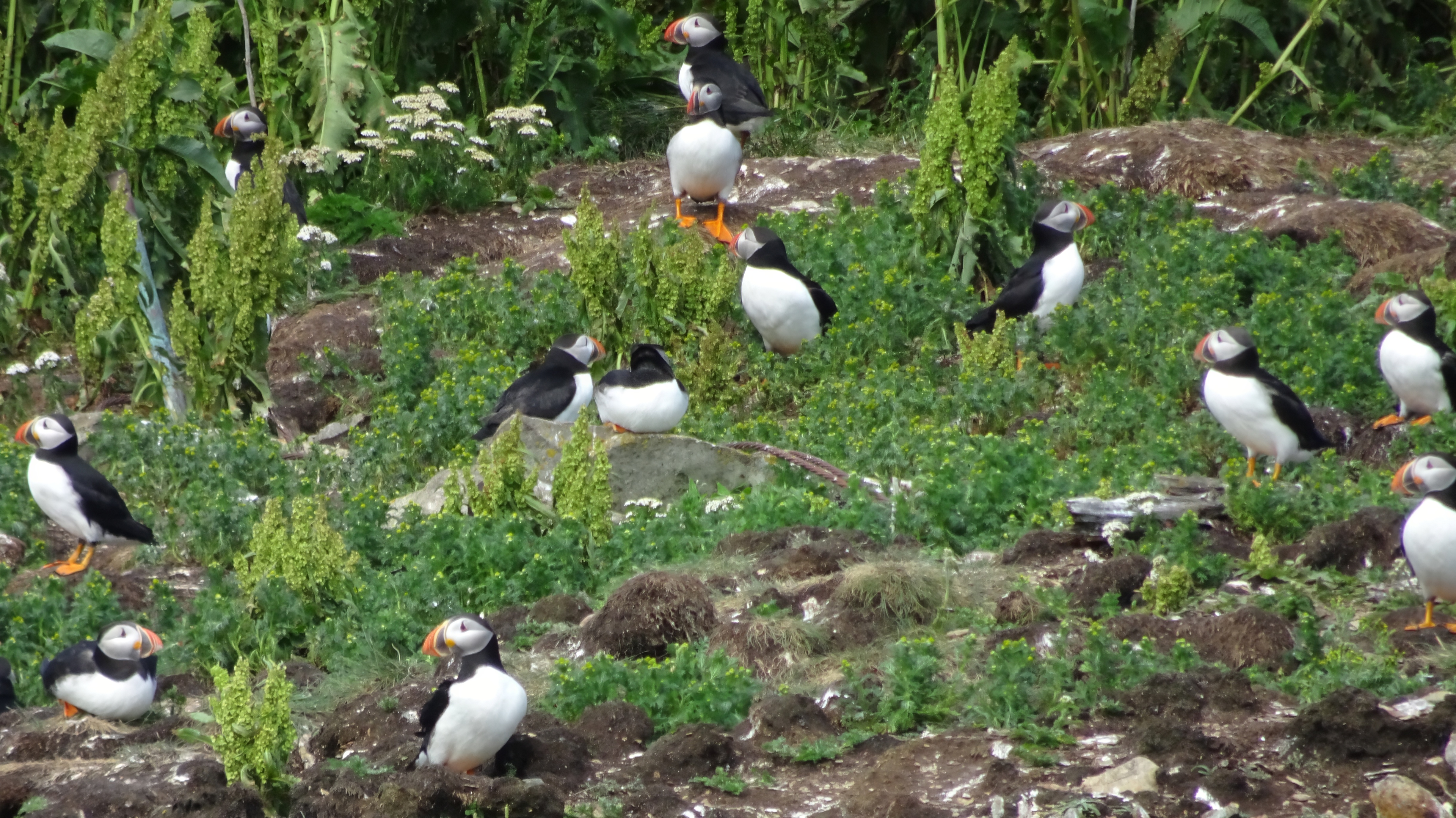
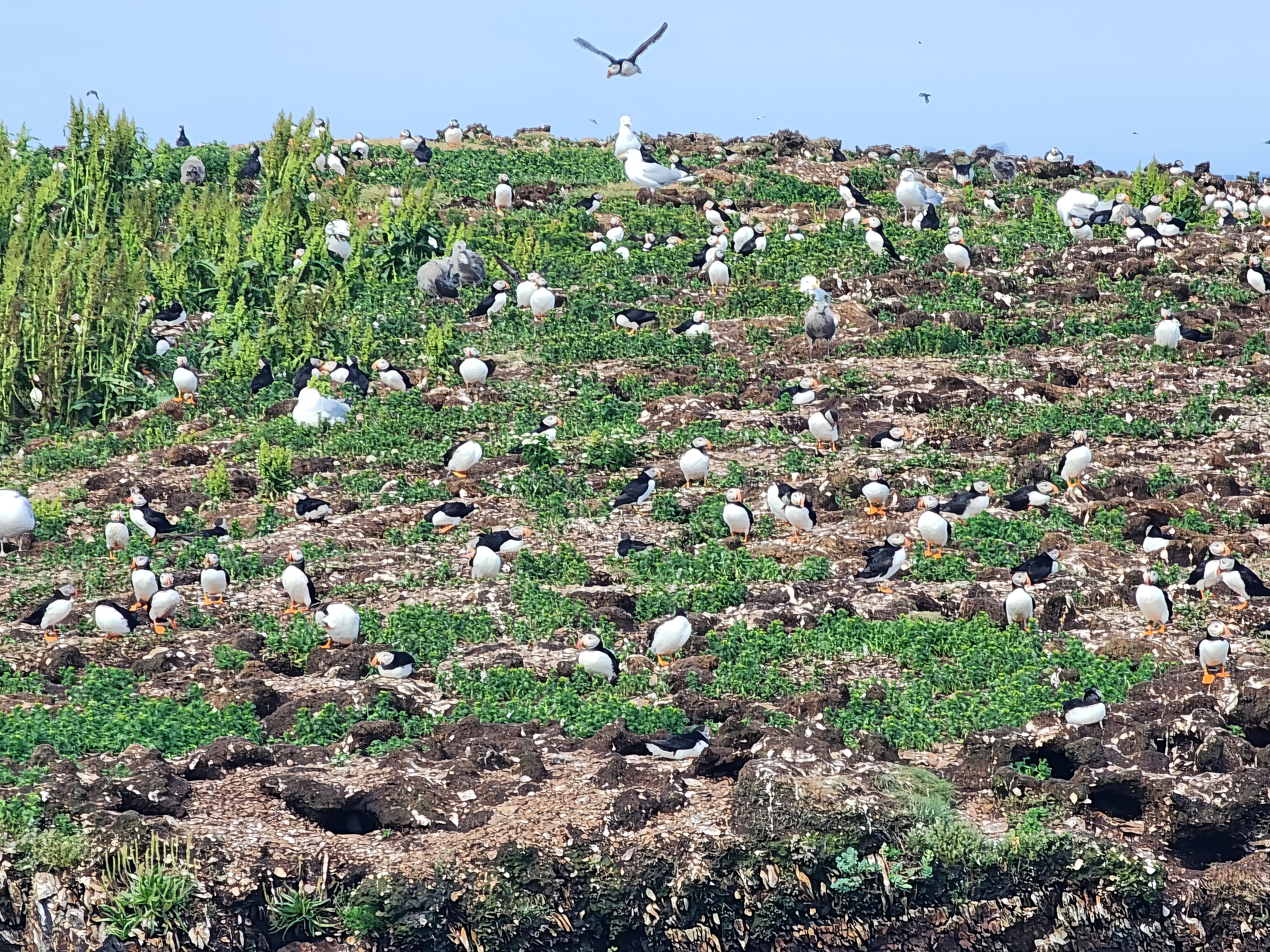
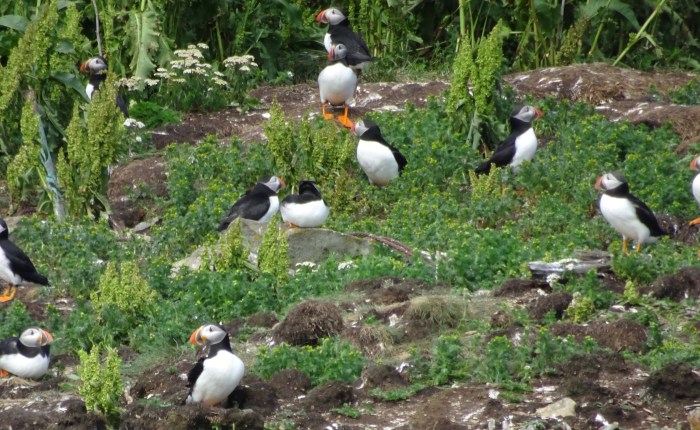
Then there were the puffins. What can we say? Against the spectacular backdrop of dramatic cliffs and pounding ocean waves, we hiked to several spots to observe the magical puffins. These Atlantic seabirds are indigenous to this part of the world, breed in large colonies on these coastal cliffs and are so distinctive with their brightly coloured beaks.

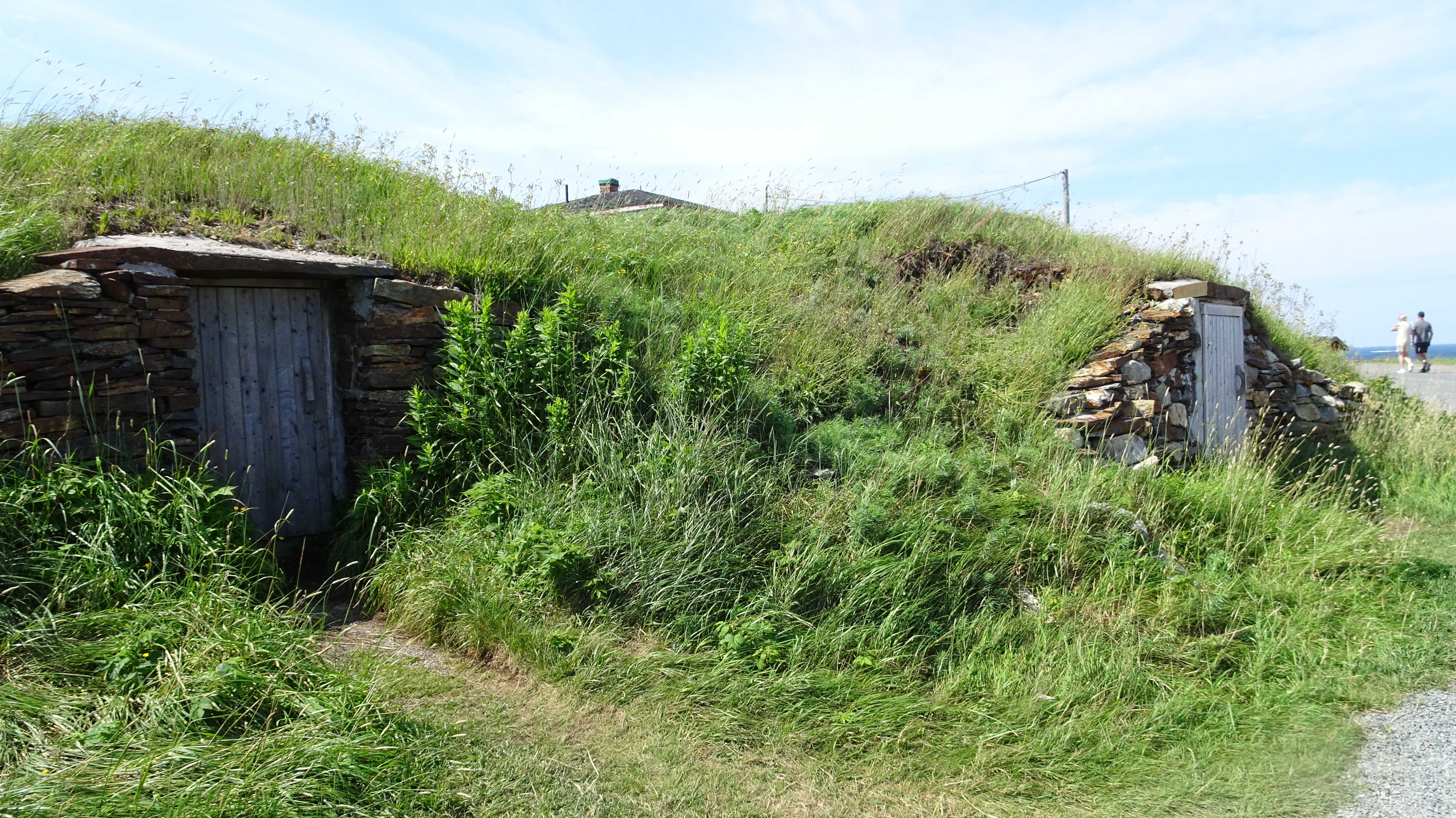
One of the most interesting places where we parked and hiked to see these birds was a village called Elliston, which bills itself as the “root cellar capital of the world.’ And they have good reason to do so! The root cellars, along with the magnificent scenery, make the place so worth the visit.

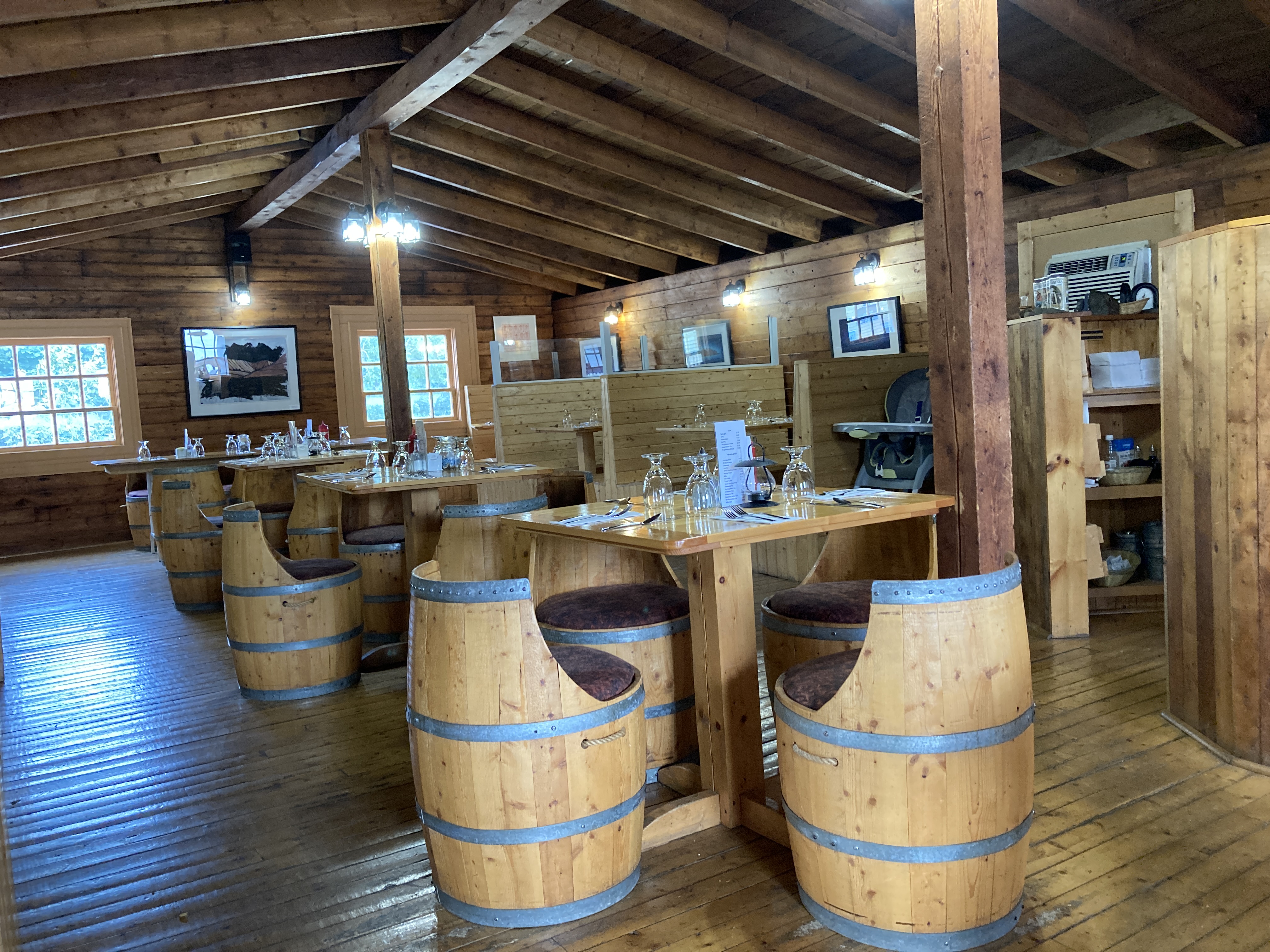
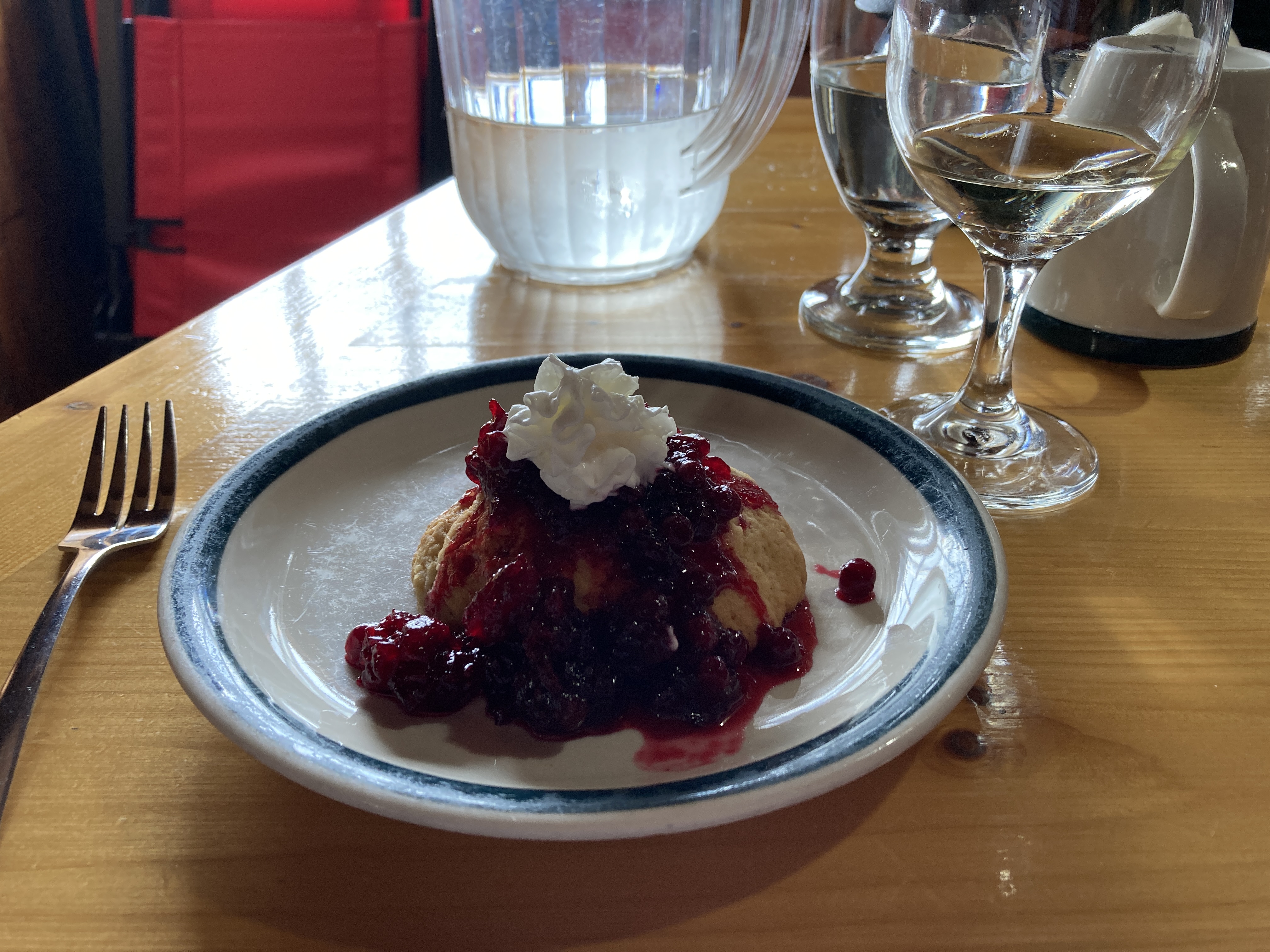
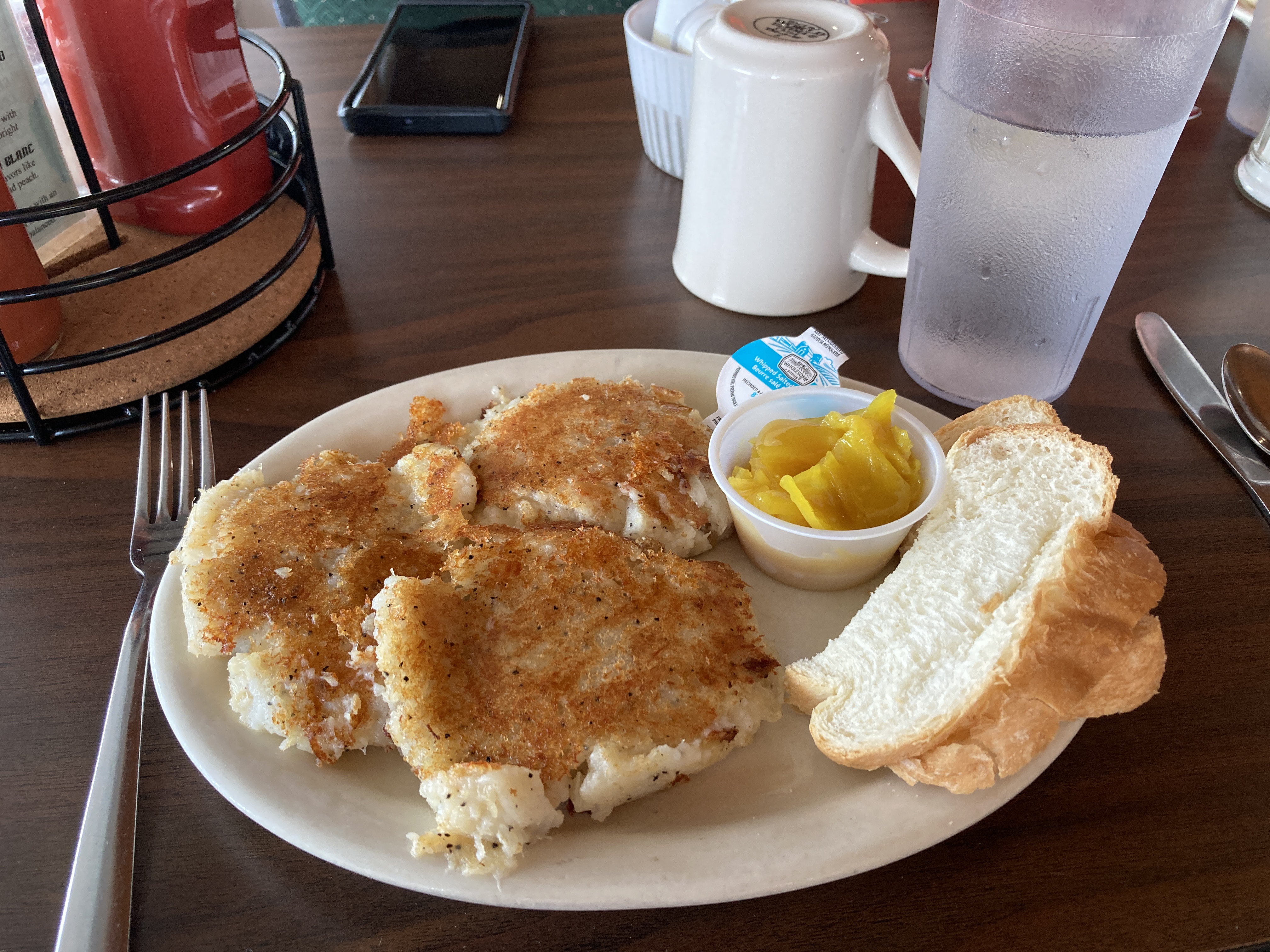
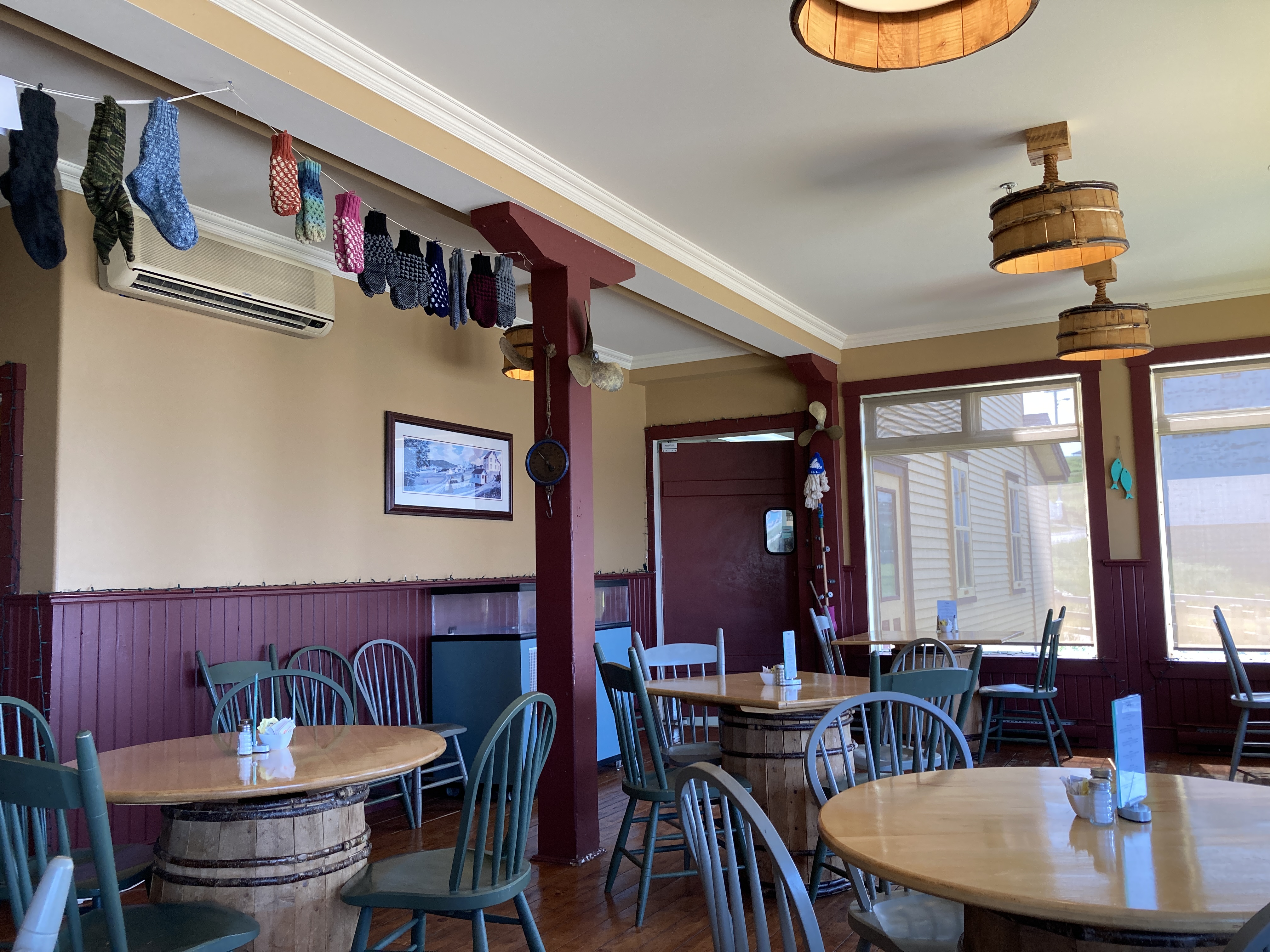
All along the way, Carl, our guide, led us to fabulous little spots, including tiny restaurants where we sampled staples of Newfoundland cuisine every day at lunch—fish cakes, homemade breads, partridgeberry cake, cod au gratin. We could never have found these by ourselves, which is one of the reasons we love private touring with a guide.

It rained during the final day of our trip. So, Carl arranged appropriate activities. First, we had a private tour of Vernon’s Antique Car Museum (read more about that here), then a tasting and lunch at the Newfoundland Brewing Company.

We finally ended in St. John’s, where we did our own tour of special places in the city. (More about this city visit in the next post.)

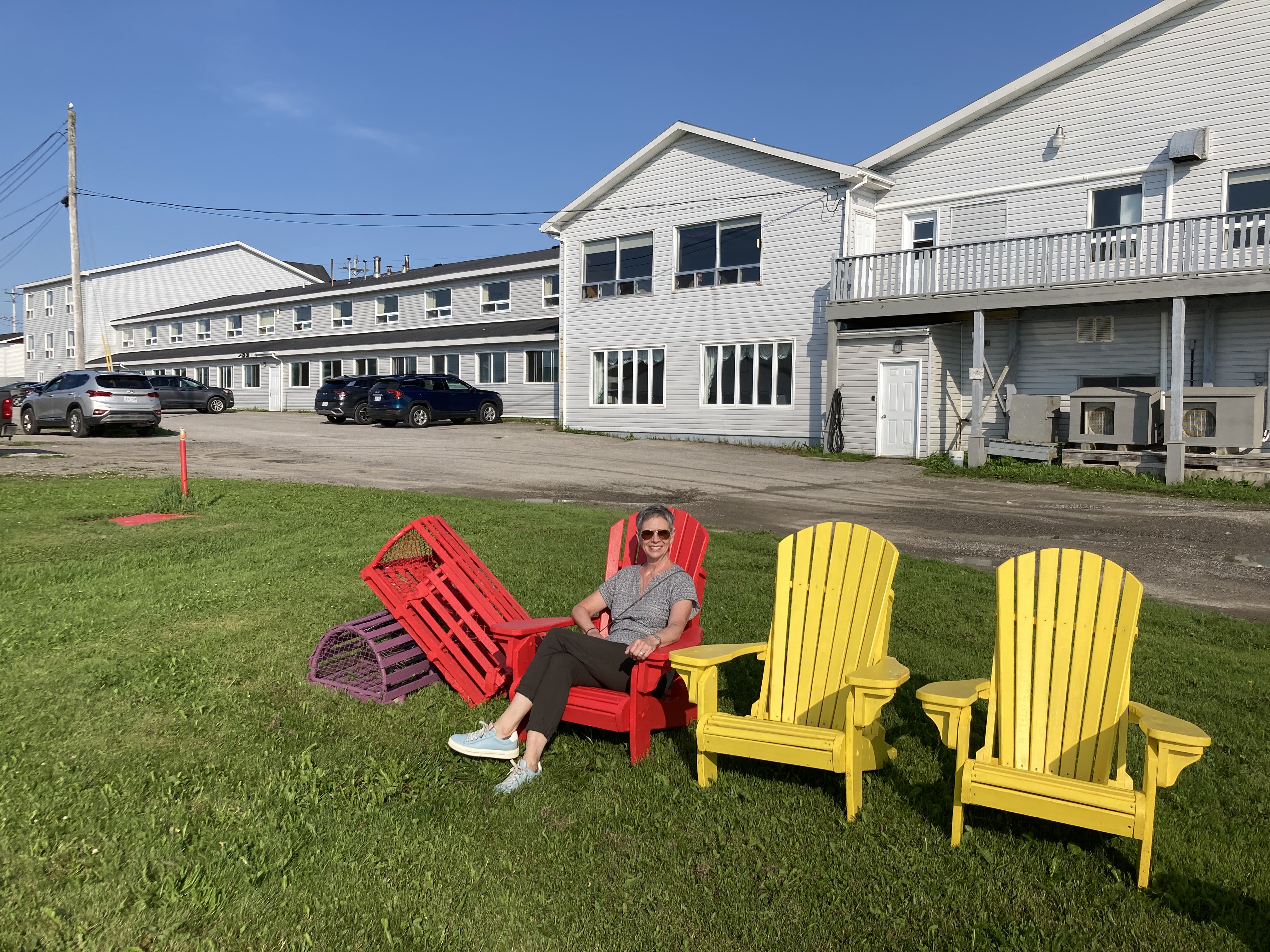
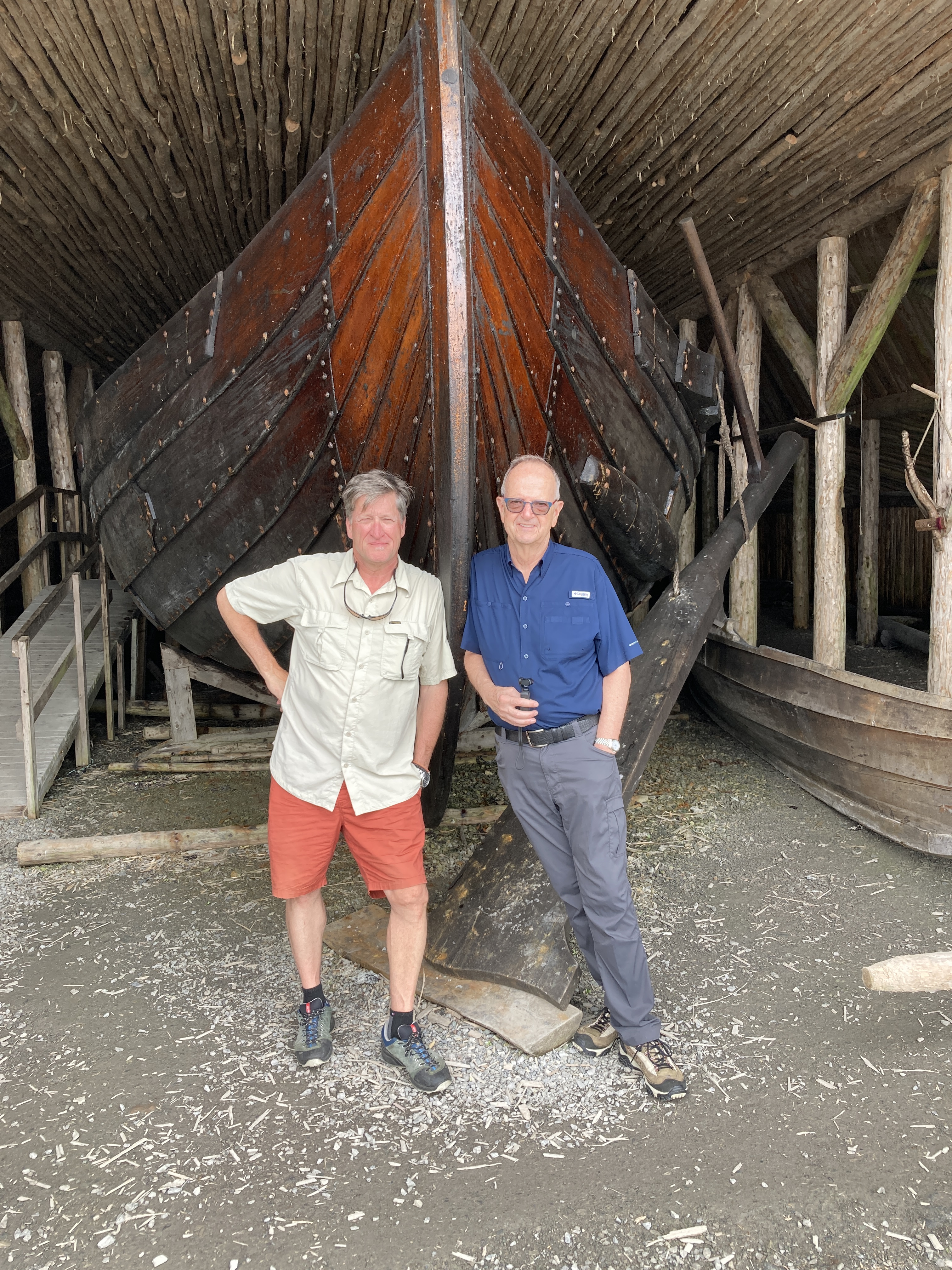
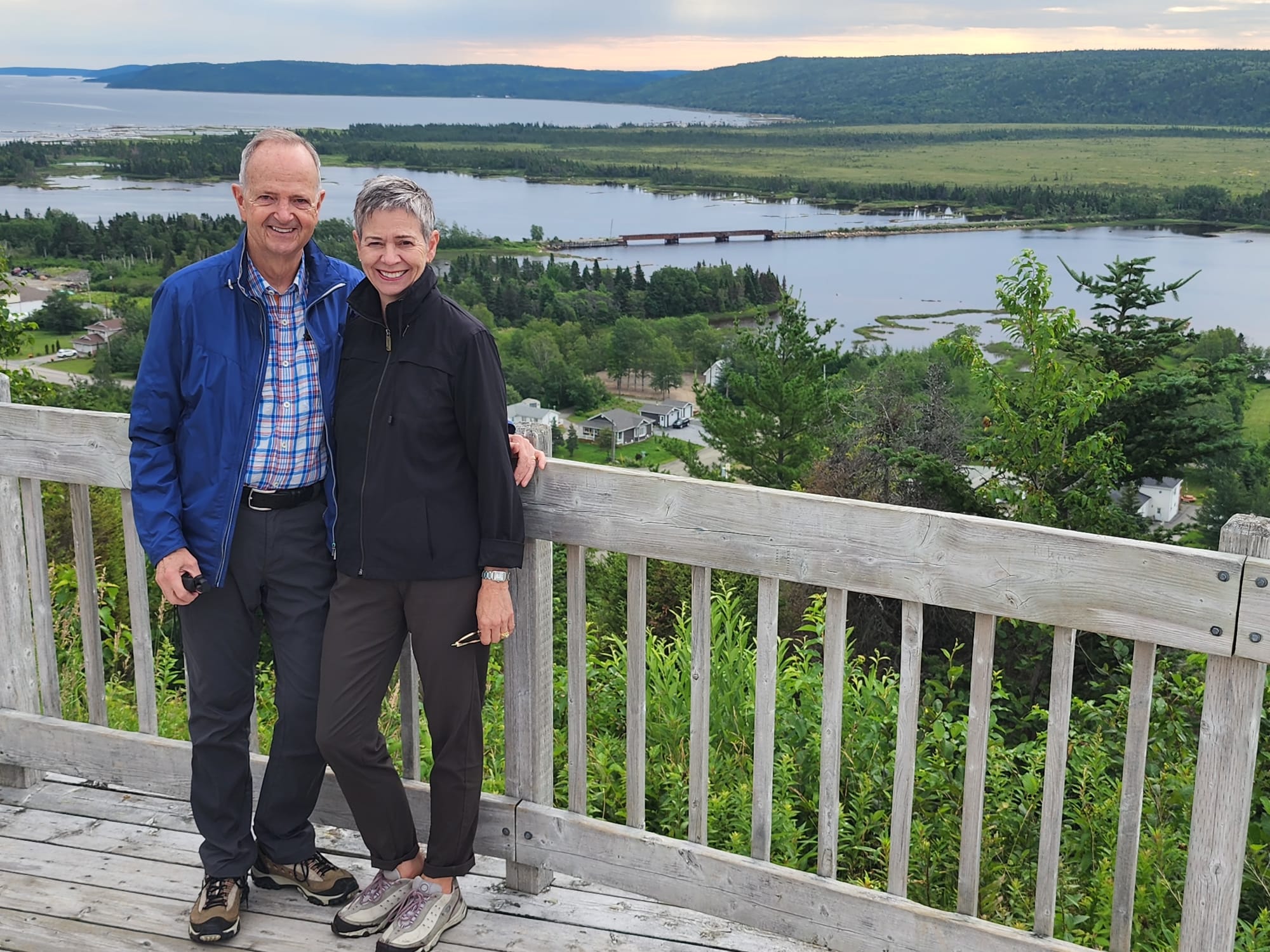
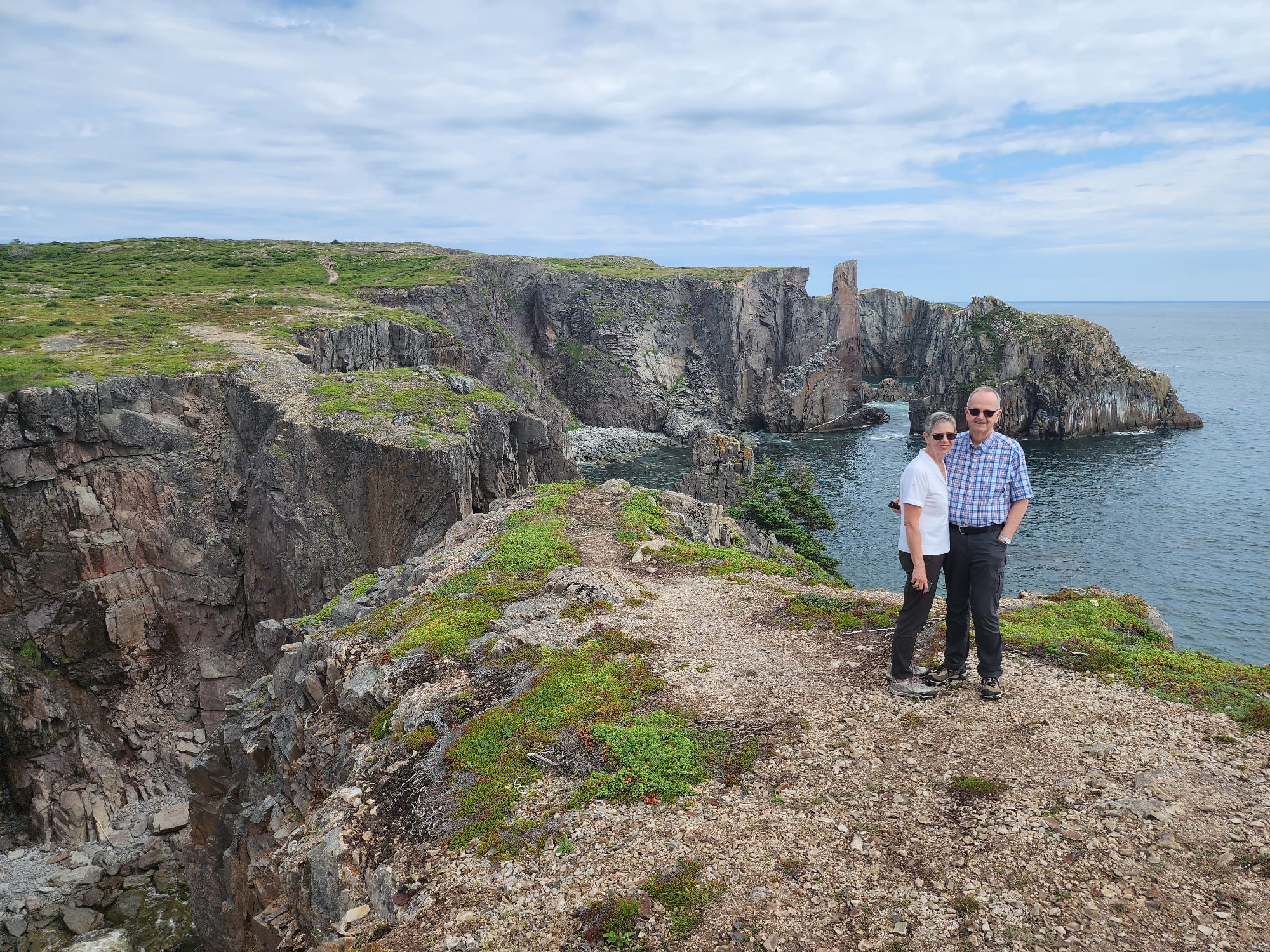
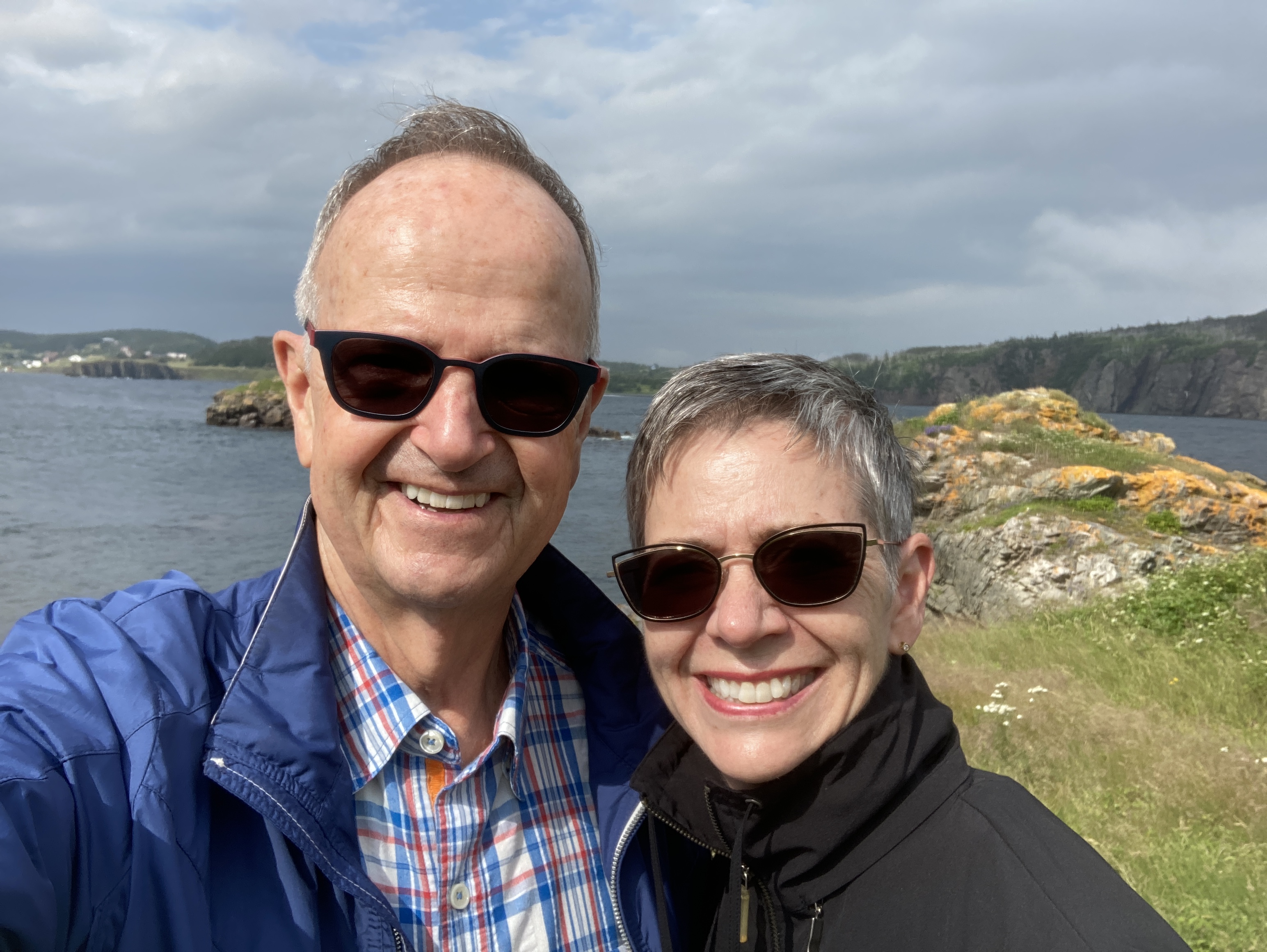
One of the extra bonuses of travelling with a private guide is the opportunity to have someone take photos of the two of us together! Such a treat! (Okay, the third one’s a selfie.)

There is no doubt in our minds that private touring is well worth the extra expense. And you can’t put any price on the memories we created on our Newfoundland trip.

In case you missed any of the videos…

Western Brook Pond…

L’Anse aux Meadows

Bonne Bay & the Tablelands

Bonavista

A Vintage Car Museum Extraordinaire: Travelling in Newfoundland

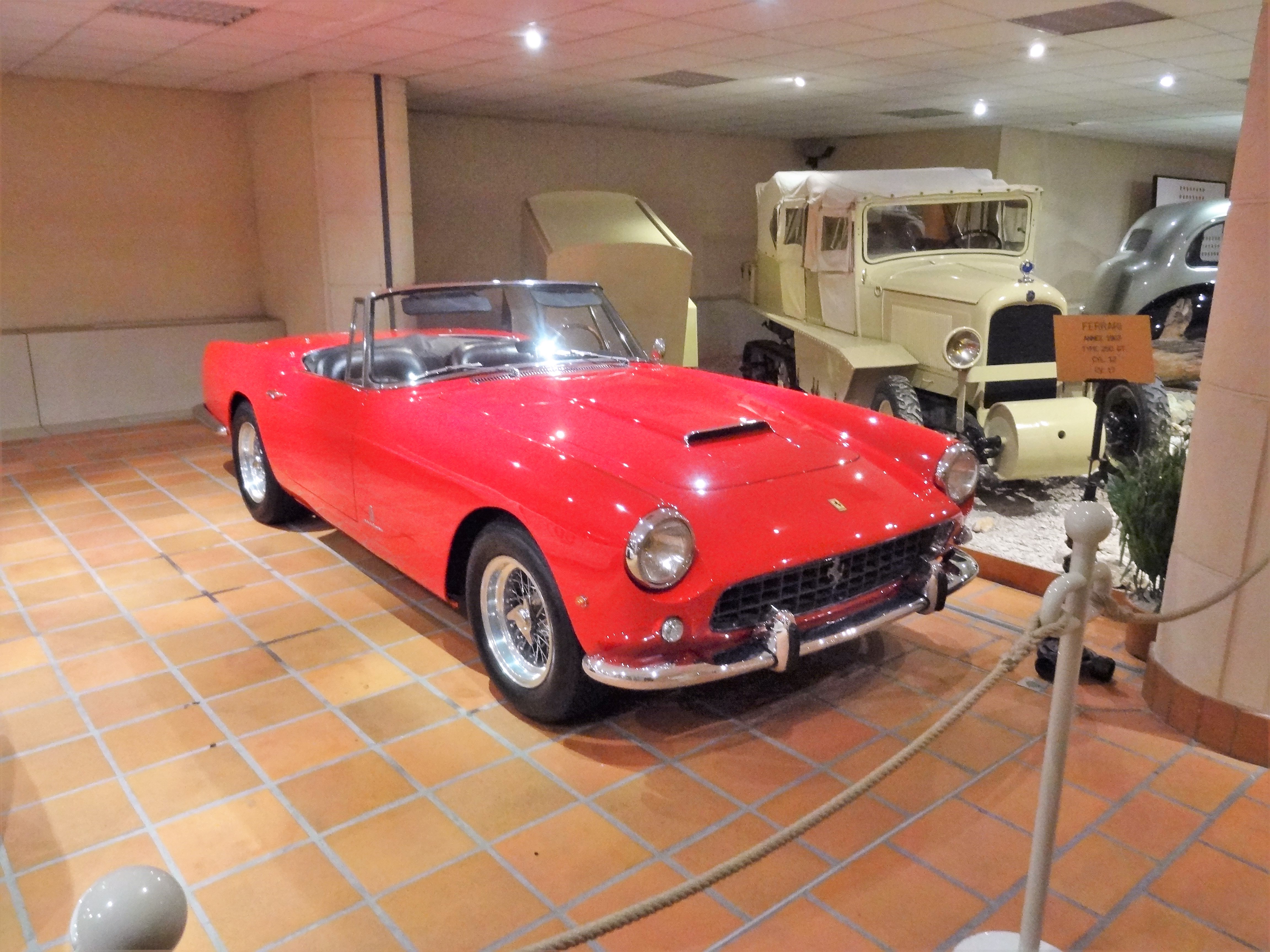
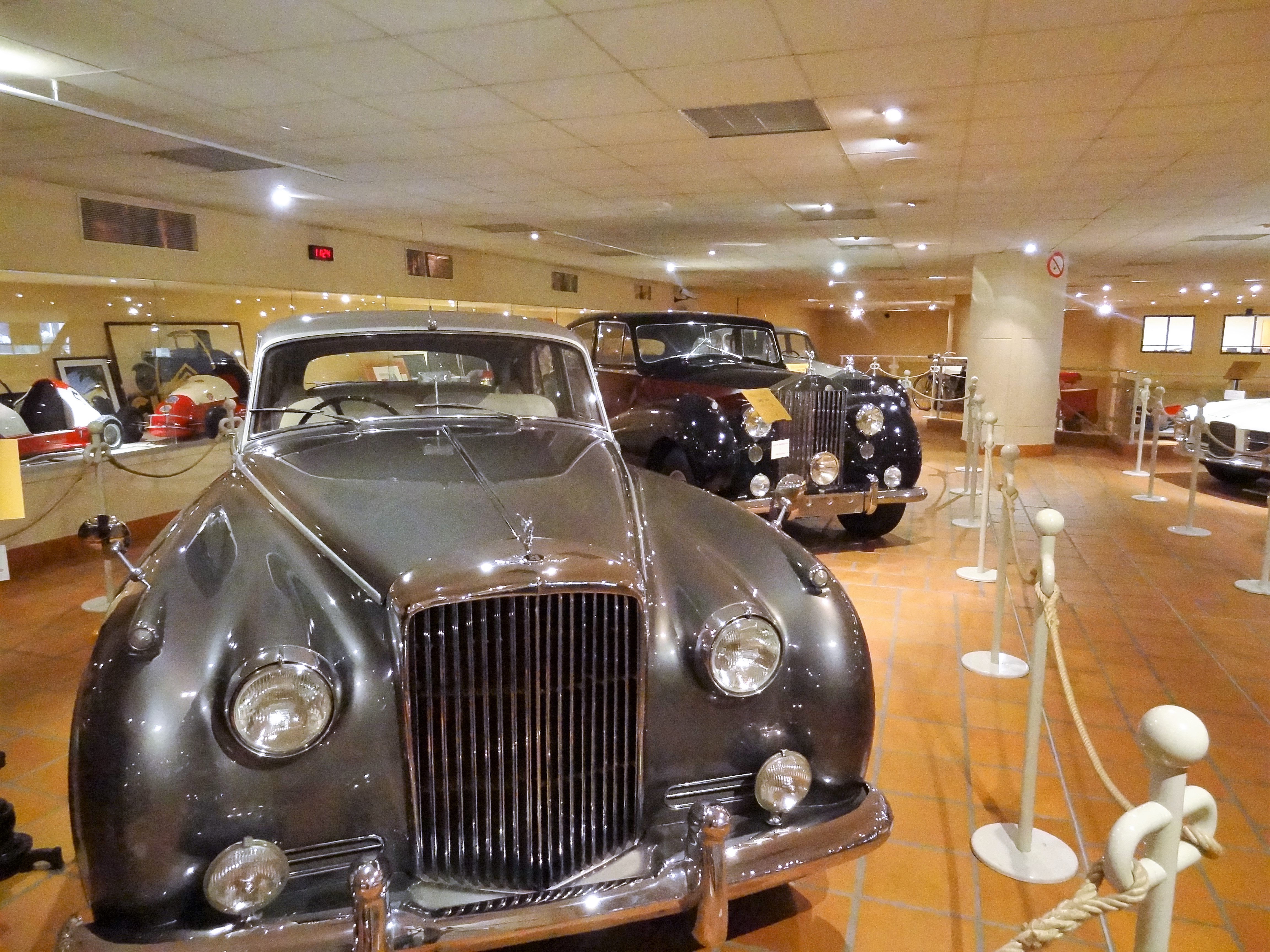
It’s been more than a few years now since we last visited a vintage car museum. It was the last time we were in Monaco when our son worked there. It was over the Christmas holidays, and we had a few empty hours. Although we’d visited the tiny principality many times (because of the aforementioned son), we had never visited the car museum.

Owned by Prince Albert of Monaco, that museum featured a nice collection of cars (see above), including one that had been owned by his mother, Princess Grace. We were impressed with this museum until this summer. It pales in comparison to where we were on our summer vacation.

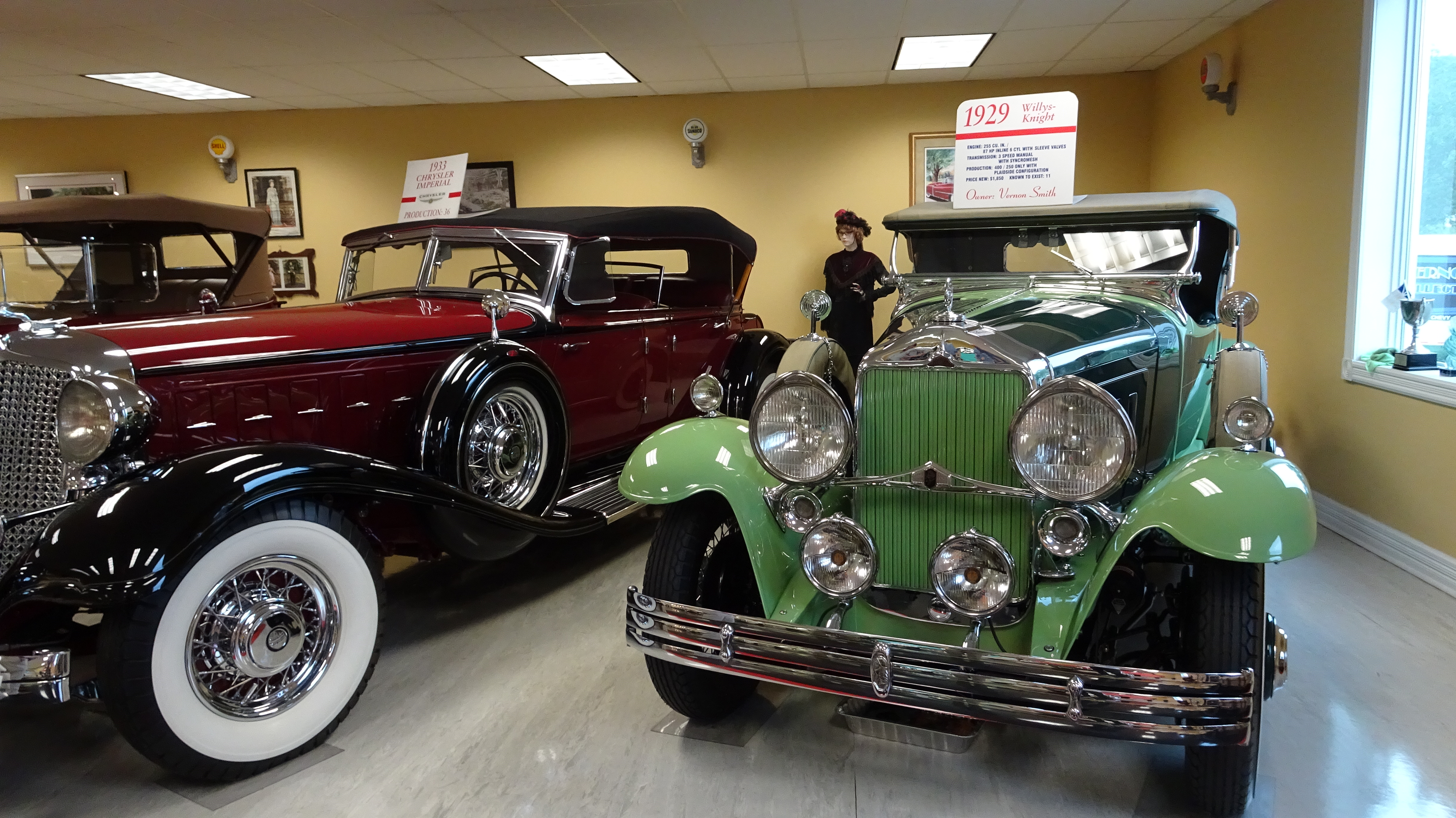
In a tiny spot called Swift Current Newfoundland, there is a collection of over sixty of the most extraordinary vintage automobiles, meticulously restored. How did we even get there?

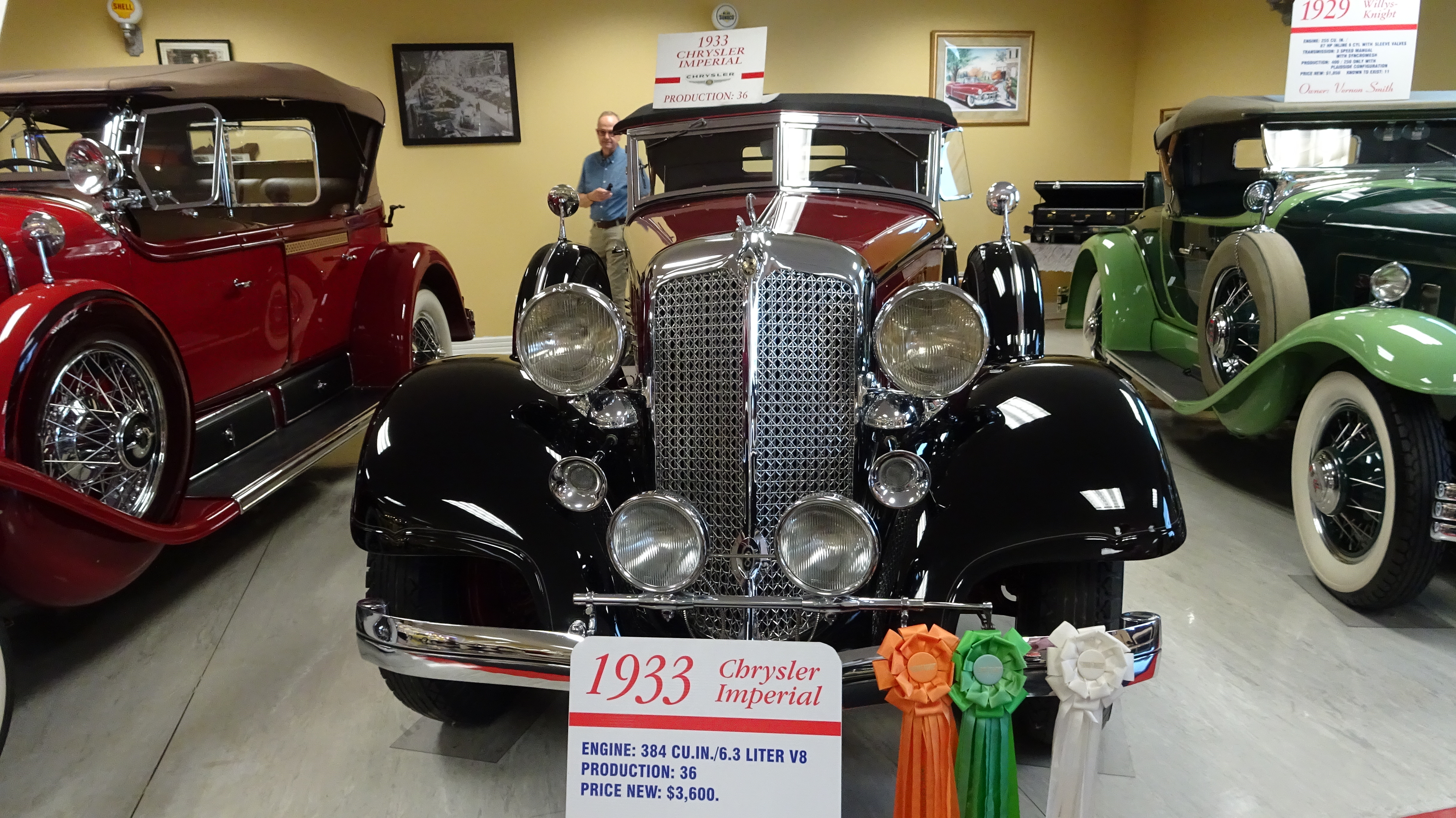
As we love to do, when we decided to visit Newfoundland this year for our summer holiday, we booked a private tour (more about that in the next post). The weather in Newfoundland can be changeable, to say the least, but we experienced mostly spectacular weather until the final day of our tour. It rained. Our private guide called a friend, and the next thing we knew, we were being treated to a private tour at Vernon’s Antique Car Museum. Owned by a private collector, the cars have won awards from some of North America’s most prestigious car shows, including Amelia Island Concours, Meadowbrook Concours and Pebble Beach—and with good reason. They are spectacular.

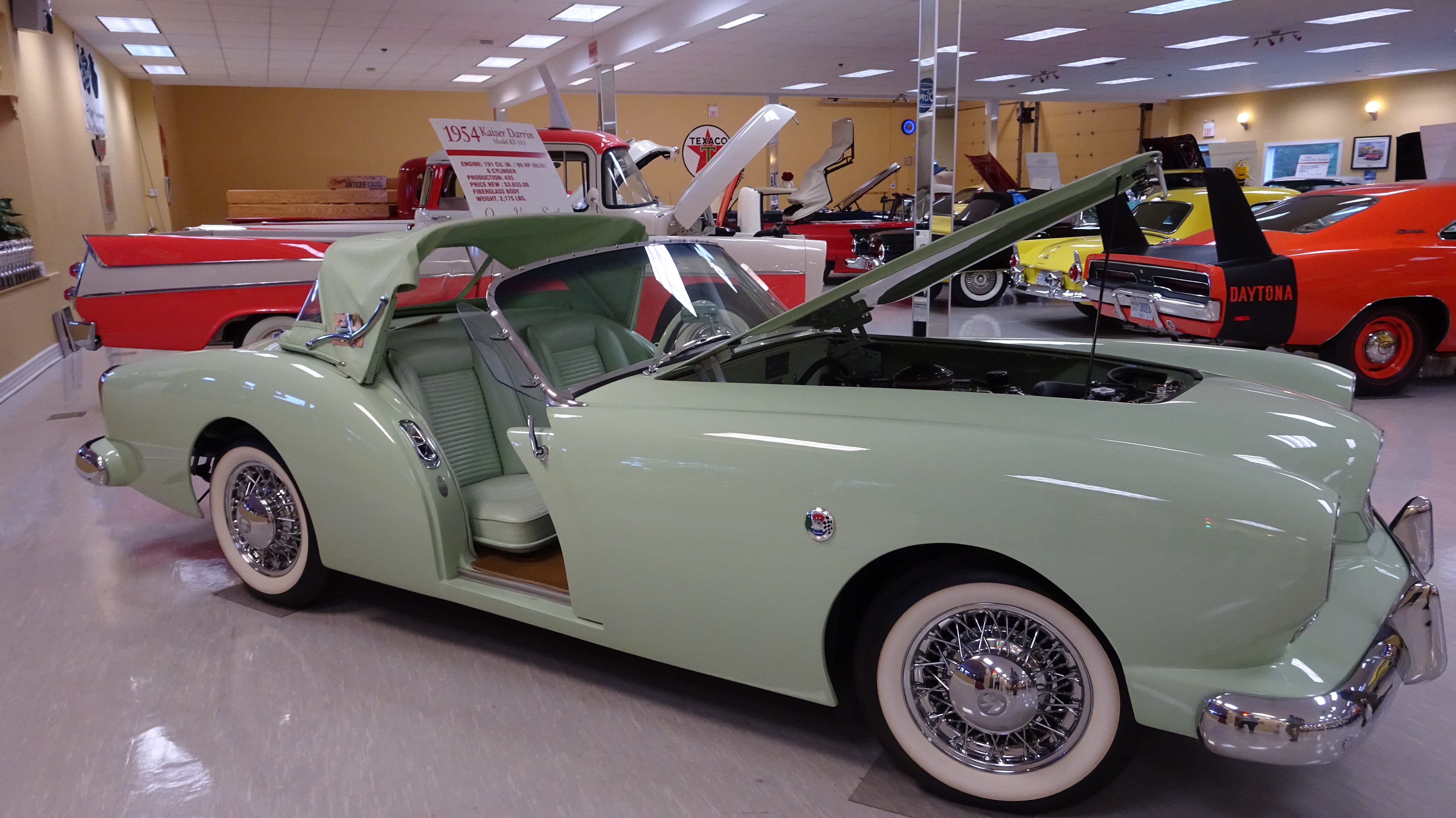
The collection includes beautifully restored models from a 1908 Buick Model 10 to 1970 muscle cars with something for everyone. The collection even includes a rare specimen of an amphibious car—a design that never really took off.

[We’re pretty sure you only get to sit in them on a private tour!]

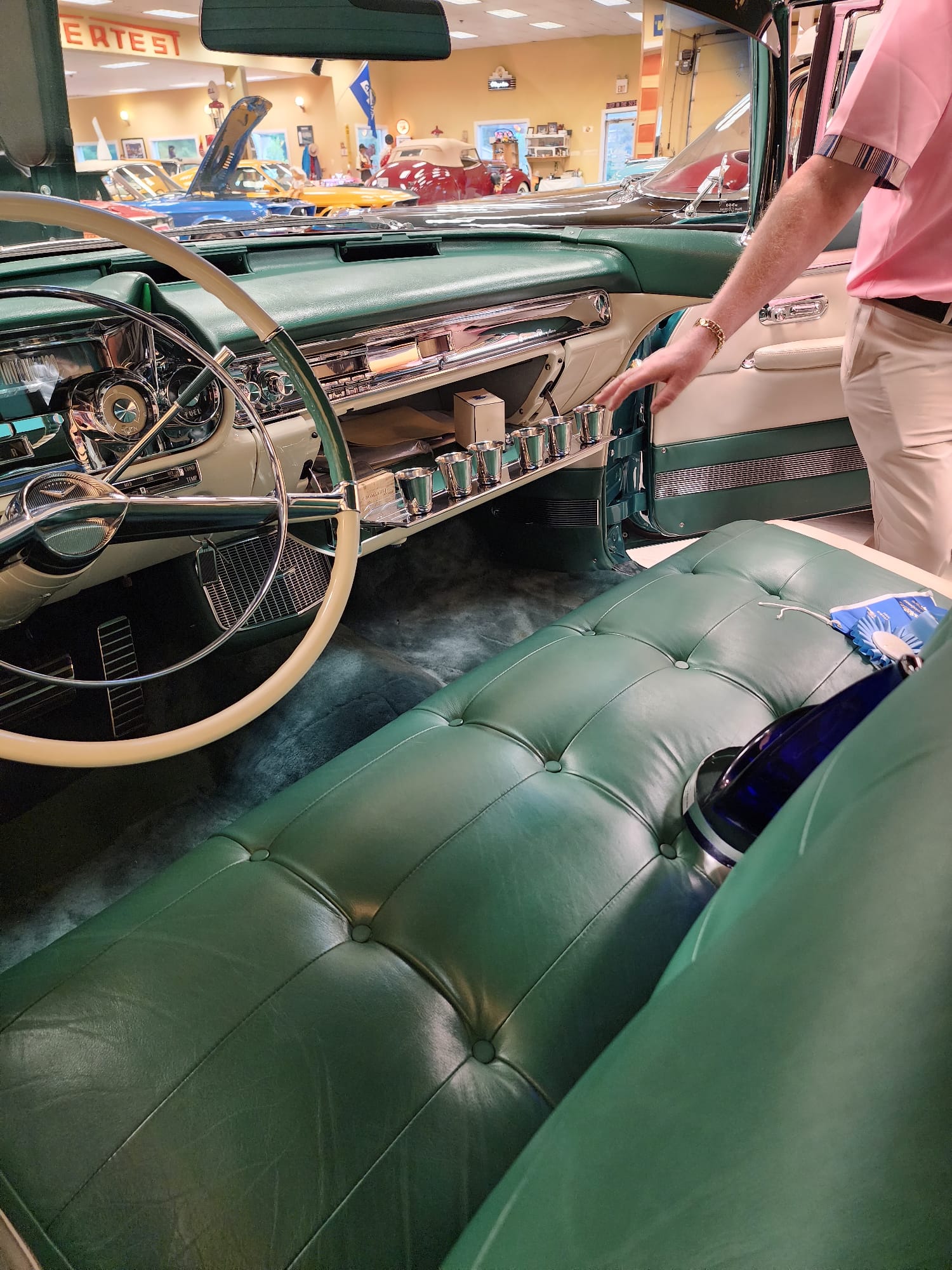
What struck us the most were some examples of early auto technology that faded away only to return in recent years as if they were new ideas. The push-button start was but one. And what about that bar in the glove compartment? Well, it might not be practical these days, but you must admit it was a pretty innovative idea!

One of the things that strikes modern car owners the most (especially us) is how well-designed the interiors were. There was a time when the interior aesthetic reflected the exterior. These days, we have to work hard to get our cream-coloured interior instead of the ubiquitous black.

For anyone of a certain age, there is a lot of bling and a whole lot of nostalgia. We defy you not to discover at least one car someone in your family owned back in the day. It made for a wonderful morning. You never know where your travels will take you!

Join us for our private visit and hear Vernon, the owner, share his extensive knowledge about his vehicles. Happy driving!

Visit Vernon’s online at https://www.vernonsantiquecarmuseum.ca/home.

Boating on Western Brook Pond: A Newfoundland Inland Fjord

Boating on Western Brook Pond: A Newfoundland Inland Fjord

Deciding where to go for a summer vacation takes a bit of thought. We live in a big city that’s hot in the summer, so we’re never likely to choose anywhere that won’t provide a bit of weather-related relief. This year, we decided on Newfoundland—specifically, a private, escorted tour of the easternmost province of Canada. Before we tell you about the tour itself in a later post, let’s start with our spectacular visit to one of the most beautiful pieces of mother nature, Gros Morne National Park. And our first stop there was a boat tour of Western Brook Pond.

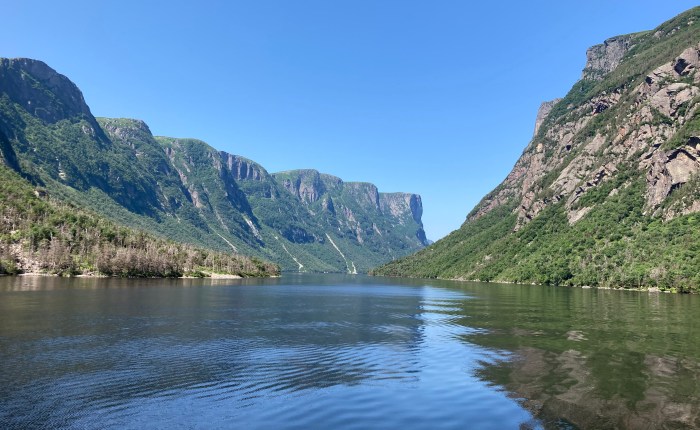
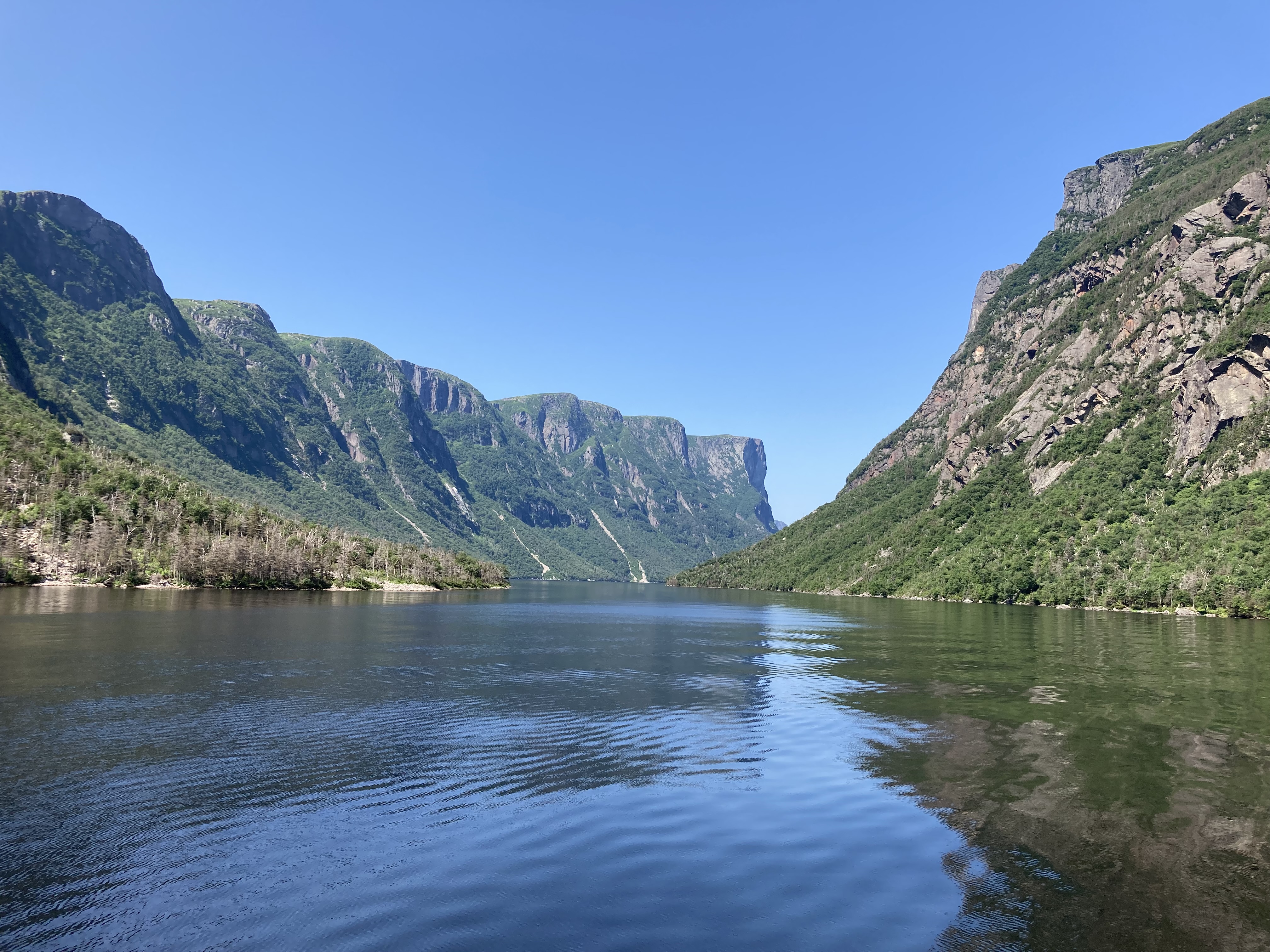
Western Brook Pond is a glacier-carved, land-locked fjord with myriad waterfalls and billion-year-old cliffs—the only way to really appreciate it is from the water.

We arrived at the car park at the edge of this magnificent land-locked fjord and hiked the three kilometres to the shore. The shoreline is entirely pristine—untouched by development (it is, after all, in the middle of a national park). The only structures on the shore are the building where the boats are housed in winter and a tiny restaurant at the dock.

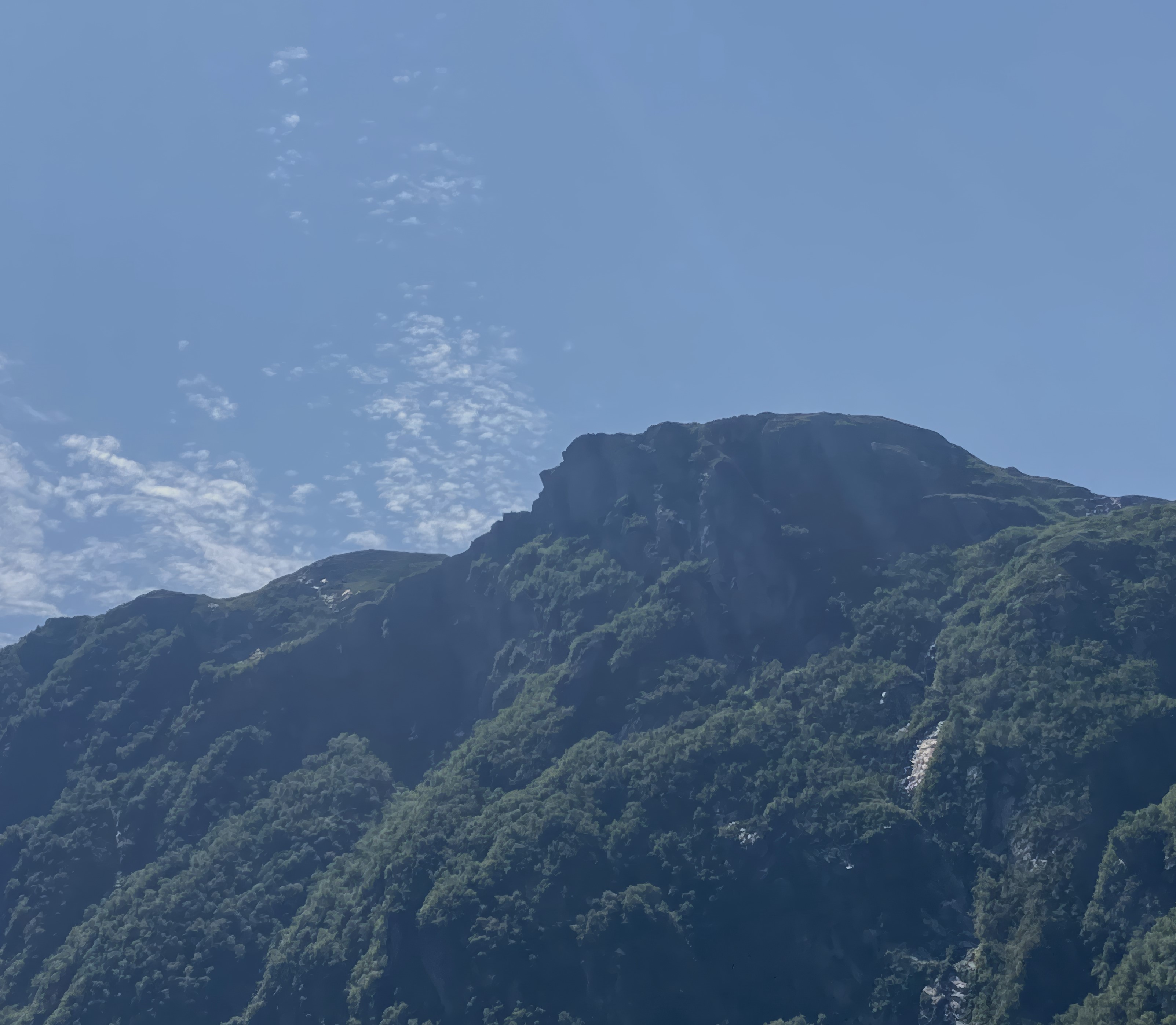
We boarded a boat for a two-hour tour, surrounded by 600 m (2000 ft) high cliffs cut off from the sea millions of years ago by glacier movement. The melting glaciers eventually flushed the salt water from the now-land-locked fjord, leaving a fresh-water pond. Interestingly, it’s located within The Long Range Mountains, the northernmost part of the Appalachian Mountains. [Can you see the man in the mountain in the first photo below?]

A moment to explain the term “pond.” In other parts of the world, a pond is usually the term used when referring to a small lake. However, in Newfoundland and Labrador, the term pond is applied almost uniformly to land-locked bodies of water, regardless of their size. Almost. There are a few “lakes” in Newfoundland—Deer Lake and Quidi Vidi Lake in St. John’s come to mind. Although historians noted that the term pond was used even back in the nineteenth century, lake seemed to be the term of choice whenever the body of water was located close to an American base—and there were several on the island of Newfoundland over the years as a result of its strategic position. So, the term pond doesn’t mean it’s small—it’s sixteen kilometres (ten miles) long.

Although the weather can sometimes be unpredictable (cue the rain, drizzle and fog), the day was a perfect July day. The sunshine illuminated waterfalls, rock formations and the sparklingly clean water.

As spectacular scenery goes, it doesn’t get much better than this. For a better appreciation of our trip, here’s a video where you can come along with us…