Cruise ships and their photographers: It can be fun to use them!

The “boarding portrait”: More than a bit on the tacky side, but as you can see, on that occasion we did buy it!

If you have ever been on a cruise then you know what we’re talking about: cruise lines hire photographers to take photos of practically everything and everybody.  Opinions on these photographers seem to fall into one of two camps:

  • Those who love them and step into camera range at every opportunity;
  • Those who loathe them and wish they would just go away.

But even within these two groups, the extent to which cruisers buy the photos varies considerably.  Some of those who love to have their picture taken never actually buy them; at the same time there are those who complain but who do buy the pictures.

We can still remember our very first encounter with a cruise-line photographer.  We had just checked into our cruise aboard the Carnival Triumph with our then ten-year-old son.  We had our key cards in hand and were about to walk across the gangway to board, but before we were ‘permitted’ to do so, we (and everyone else in the line) had to stop  behind a life preserver emblazoned with the ship’s name and the Carnival logos to have our picture taken.  We had just flown from Toronto and looked a bit dazed – as did everyone else getting their boarding photo taken.  At that point we had no idea where, or if, we would ever see that photo.  It wasn’t long, however, before we learned about the photo gallery on board cruise ships.  No, these are not galleries of professional, artistic photographs for our viewing pleasure.  These galleries have portable, foldable walls that come out every evening to display all of the photos that the onboard photographers have taken that day – and some of them are a sight to see!

Oh so tacky: the roving dining room photographer provides us with a reminder of our Christmas dinner on Holland America’s Zuiderdam. But we bought again!

As that first cruise progressed we found ourselves accosted by photographers in all manner of locations.  Over the years we’ve learned that cruise ship photographers will inevitably take your picture in the following places and at the following times:

  • When you are boarding on the first day.
  • At the end of the gangway every single solitary time you disembark at a port (this happens much less in Europe we might add, all the time in the Caribbean).
  • Sometimes at the end of the pier with the ship in the background when you arrive in a port (this is a newer incarnation).
  • On your way to and/or from dinner on formal nights.  They will offer atrium and/or grand staircase backgrounds or those weird phony ones like in front of the Titanic staircase. On these nights the photographers will inevitably tell you how to stand, where to put your arms etc. and some of this looks very odd.  We often argue with them;  we usually win, but it isn’t easy and they have told us that they are instructed to do this.
  • During dinner with or without your dining companions in the shot.
A prime example of a fake background on semi-formal night aboard the Celebrity Century where we celebrated our 20th wedding anniversary a few years ago.

Some time the next day, these will all appear on the walls of the ship’s photo gallery.  You can buy them or ditch them – it’s up to you.  Ten cruises later, and we’re here to tell you that you need to take control of your photo experience on board – and we’re delighted to be able to tell you that as you become more discerning in your travel choices and graduate to the high-end cruise lines, there will no longer be any photographers.  That being said, it can be a lot of fun if you take control of the experience.

Based on our personal experiences on a variety of cruise lines (Carnival, thankfully only once, Holland American we believe three times, several times on Celebrity – all of that before Regent and Silversea who have wisely ditched their photographers), we have some advice for making the best use of the service.

  • Think of this as an opportunity for that really nice, formal family or individual portrait.  Put yourself in front of every photographer whose backdrop you like on formal nights.  You don’t have to pay a sitting fee as you would if you did this with a photographer at home.  Then when you see the ones you like the next day, you simply buy them.  We recommend waiting until the end of the cruise before making a final decision, unless you are convinced that you want the one from the first night.  These are usually 8 X 10’s and cost around $20.00 each.
  • Buy only the photos you really love or think are very fun!
  • Especially if you have children or it’s a special occasion, take advantage of the opportunity for a group photo somewhere fun – like at the end of the gangway in the Bahamas or Jamaica.  Work the cost into your on-board budget in advance if you need to.
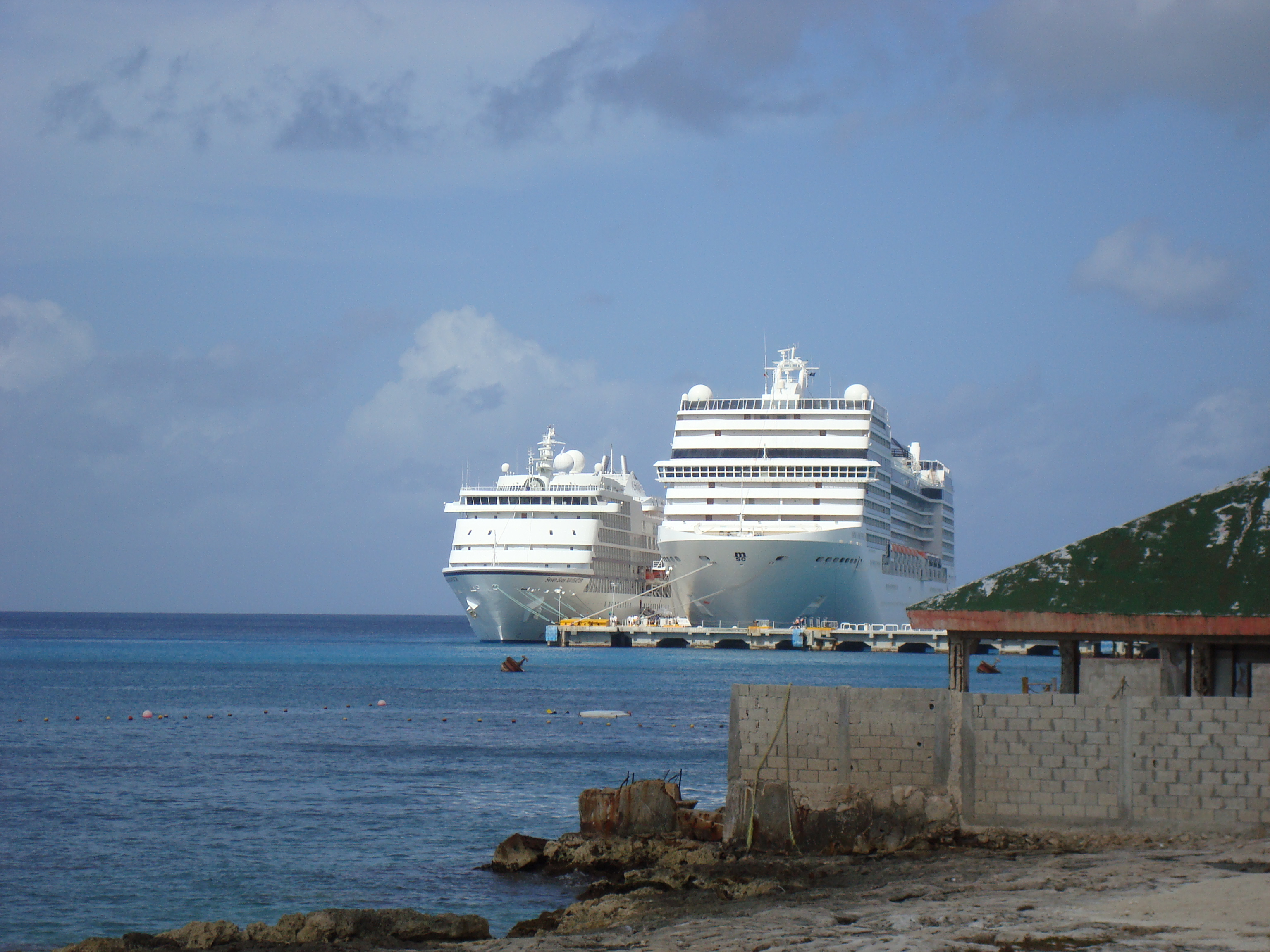
  • Just say no – and be firm – if you do not want your photo taken, especially at the end of the gangway at every port.  This is the place where it becomes tired fastest in our view.  Do you really want your photo with a very large, stuffed lobster?  Last winter as we walked along the pier from the Silver Spirit (which wisely does not employ these photographers) in St. Martin we were accosted by a ship’s photographer – from an NCL ship that was on the other side of the pier.  We demurred, he insisted.  We said no, he cajoled.  We then pointed to the Silversea ship and he let us go.  Be very firm.
  • When you are really sick of the whole idea, switch to an ultra-luxury line.  No one will ever accost you again!

A family portrait aboard Cunard’s Queen Mary 2 last summer. It’s the only way for the three of us to get a professional portrait since we live on a different continent than our son. A great opportunity when we’re all dressed up.

One perfect end-of-summer day – in Nova Scotia

As you round the point from St. Margaret’s Bay into Mahone Ba,y the ocean can be sightly rough even on an otherwise calm day.

It seems like every time we think about a perfect day that we’d like to bottle up to take out at a later date to relive, we’re on a boat.  The first one we can remember was a day of sailing in the British Virgin Islands, the only time in her life when Patty sat at a bar (on an otherwise deserted island – Norman Island to be specific) in a bikini!  A couple of years ago, we rented a boat and a captain and motored along the French Riviera, glass of champagne in hand.

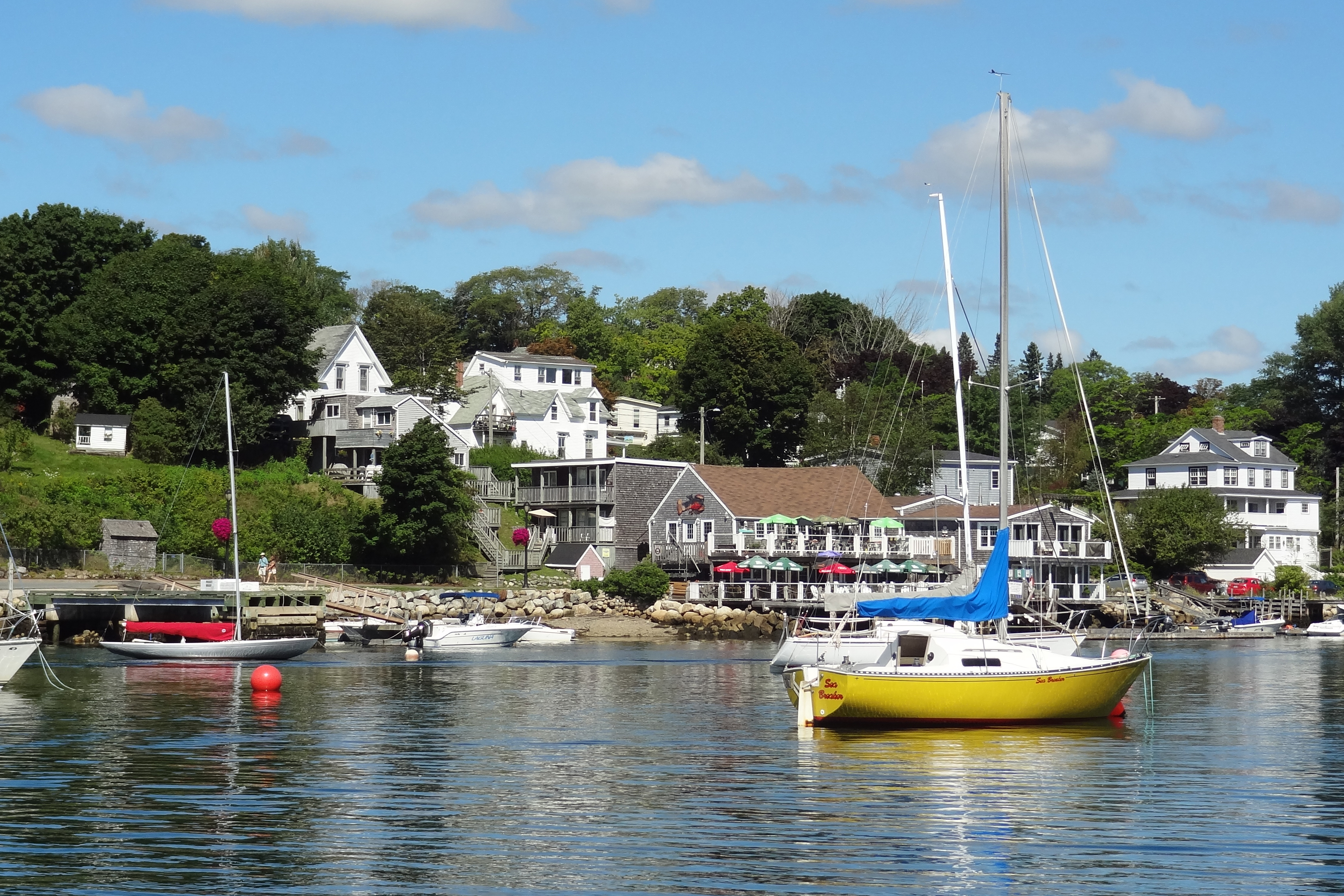
This past week, as we near the end of summer, we’re traveling closer to home.  Armed with a picnic and a full tank of gas, we motored our 24-foot Chris Craft out of our cove on St. Margaret’s Bay in the Halifax region of Nova Scotia.  We headed across the bay and rounded the point of land the separates St. Margaret’s Bay from Mahone Bay and headed toward the tiny village of Chester.   More of a summer refuge for both Americans and Canadians who can afford the fabulously large, east-coast-styled clapboard dwellings, the village is on every tourist’s travel itinerary as they make their way along what is known as the lighthouse route on the south shore of Nova Scotia.  Seeing it from the water, however, always imbues it with a different kind of charm.

The Chester waterfront dominated byt the pub-like “Rope Loft” restaurant.

After Chester, we made our way along the coast and into Marriott’s Cove that is home to the South Shore Marina and one of our favorite out-of-town restaurants, The Galley.  We pulled in to top up our gas and then were off to Oak Island.  Yes, Oak Island of the buried treasure fame.  Situated just on the shore that is connected to the island with a causeway is the Oak Island Inn and Spa.  Rather than pull into here for lunch, we dropped anchor just off the mysterious Oak Island and had a wonderful lunch in the sunshine.

Just after lunch it was about time to head home thinking that we’ll remember this day next winter when we’re gazing out a window to see the snowflakes dancing on the dock!

The iconic “three churches” from the water in the village of Mahone Bay itself.
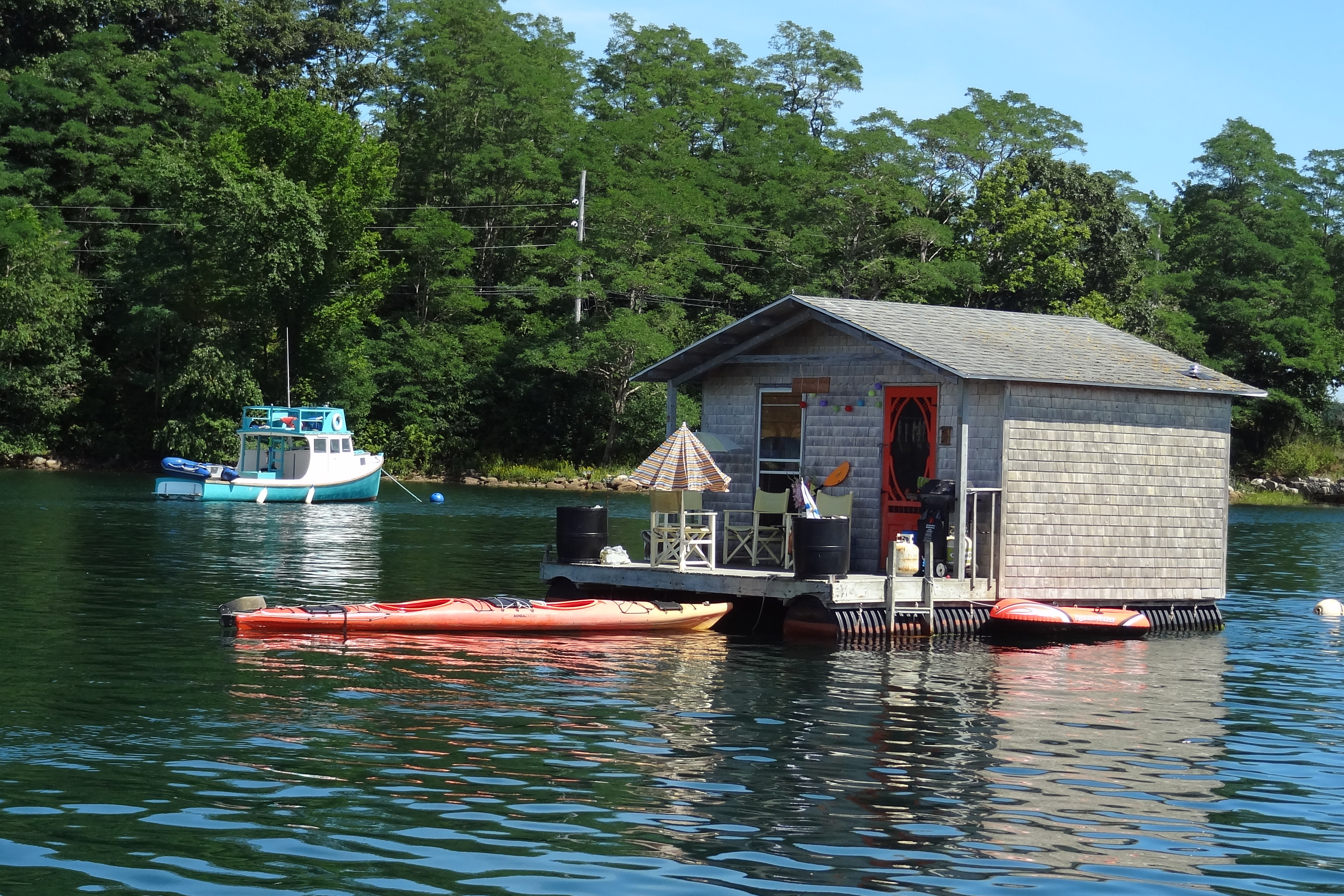
In Nova Scotia, when they say a cottage is “on the water,” you had better be more specific!
Houses on the Chester peninsula.

A discerning guide to hotel ratings

So, we’re in the process of planning a three-part winter trip to flee the Canadian winter for a while in early 2013.  We are already booked on our first Seabourn cruise aboard the Seabourn Spirit, and since it leaves from Barbados and ends in St. Martin, it only seemed natural that we’d book-end the cruise with vacations in Barbados and then St. Martin.  Can’t wait!  But, trying to find the right hotel or resort in which to spend a week or so in each place has proven to have eaten up more time than any of our numerous hotel/resort choices in the past.  It occurs to us that it’s at least partly because (a) the resources we have now are almost too-much-information; and (b) the ratings systems are so inconsistent and even, dare we say, capricious.

The view from the Ocean Grill in Grenada: Air Canada Vacations was our choice for booking this holiday — and it was a good one!

Let’s start where we usually start: namely our favorite hotel aggregator.  That would be Air Canada Vacations.  We have tended to use ACV in the past because we’re AC frequent fliers and can accumulate points by booking hotel packages through them, even if we’re not actually booking an air-hotel and/or cruise package, all of which can be done.  We have also often found that the package rate is better than booking hotels on their own (and we have absolutely no interest in those aggregators like Hotwire where you pay in advance and don’t know exactly where you’ll be staying – you may be able to save money that way, and we’re sure that many people enjoy this. We don’t.).  We had a great find in Paris a few years ago.  In fact, we have booked our Barbados hotel through ACV.

We wanted to experience The House on Barbados and it happened to be among the ACV offerings , and advertises with that enticing descriptor that we love so much: “adults-only.”  The rate was competitive and booking this way allows us to put down a deposit and then pay the whole thing in advance (with cancellation insurance, of course).  That way our entire holiday is paid for before we go, a feeling that we truly enjoy.  But trying to find a hotel in St. Martin was a different thing altogether.

To date, we are still not booked for that week of vacation, since somehow our first choice hotel on St. Martin, La Samanna, does not seem to be available any longer (according to our travel agent, and this despite the fact that today when we surfed over to the ACV site, it’s still listed).  So, we’re left trying to decipher the hotel rating systems to figure out where we’d like to stay.

Air Canada Vacations has their own rating system, and it does not necessarily reflect the systems by any other organizations, or countries for that matter (some countries, predominantly in Europe, have their own rating systems).

Air Canada Vacations’ Hotel Ratings explained.

Source: http://www.aircanadavacations.com/en/travel_information/ratings_explained

This explanation is helpful, but the way they rate is not the same as how others rate and we’re left scratching our heads.

One of the important considerations in deciphering rating systems is the rating organizations’ reason for doing the rating.  Are they trying to sell hotel rooms?  Are they a travel advice service only?  Or, as is the case so often now in this excess of information age, are they simply allowing people to post their own reviews from which an overall rating is then created?

Air Canada Vacations, and others like them, have a vested interest in having these ratings clearly establish certain parameters in the minds of consumers.  If they are wrong, or misleading in any way, not only will the customer not book that hotel again, the customer is unlikely to book any of their hotels again.  But, of course, sometimes customers disagree with the rater, or have a particularly bad experience that might not be the experience of the majority of others.

Then there are the ratings that are assigned by third-party organizations like Forbes.  They are not in the business of selling multiple hotel rooms, so their ratings are often viewed as more objective.  They have things like anonymous inspectors and consistent criteria that provide you with what is likely to be an overall more accurate rating than, say, customer-generated ratings.  For a very good explanation of rating systems, read the CN story The Dirty Truth About Hotel Ratings.

We have been reviewing hotels and restaurants on TripAdvisor for a while now, and we do use customer ratings, but recognizing their limitations, we do take them with a grain of salt.  We’ve discussed this before, and the overall ratings that come out of customer reviews are often baffling to us.  It seems that we are not looking for the same things as many of the reviewers (who are predominantly from the USA, by the way – and this makes a difference).

Other customer-generated ratings are published in magazines and on web sites as “readers’ choice” ratings or awards and are even more peculiar since anyone can vote and that anyone need not have ever traveled to more than that single hotel or been on any other cruise line to make a judgment about ‘favorite.’  But that’s a different story.

The bottom line is that to the discerning traveler, hotel rating systems are useful, but need to be taken into consideration only with an array of other information you have available to you.  So, where does that lead us in our search for the perfect spot to enjoy St. Martin?  Exactly nowhere at this stage.  We’re still looking!

The ups and downs of travel loyalty programs: When is a perk not a perk?

The Ritz Carlton at Half Moon Bay in California is set on a rugged bluff overlooking the Pacific and is part of Marriott’s loyalty program. We stayed here last year.

We’re just back from a brief summer holiday.  As usual, we traveled via our usual airline (in whose loyalty program we have been ‘gold elites’ for the past several years) and stayed for a few days in our usual hotel chain (in whose loyalty program we hold ‘platinum’ status – ostensibly much better than gold status).  We also spent several days in another brand of hotel.  This coupled with travelling at the peak of the summer season (is it not possible to prepare for the inevitable airport security screening even if you don’t travel often?) has led us to a few interesting observations and questions about airline and hotel loyalty programs.

For years now, or ever since the advent of the travel blog, travel writers have been weighing in on these loyalty programs, and this includes polls about the best frequent-flyer program and the best hotel loyalty program.  There are also myriad awards for the best of these programs.  The trouble with these polls and awards is the same problem exhibited by those readers’ choice awards we have discussed before in relation to cruises: that is, anyone rating the programs probably doesn’t have experience with more than one or perhaps two such programs, so how can there be any kind of useful comparison?  No, it’s a matter of trial and error for the discerning traveler when selecting and participating in these loyalty programs.  We’ll use our own programs as anecdotal evidence.

We’ve both been loyal Air Canada Aeroplan members for well over 20 years.  Our reasons for selecting this program are the following:

  • Our air travel inevitably begins or ends in Canada since that’s where we live.
  • Air Canada, despite its many detractors, is a safe, solid, clean, reliable airline.
  • Air Canada belongs to Star Alliance which is both the oldest and largest airline alliance in the world.  This means that we can get to practically anywhere in the word and still earn Aeroplan points.
  • We believe that you should never set foot on an airplane without being a member of its loyalty program – you should earn points on every trip on the off chance you ever accumulate enough to get some of their perks – which we’re getting to.
Whenever you travel on a cruise line, you are either automatically enrolled in their loyalty program or offered the opportunity to join. Their ‘perks’ require a completely separate blog post!

We have also been members of the Marriott hotel chain’s loyalty program for many years.  Our reasons for selecting this program (although we do belong to others for those odd occasions when there are no Marriotts around or we want to try a new experience) are as follows:

  • We ended up at a Marriott in down town Toronto one time many years ago when our first-choice hotel was fully booked.  The staff at the Eaton Centre Marriott on Bay Street was so fabulous that we never went back to our old favorite.  From the time when our then-eleven-year-old son started training at the National Ballet School until he graduated at eighteen (five years ago) and beyond, we have stayed there seven or eight times a year.  We have also stayed at Marriott Hotels all over the world, and their staffs never cease to amaze.  They must know a thing or two about staff training and nurturing!
  • What we’ve learned since then is that it’s easy to redeem Marriott points and we’ve done so happily for many years.  They have been particularly handy when travelling with an adult offspring or two to cover the costs of the extra rooms in expensive cities (like Paris!).
  • As above, we believe that you should never set foot in a hotel that is part of a loyalty program without being a member.

All of that being said, we have lately begun to wonder about the erosion of the so-called perks that follow from being a loyal member of such a program.

Just last week as walked through the terminal at Pearson International Airport in Toronto we were accosted by an American Express sales person who wanted to ‘sell’ us his credit card.  One of the perks he mentioned was access to Maple Leaf lounges, the lounges owned by Air Canada to which we have access as gold elite members of Aeroplan.

Then, as we entered the concierge lounge at the Toronto Marriott for breakfast to find there was hardly a seat in the place, we wondered about this perk, too.

So, we asked, when is a perk not a perk?  Our answer is simple: when everyone has it.  And so this is our conundrum with these programs.  So many credit cards have especially airline perks like lounge access and priority boarding as ‘benefits’ that it seems there is almost no one left who doesn’t’ have these ‘perks.’

If you’ve ever been in an airport business-class lounge when there have been several delays or cancellations, you know that it’s like the black hole of Calcutta.  We had the most dreadful experience of these lounges several years ago in Frankfurt (the Lufthansa lounge).  We had actually paid for our business class ticket, which is more than can be said for the vast majority of everyone else in there – and we’ve been in in there under those circumstances ourselves.  How do we know they weren’t flying business class?  Because when you get on the plane with everyone else who has that perk, you can see where they’re sitting.

And of course there’s the priority boarding ‘perk.’  Over the past two or three years, it has become increasingly clear that half of the travelers today seem to have this perk.  Have you seen the race to the priority lane the minute they make the boarding announcement?  This is, of course, really a race for bin space.  There’s nothing worse than being last on the plane only to find that you may have paid top dollar for your seat but there is no bin space left for your measly little carry-on bag since someone has stuffed an enormous wheelie above your head.

Our message here to airlines and hotels: Before you offer someone a perk, you better make sure it really is one!