Travel for us is about experiences. Sometimes it’s the places we visit; sometimes the people we meet. Other times it’s the food we eat or the wine we drink. All of these form the experiences of the discerning traveler. But sometimes, experiences are unexpected and not related at all to where you’re visiting. A few months ago, while aboard the Oceania cruise ship Nautica, we witnessed a helicopter medevac as we sailed the Mediterranean off the coast of Greece. And our thought was this: It could have been anyone of us.
It all started a few hours earlier as we sailed peacefully on our way from Malta toward Crete. We had noted only peripherally (as you do when you’re enjoying the only day at sea in an itinerary-rich cruise) that the ship seemed to have sped up. The onscreen information that continually streamed on a television channel from the bridge confirmed this suspicion, and we had also slightly altered our course. We thought little of it.
Half an hour later the Captain took to the public address system to tell us that we had indeed altered our course so that we could get closer to mainland Greece in an effort to meet a helicopter from the Greek Coast Guard that would effect an evacuation at sea of a passenger who had fallen ill. As we all know, cruise ships have well-equipped infirmaries, but there are some illnesses that require more than can be provided by these facilities, and by the single physician and nurse aboard. This was evidently one of those occasions. And wouldn’t you know it? It happened on the only day we weren’t in a port!
Evidently these kinds of thing happen more often than we might think – although in some fourteen cruises, we had never observed one.
An hour or so after the Captain’s address, we saw the helicopter approaching the ship. The Captain had requested that everyone stay off the open decks for safety reasons – and we can only imagine that it would be an extra burden to the passenger and his wife to have onlookers curiously peering at them close-up. Although some of the newer and much larger cruise ships these days have helipads, most don’t, requiring the helicopter to hover for a half an hour or more – as long as it takes to send down an emergency medical technician, secure the patient to the stretcher, hoist the patient up to the chopper, then hoist the technician and the passenger’s wife into the hovering beast.
Those of us with verandahs in the aft of ship had a view of the entire operation from beginning to end. We were impressed with the efficiency of it all, and the coordination it took to get such an international rescue underway so quickly. We were just happy that it wasn’t one of us.
Several days later, we happened upon the ship’s doctor on an elevator and Art, who in his past has actually done a stint as a ship’s doctor, enquired about the outcome of the medevac. The doctor said that the patient had evidently had a stroke and the medevac was successful.
Consumer Reports covered the subject of medical care at sea in a blog post last year. Among the seven things they suggest you need to know are the following:
The medical facilities at sea are not the same as your local hospital with respect to either equipment or staff.
Medical care at sea is expensive. Be prepared for sticker shock, as they say.
If a ship is 500 or more miles away from shore, “it’s unlikely the Coast Guard will respond.”[1]
As discerning travelers, we are always aware that these kinds of things can happen. We try to minimize it by being healthy when we leave, and taking a few precautions while we’re away (such as hand-washing, staying away from buffets etc.). Unexpected things do happen, though. We never leave home without travel medical insurance. And we are always sure to read the fine print!
We’d like to share with you the video we took of the medevac. Travel often and stay well!
Perhaps it’s time the ultra-luxury cruise lines started rolling out the red carpet before booking.
Only occasionally do we find ourselves in the position of feeling a travel rant coming on. This week is one of those weeks.
For many years we’ve been dividing our travel time among various adventures: resorts, road trips, private touring, and often cruising. Since we’ve both been very busy in in our work lives, when we are choosing a cruise we have to book far in advance at whatever price is on offer for the itinerary and suite that we know will make us happy. Notwithstanding the exorbitant prices that we’ve often found ourselves paying over the years, we have been completely happy with our choices after the fact. Unlike many people we know who search for bargains, we have never returned home complaining about accommodation, service or overall experience. You get what you pay for, we’ve often opined. So why are we complaining now?
We have moved into a phase of our lives when we don’t need to plan so far in advance. This means that we’d like to be able to take advantage of at least a few of the copious numbers of offers that find their way into our real and virtual mailboxes every week. God love the cruise industry: if it weren’t for them, we’d hardly have any real mail!
We have often wondered if the cruise lines really think that we’re dumb enough to believe that what we are paying are two-for-one prices. For example, every single piece of material that comes to us from our favorite lines (ultra-luxury Silversea, Seabourn, Regent and recently Oceania) tells us that we will be paying essentially half fare. The fare is always listed in two columns: “brochure fares” and “savings fares.” Brochure fares are always (at least) double the savings fares. Indeed, they never seem to be charging brochure fares at all which leads us to believe that they don’t have to adhere to the usual advertising laws that force retailers to actually offer the merchandise at the full price for a minimum period of time before they can advertise it as being on sale. And, just who in their right mind would pay some of those fares anyway?
Two recent examples: Just over month ago, we tied to book a Regent cruise from Athens to Turkey for the fall on the day we received in the mail a brochure indicating special past-guest savings for the itinerary we wanted. We immediately emailed our travel agent who, within minutes went to work on the booking. When she contacted Regent to book it, the offer was not being made available to us. Sorry, they said, they should have booked earlier. We had the brochure right in front of us. According to our travel agent, Regent told her that the offer had changed and referred her to the asterisk that indicated subject to change without notice. We could only conclude that that would kick in about one minute before a past-guest actually called to book. We even attached a screen shot of the newly-arrived brochure to a return email to our travel agent. Regent would not budge. We are now booked for almost the same itinerary on a different cruise line and are feeling very sour about Regent on which we have sailed three times before. So much for perks of being a past guest.
The second example was just this past week and was what set us off on the rant. We received another tempting offer last Friday and contemplated taking advantage of this advertised fare in a Seabourn brochure. We were considering booking a veranda suite aboard the Quest for 35 days in South America this coming winter. We were delighted to see that this category of suite was on a promotion: a savings fare from $10,999 down from a brochure fare from $36,500. Let’s ignore for a moment that we wouldn’t even look at such a fare for this small suite even on a Seabourn ship (and the fact that they never really offer it at that fare because no one would pay it) and concentrate on the asterisk that followed the word from. Yes, of course we see the asterisk and expect that if we are not planning to sail on the asterisked date (October 25) we will pay more for February 24. However, given that this is being promoted as a great saving, we expect a reasonable sum more. We would be wrong.
When our travel agent tried to book this for us, she found that indeed the price we would have to pay would be $14,999 per person not including taxes which would bring it up over $16,000 per person. We called Seabourn to inquire ourselves with the brochure in front of us. They simply reiterated what she told us and pointed to the asterisk. This is a difference of over 25% and is unacceptable as a hidden piece of information. The cruise line may believe that the asterisk protects them from liability for false advertising, but as a customer (and past guest of this cruise line) we think it is disingenuous and this kind of advertising needs to stop.
The Bureau of Consumer Protection of the US American Trade Commission’s guidelines for truth in advertising are contained in a document titled: Big Print. Little Print. What’s the Deal?[1]which clearly lays out the expectations for truthful advertising as follows:
“Your ads should clearly and conspicuously disclose all the information about an offer that is likely to affect a consumer’s purchasing decision. Disclose the most important information – like the terms affecting the basic cost of the offer – near the advertised price.
Print advertisers should not attempt to hide the real cost or the critical terms or conditions by:
Putting them in obscure locations, such as the border area on a print ad;
Burying them in numerous, densely packed lines of fine print; or
Including them in small-type footnotes.”[2]
The Advertising Standards Council of Canada is equally clear in the first clause of the Canadian Code of Advertising Standards as follows:
“…(b) Advertisements must not omit relevant information in a manner that, in the result, is deceptive.
(c) All pertinent details of an advertised offer must be clearly and understandably stated.
(d) Disclaimers and asterisked or footnoted information must not contradict more prominent aspects of the message and should be located and presented in such a manner as to be clearly visible and/or audible…”[3]
As far as we are concerned, these advertisements are misleading doing more than putting pertinent information in “obscure locations” and contain “disclaimers and asterisked footnoted information” that contradicts the main message. The cruise line may believe that the asterisk provides legal protection (which is arguable), but it certainly doesn’t provide them with moral protection. Shame on them.
Our bottom line is that we are a bit sour on Seabourn now and will reconsider our winter cruise plans.
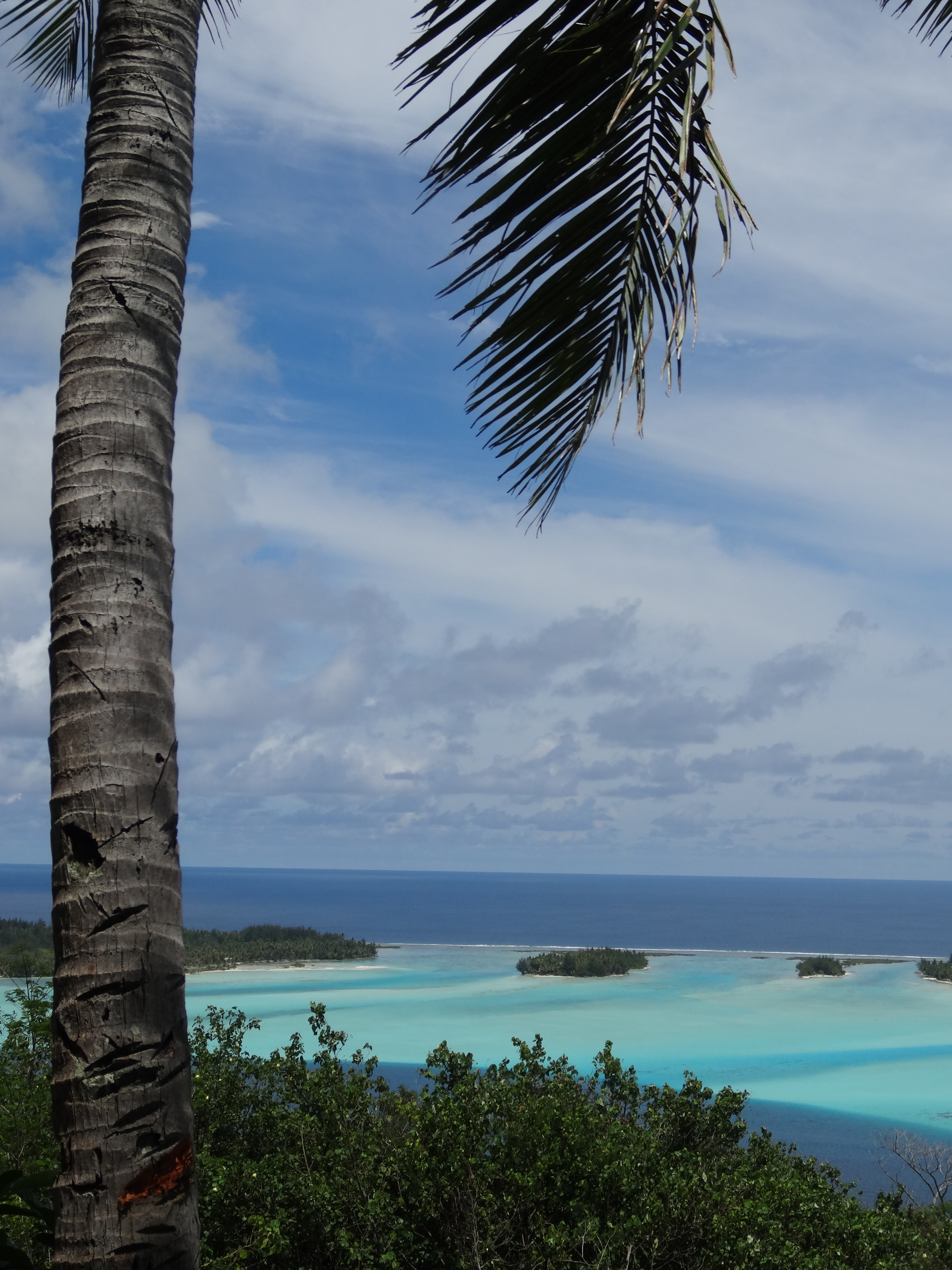
Bora Bora’s aquamarine water is almost artificial looking.
Could there be a more sinister April Fool’s joke than to wake up on what should be a spring morning to find the ground covered in white? Well, for us this morning it was no joke. Good thing we have our memories of exotic Bora Bora, one of the islands we visited in February – it made the winter a little less hideous for us this year!
It’s an island that had been shrouded in exoticism and mystery for us. On the other side of the world, the island of Bora Bora, a member of the Society Islands which are part of French Polynesia, is one that we North Americans often think we might never visit. The town of Viatape where we anchored off shore is a small, very French spot with some pearl shops, a tiny duty-free outpost and a pharmacie (which of course, being French has a wonderful selection of French skin care brands!). Wander down the street, buy your sun screen if you can find your brand and then take an off-road tour.
Our vehicle for the tour.
Just as are all of the islands in that part of the world, Bora Bora is the top of an extinct volcano, in fact it rises in two peaks. This means that the center of the island is at a much higher altitude than the coast – it also means that there is essentially only one road on the island. Well, it might be more accurate to say that there is one road over which you’d actually drive a car, and that road rings the island. So, if you want to get into the center, get up high and see indigenous flora up close, you have to take an off-road vehicle. That’s what we did – and were certain to have both a driver and a guide.
Quintessential Bora Bora as seen from up on the volcano.
As we turned off the coastal road with its breathtaking beaches, we began our climb up a steep, rutted, muddy track that couldn’t really be called a road. It was full of rocks and turns and major potholes. Indeed, it was a bit like a carnival ride. Not to worry, though, we made it.
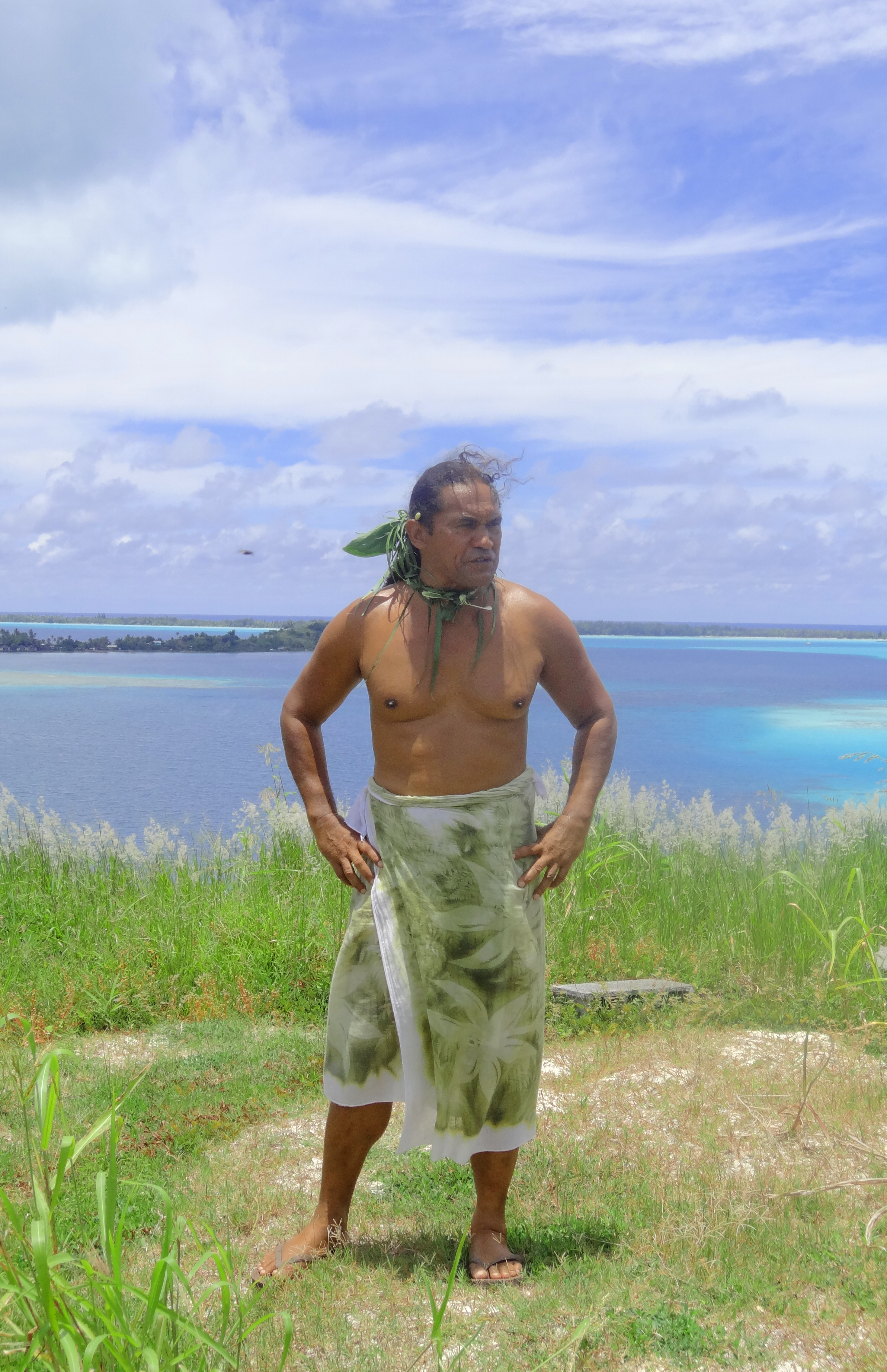
Our guide
Our guide, who in his off hours was employed feeding the sharks in a huge glass aquarium at one of the luxury resorts on the island, took us to a vantage point owned by his family. He shared this extraordinary spot with us, telling us that it is now difficult to keep the young people on the island after they’ve been away to school – often to France.
We visited a pearl farm and had an opportunity to watch a craftsman extract a pearl from its oyster home, thinking all the while that this was the provenance of the Tahitian pearl we bought in Papeete.
The trip was spine rattling, but we wouldn’t have missed it for anything!
If you have a few minutes, come along on our tour of Bora Bora through the magic of our video!
On more than one occasion in the past we have referred to ourselves as (if you will pardon the expression) “cruise whores.” In other words, we are not monogamous – we cruise around so to speak. Despite the fact that we have never taken a cruise that we didn’t enjoy, we have been making our way around the industry (avoiding several specific lines because of personal experience and research). We might even describe our behavior as moving up the cruise food chain so to speak. Here’s our story.
We like to travel. We like to travel by plane, train (well, not train so much after that overnight “hotel train” between Paris and Barcelona a few years ago), limo, car, foot etc. We just like to experience new places. We sometimes stay in one place for a while; sometimes we stay only a day and move on, either by car or by ship. Despite the snotty travelers who are disdainful of the ‘travel’ value of a cruise, we do enjoy them. They are our way to sample many different places in the world, some of which we have returned to for longer visits. The point is that cruise travel is just one more way for us to see the world. We no longer book cruises just for that week in the sun in the middle of the winter. We’re not knocking that, but for us cruising has taken on another whole dimension.
The first cruise: Carnival
Our first cruise plans began much like any other family’s vacation plans. We had a young child, we wanted to escape the winter briefly, and we had only a week or two of winter vacation. So, we contacted our trusty travel agent (if you want to know why we use a travel agent, you might want to read Why you need a travel agent…really) who chose Carnival cruises for that first trip.
“I would never put you on Carnival if you were going by yourselves,” he said, knowing our tastes and preferences. “But since you’re taking a child, I’d recommend this to you.”
And so we booked a verandah cabin and made our way to Miami. Needless to say we had a wonderful time. This was in spite of the multitude of drunken spring-breakers who spent the entire cruise camped out on the deck, never once even making it into the dining room. The dining was therefore blissful! The kids’ club was a real treat for our young son, and we were introduced to a number of Caribbean islands that we had not at that time visited. We’ve been back many times since, but we have never returned to Carnival.
Why have we not returned to Carnival? You might ask. The reason is the same one that keeps us off NCL and Royal Caribbean: not our kind of experience. The glitzy décor, the loud passengers, the too-happy cruise directors, the big, showy performances nightly (OK unless you’ve seen a London West End show or been to Broadway in New York) – well, let’s just say that we’ve evolved. So it was on to Holland America.
Setting sail on Holland America
We sailed on Holland America three times, including our wonderful Christmas Cruise. We started out in what was then referred to as a Superior Verandah suite (now called the Signature Suite) for the size enhancement, but that began our upward move toward larger and larger suites. The next two cruises on HAL were in Deluxe Verandah suites (now called the Neptune Suite) and we would actually return to this line for the right itinerary.
Celebrity: Second time not up to expectations
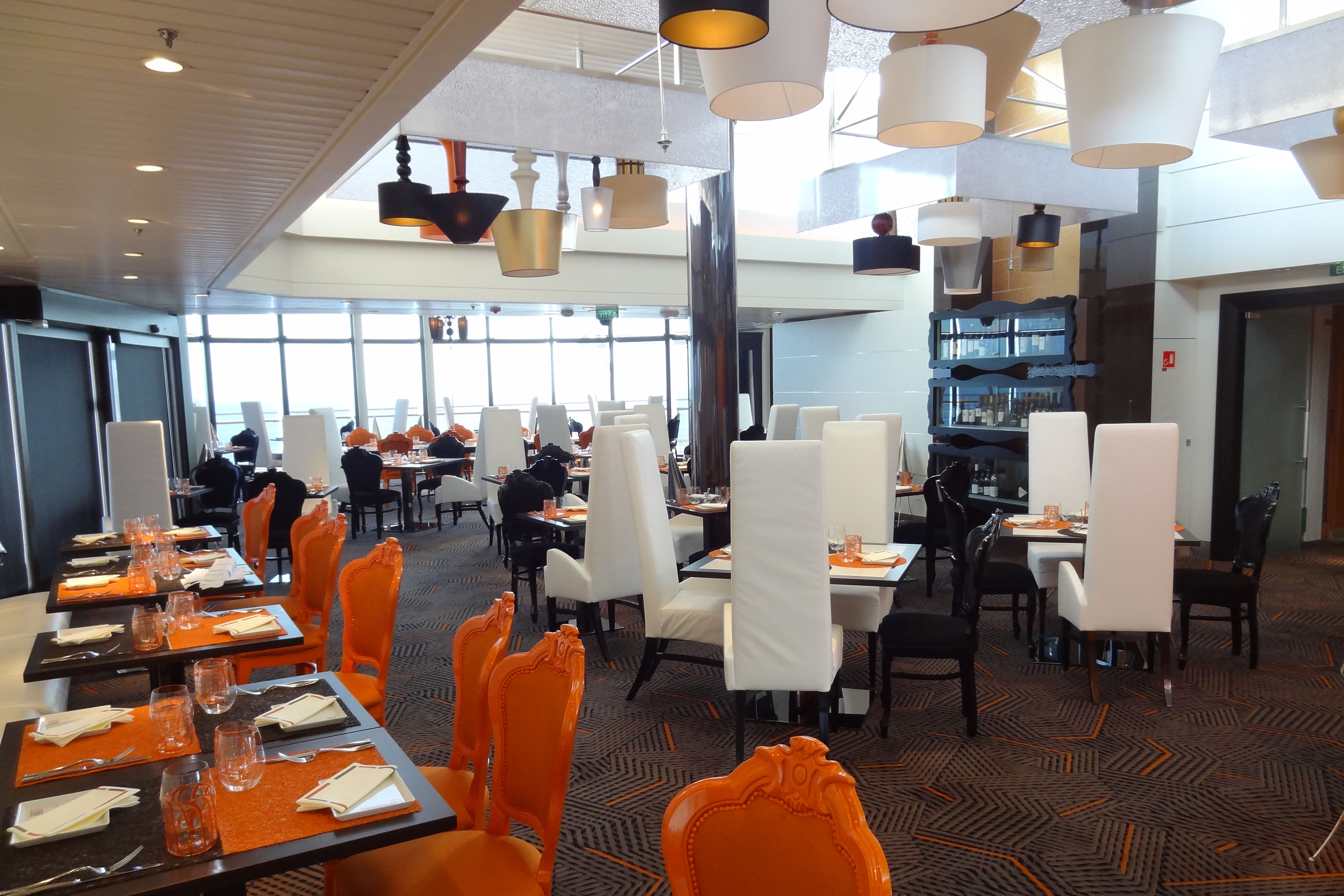
The exquisite Qsine on the Celebrity Summit.
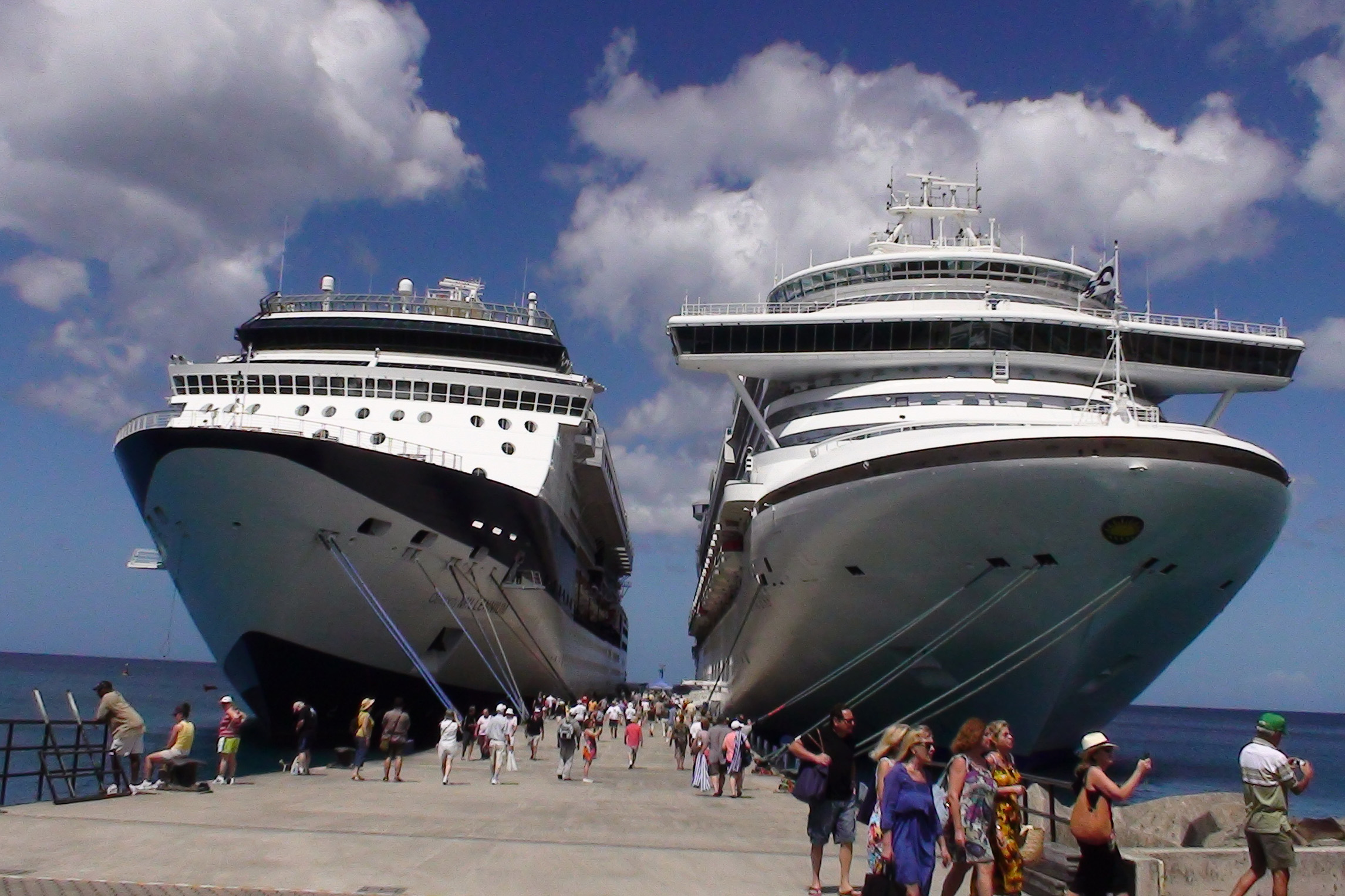
We spent our twentieth wedding anniversary on the Celebrity Century in the Mediterranean. Splurging on a Royal suite, we didn’t realize that we were setting ourselves up for a few expensive vacations. After this kind of accommodation – and being in the Med – how could we ever return to a ‘normal’ cruise in the Caribbean in a regular stateroom? Well, we couldn’t. Our return to Celebrity was a couple of winters ago when we wanted to sail out of Puerto Rico; unfortunately, the experience didn’t meet our expectations despite the Jacuzzi on our large, private verandah on the Millennium(although we did enjoy ourselves as always).
Cruise lines always say they want to “exceed your expectations.” The problem with that is when your expectations, like ours evidently tend to be, are very high, it’s difficult if not impossible for the line to accomplish this. If a line can meet our expectations, we’re delighted. Exceed? Well maybe this upcoming one will (more about that later).
Moving up the cruise food chain: Regent Seven Seas
Our desire to move up in terms of luxury cruising (despite their “modern luxury” advertising tag line, Celebrity does not fall into this category: they would be considered premium) led us to Regent. We embarked on our first Regent cruise on the Navigator in a Navigator Suite (448 square feet) in Fort Lauderdale to set sail for a Western Caribbean cruise including Mexico, Guatemala and Belize, places we wanted to visit – or revisit in the case of Mexico.
Regent was our first so-called real luxury cruise experience, and the first one that is all-inclusive. This is a wonderful addition since you never have to take out your key card to sign for your drinks, and your suite is equipped with a well-stocked, included bar. If you don’t want to socialize, you simply pour yourself a drink and repair to your private verandah.
Overall, the cruise was wonderful. The Navigator was, up until that point in our lives, the smallest ship we’d ever been on: 490 passengers. We loved that part of the experience, but were unaware that Regent cruises from Florida carried a much higher number of older passengers. To be clear: we were in our fifties-sixties and were among the youngest dozen passengers on the ship! One evening we took a foray into the piano lounge to find it resembling the day room in a high-priced senior’s home!
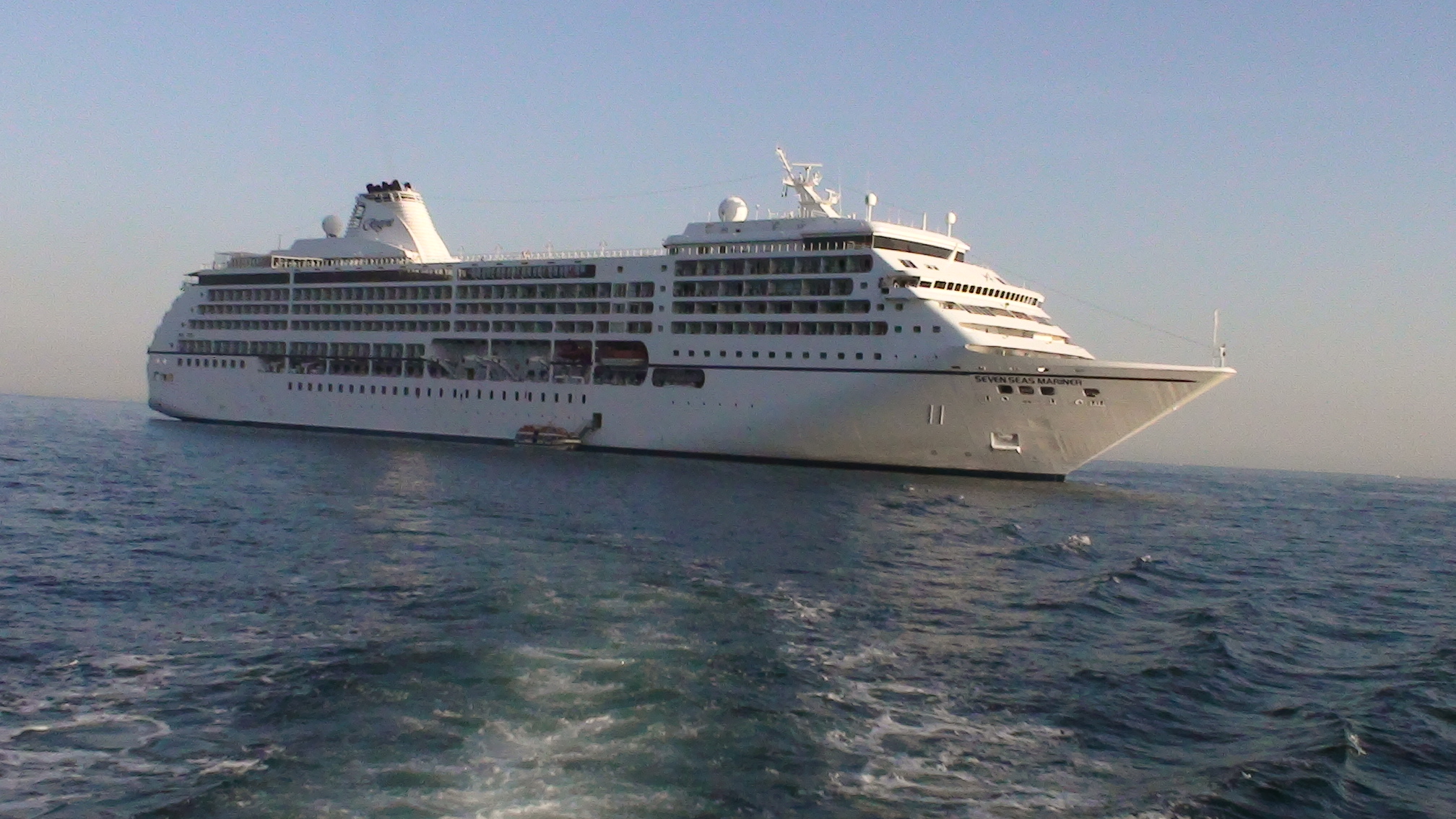
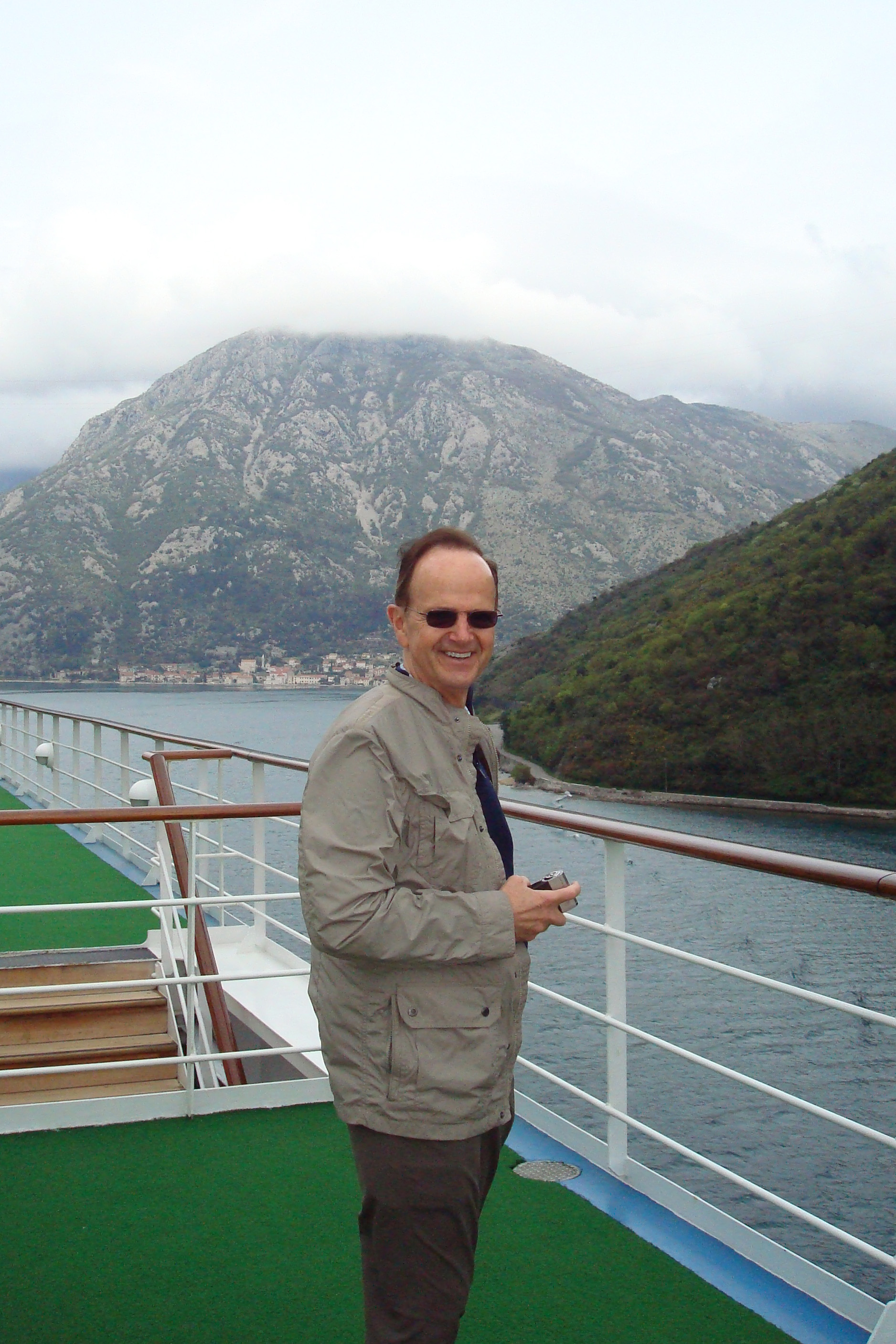
Art on board the Regent Seven Seas Mariner in Montenegro. It was a great trip, but not a ship we want to revisit this winter in the Caribbean.
Our next Regent experience was on the larger Mariner leaving from Monte Carlo onward to Venice. Our Penthouse suite was a bit smaller than the Navigator suite, but with its floor to ceiling windows we could sit inside when the weather in the Adriatic was cool and watch the shoreline as we cruised the fjords of Montenegro.
We will probably return to Regent someday.
Moving up again: Embarking on Silversea
After six days at the Crane Resort in Barbados, we boarded the Silver Cloud in Bridgetown for a cruise to Fort Lauderdale. With a capacity of only 296 passengers, we were moving down again, even as we were moving up. And moving up we were.
The oldest ship in Silversea’s fleet, the Silver Cloud was nonetheless extraordinary. But more important than that, the service was impeccable. We truly thought we had died and gone to heaven. Little did we know that we were only part-way to heaven.
Our transatlantic voyage
Everyone should do it once. Of course we’re talking about a true transatlantic voyage on a real ocean liner – not a cruise ship. Three years ago we boarded the Queen Mary 2 in Southampton and spent seven wonderful days at sea making our way across the North Atlantic to New York. What truly made this a step up even from Silversea was that we booked into a Queen’s Grill suite and found ourselves in a ship within a ship. Make no mistake: Cunard has three classes and Queen’s Grill is first class all the way.
With its private dining room and bar, the Queen’s Grill provides passengers with the best of both worlds: the intimacy of small ship service and the amenities and entertainment of a large ship.
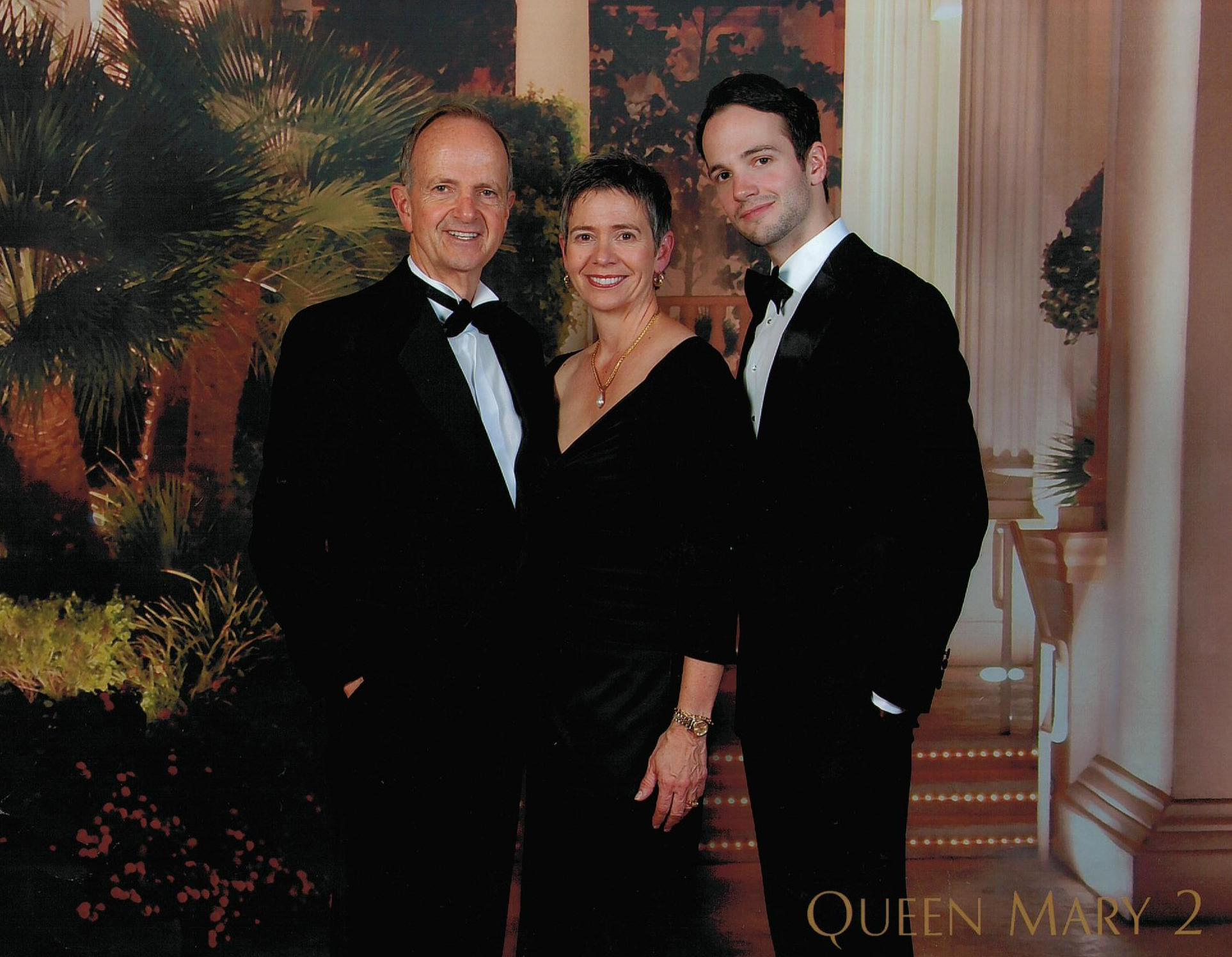
A family portrait aboard Cunard’s Queen Mary 2 last summer. It’s the only way for the three of us to get a professional portrait since we live on a different continent than our son. A great opportunity when we’re all dressed up.
Although we would not do a transatlantic voyage again, we will certainly return to Cunard for the right itinerary (there it is again: itinerary).
The pinnacle of luxury perhaps?
Last year we booked passage on a 204 passenger luxury cruise ship: the Seabourn Spirit. After almost a week at the luxurious property The House in Barbados, once again we sailed from Bridgetown. This time, however, it was to ports and islands where large ships can never go.
Everything about the Seabourn experience (caviar and champagne on the beach, anyone?) was above and beyond. The service was superb, as was the food and the accommodation. It truly was like a country club and we savored every minute of this super-luxury experience followed by six days in St. Martin. How could we possibly top that?
Onward and upward?
We aren’t sure we can top that last experience, but we’re going to try. Art is retiring from his private family medicine practice in a few weeks and we’re off to that ultimate, post-retirement reward.
After five days in Tahiti, we’ll board the Oceania Marina for almost three weeks meandering through French Polynesia, Samoa and the east coast of Australia, ending with five days in Sydney. Why Oceania?
Last winter while in St. Martin following the Seabourn experience, we dined one evening with fellow passengers from the Spirit. They asked us if we’d ever sailed on Oceania. We had not. Given that they had just disembarked from a Seabourn cruise which they enjoyed, we had to take seriously their recommendation that we give Oceania a try. But what we were really looking for was an itinerary that would take us to new places.
We hit on Oceania’s South Pacific cruise and the rest is history. Stay with us for a while and come along on that special vacation as we try live blogging and tweeting for the first time.
 Travel for us is about experiences. Sometimes it’s the places we visit; sometimes the people we meet. Other times it’s the food we eat or the wine we drink. All of these form the experiences of the discerning traveler. But sometimes, experiences are unexpected and not related at all to where you’re visiting. A few months ago, while aboard the Oceania cruise ship Nautica, we witnessed a helicopter medevac as we sailed the Mediterranean off the coast of Greece. And our thought was this: It could have been anyone of us.


 The Discerning Travelers
You must be logged in to post a comment.