Someone once said that traveling is the only thing you buy that makes you richer and as far as we’re concerned, no truer words were ever spoken. There is little doubt that we are richer by far from the past five weeks of travel in the South Pacific – beginning in Tahiti.
Just say the word to someone buried under a mountain of snow in the dead of winter and it conjures daydreams of palm trees, mysterious, mist-covered volcanoes in the distance and bungalows hovering over the azure blue of the South Pacific waters. All of these daydreams of ours came true.
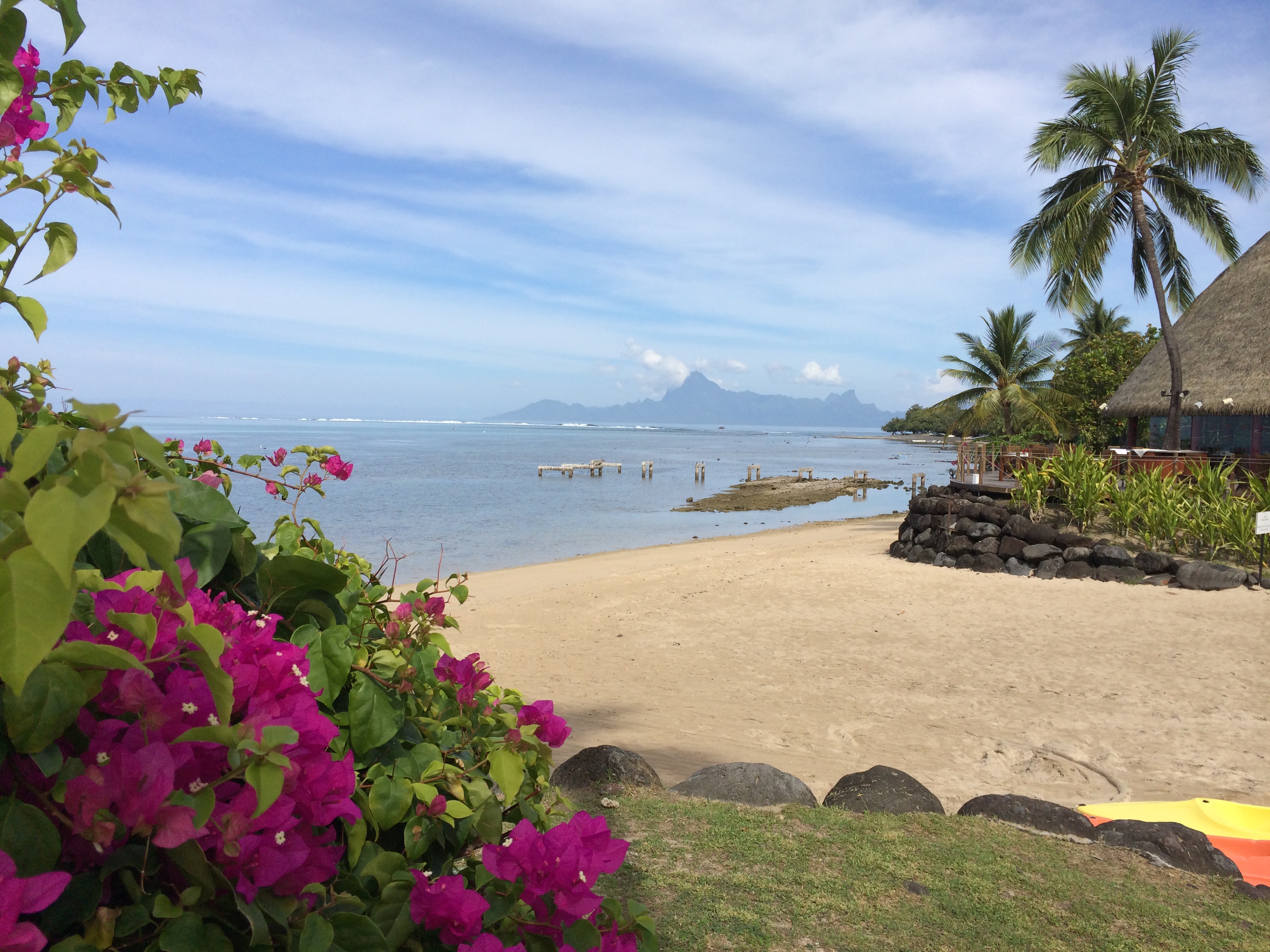
Mysterious Moorea in the distance from the beach at Le Meridien.
We arrived in Papeete, the capital of Tahiti aboard an Air Tahiti Nui flight from Los Angeles. One of the best air travel experiences we have ever had, this airline is on our list of carriers to revisit whenever possible. We did our homework – visiting Seatguru, reading the reviews etc. as all discerning travelers do. We were traveling business class so expected extra room, better meals and perhaps some in-flight entertainment. What we were greeted by were refurbished planes with fully-reclinable seats, wonderful, flat-screen computers at every seat with a terrific selection of entertainment and on-board staff who were the nicest, most attractive, most efficient we’d seen since we traveled on Hawaiian Airlines two years ago. So when we arrived at our destination, we were already relaxed and in vacation mode.
The new in-flight entertainment system on Air Tahiti Nui. (We were in business class, but even economy has the screens.)
We chose to stay at Le Meridiensome fifteen minutes’ drive outside of Papeete rather than at the Intercontinental which had been initially recommended. This was partly because we didn’t really want to be that close to the city, and partly because the Intercontinental was offering only standard rooms. This was a special vacation and we opted for a Senior Suite. The hotel’s web site did not do it justice at all.
The hugely spacious two-room suite’s best feature as far as we were concerned was the huge terrace with 180 degree views – and the island of Moorea in the distance. Although many travelers like to search for the cheapest way to travel, we believe that you should look for luxury (for less if you can) that you can afford. The funny thing is that when we treat ourselves, we are never disappointed.
Exotic lotus blossoms in Tahiti
The first thing we noticed about Tahiti was how nice everyone was – smiling, attentive staff, eager to please. Then, of course, there was the water – so blue and so warm, warmer by far than even the Caribbean. So we had to see the island.
The hotel concierge helped us to arrange a private driver and car for a full-day, private circumnavigation of Tahiti Nui (Tahiti actually consists of two islands connected by a causeway: Tahiti Nui – which means larger; and Tahiti Iti – smaller and less navigable all around). Our driver was deeply versed in the flora and fauna of the island and took use to a number of truly wonderful gardens and grottos.
We lunched at the Paul Gauguin Restaurant sampling a number of local delicacies and visited Point Venus, the beach on Matavai Bay where Captain Cook came ashore in 1769, and where Marlon Brando (who later bought an atoll near Tahiti, built a house and lived) played Fletcher Christian in the 1960’s version of Mutiny on the Bounty, one of the movies we had watched on the plane!
While we were in Tahiti we walked the beaches, ate wonderful food and bought a Tahitian black pearl for Patty in Papeete. After five wonderful days, we embarked on our cruise.
Now that was interesting…
Art at the market in Papeete — not to be missed when you visit.
We’re not sure about everyone else, but we are sure about ourselves when it comes to travel: we are very particular about the experiences that we have, and we are suspicious of those who take the view that you can’t have an ‘authentic’ travel experience unless you somehow suffer. What nonsense!
What does it mean to be authentic anyway? Well, the dictionaries suggest that it has to do with being real, genuine, or not fake. When it comes to travel experiences, what makes something authentic (and why do travelers these days care, anyway?)? The latest craze for visiting slums in third-world countries is one of the more puzzling approaches for authentic experiences that we’ve seen.
Some travel writers seem to think that staying at a ‘quaint’ property is more authentic than staying at a ‘grand’ property, but who is to say that quaint is any more authentic (read: morally superior), than ‘grand’? And what about dining? Is it more authentic to eat street food in India or to dine at a high-quality Indian restaurant? Perhaps the risk of dysentery is what makes a dining experience authentic? Well, we think that’s just travel snobbery. Take a recent experience we had in New England.
As we love to do in the fall, we took a few days earlier this month to take in the fall colors in Maine and New Hampshire. Having not set foot in Bar Harbor, Maine in decades, we decided that it would be a good place to spend two days exploring the countryside and Acadia National Park (we suppose that a national park is authentic?) As we usually do, we sought out the fine dining experience in the village and found ourselves at a little spot called rather unexpectedly, Havana. What in the world were you doing in a restaurant named for the capital of Cuba in the middle of the Atlantic seaside in Maine? you might ask. Surely that couldn’t be an authentic Maine experience. Oh, but it was.
You see, that restaurant is owned and operated by a local restaurateur with a flair for the sophisticated. With an extensive travel background and a true respect for dining (not eating as we’ve discussed before), Havana’s proprietor with whom we chatted for a while during and after our dinner, has for the past 15 years been committed to “…serving local and organic meats, produce and seafood. [They] consistently search out New England farmers and fisherfolk to purchase products that are not only great tasting, but great for the environment and local economy as well…”[from their web site]. In addition to this, they have their own urban garden on a reclaimed urban plot. What’s more, this commitment to the local and the sustainable hasn’t gotten in the way of serving outstanding food accompanied by a wonderful, thoughtfully selected wine list.
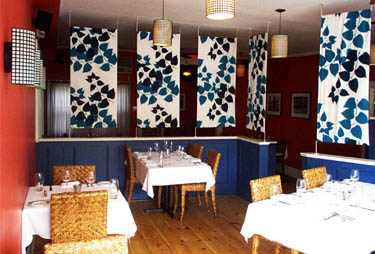
Havana Restaurant (photo credit: Havana web site)
An authentic Maine experience? Of course. Eating freshly steamed lobster at a newspaper-covered picnic table might constitute what most travel snobs would define as authenticity, but there’s more to being authentic than the cheaper, lower-level experiences.
There is nothing inauthentic about being comfortable and happy while travelling. It’s authentically wonderful to have the privilege of making a choice. Be discerning about your own experiences and never be defensive about your enjoyment of your travel experiences.
Colorful Old San Juan (Puerto Rico) is a wonderful place to spend the day strolling & taking photos.
And so we’re back at it. The dog days of summer are waning and the thoughts of discerning travelers of the Canadian sort turn to winter – winter vacation planning of course! As we begin to consider the options, we’ve been thinking back to our many cruises and island vacations in the Caribbean; we thought that we’d share our choices for the best cruise ports for travelers to venture on foot on their own.
When you’re on a cruise for the first time, there is something to be said for booking a few shore excursions – but inevitably, after a while, you just want to stroll off the ship (or the tender in some smaller ports) and wander on your own without benefit of the constant drone of the tour guide’s voice, or the chatter of other cruisers.
To give you a bit of context for why we think we have an opinion that you might find credible, you need to know that we’ve actually visited some 28 Caribbean cruise ports. So, our list of the five best ones for strolling about independently is based on considerable experience! So let’s get started!
Number 5: Georgetown, Grand Cayman
The first time we visited Grand Cayman, there were five large cruise ships moored off the port with thousands of passengers being tendered to Georgetown all day long! Despite these large numbers, most of the cruisers were actually on shore excursions, so although there were crowds in Georgetown, they weren’t unbearable. Although not a great port culturally in our view, the reason Georgetown figures on this list at all is because of the shopping.
On most cruises we take, we plan to shop only once. We don’t pick up souvenirs (we’ve told you about that before), but we do like a bit of interesting shopping. Georgetown offers a wide array of duty-free goods and if you’re in the market for something like a watch, high-end perfume, cosmetics (like Chanel), a piece of good jewelry, or even a camera this is the place to find variety, and the shops are well-laid out.
The last time we planned our shopping for Georgetown, the last cruise port on our Regent cruise, the ship had engine trouble in Cozumel and stayed there an extra day (where we ate copious amounts of Mexican food!). The Grand Cayman stop was cancelled. Oh well, we saved a lot of money on that trip!
Number 4: San Juan, Puerto Rico
We love San Juan; although we didn’t the first time we visited it on a cruise ship. That time we took a tour and didn’t really get to see San Juan. A later visit when we stayed there for a few days prior to our cruise actually leaving from San Juan endeared it to us in so many ways. But this one is on the list of places to stroll to only if your ship docks in Old San Juan. There are two cruise ship ports in San Juan: the other one is called the Pan American cruise terminal and you’ll need a taxi to get anywhere, including Old San Juan. But it’s worth doing on your own.
Old San Juan is a wonderful labyrinth of cobble-stoned streets with a wide variety of shops, pubs and restaurants. You can easily while away several hours walking around, visiting the fortress and museum, doing a bit of shopping and then grabbing a bite of Puerto Rican food for lunch. Be sure to sample the local Medalla beer.
By the way, if your cruise leaves from San Juan, this is even better! You can then stay in PR for a few days and enjoy the rest of this beautiful island.
Art in Williamstad, Curacao.
Number 3: Willemstad, Curacao
What a lovely little town this is! A UNESCO World Heritage Site (as is Old San Juan, by the way), Willemstad has wonderful architecture, and offers you a variety of sights, shops and restaurants. It’s really worth strolling around and you could easily spend the morning, have a bite of lunch, and then stroll back to the ship.
The two districts that make up Williamstad, Punda and Otrobanda, are connected by two bridges: one is a pontoon bridge you can walk across – unless it has been removed temporarily to let a boat pass. Watching the bridge come back together as you sit in a waterfront café sipping an early morning beer is a terrific way to enjoy your port visit!
Number 2: St. John’s, Antigua
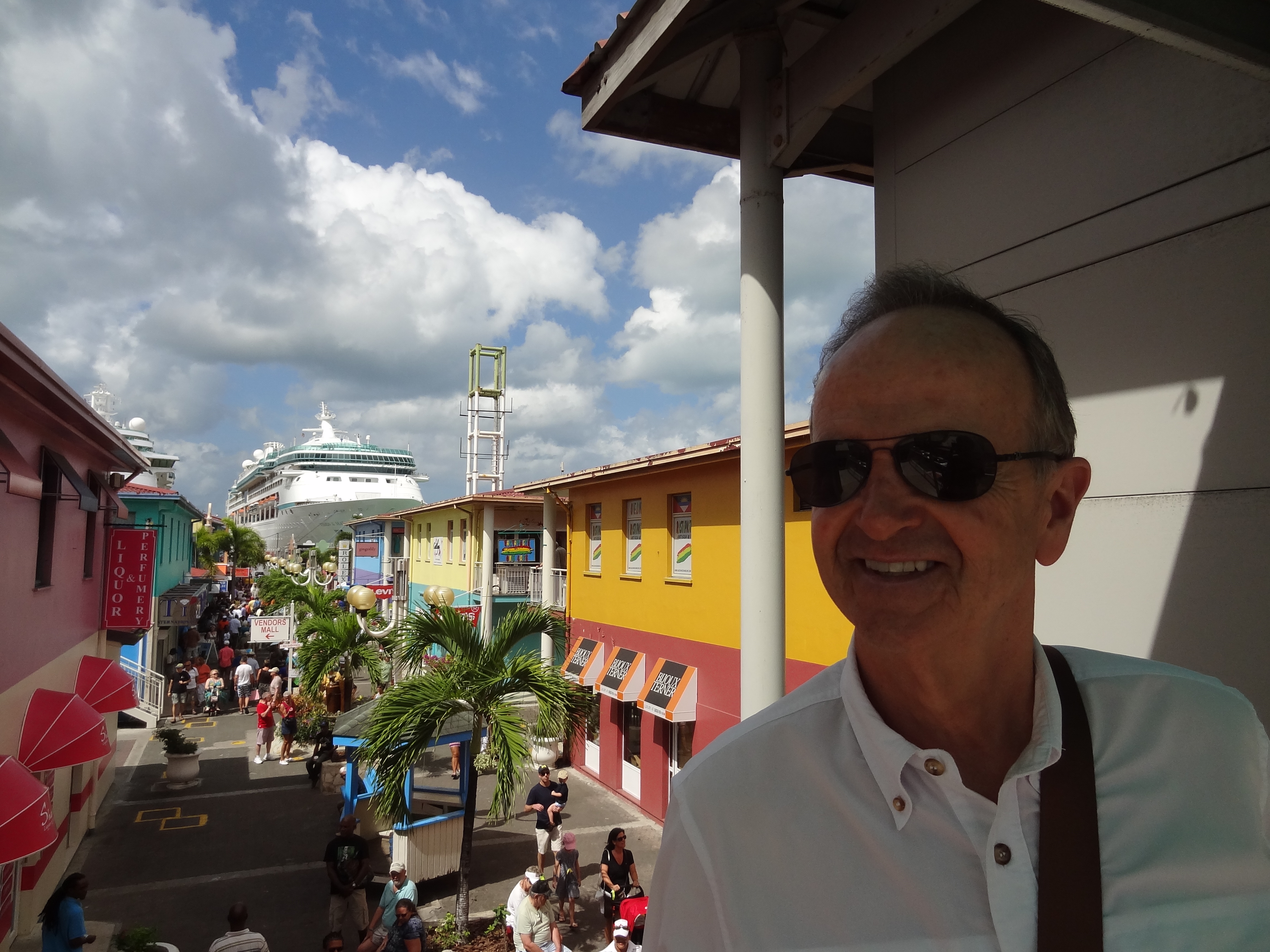
Enjoying St. John’s, Antigua
Maybe it was because Art is from St. John’s, Newfoundland that this little city resonated with us so quickly, but for whatever reason, it’s a terrific place to stroll around.
We’ve visited this from a cruise ship as a port visit, but we have also spent a vacation on the island of Antigua (which we highly recommend) and had an opportunity to get to know this town.
Whenever we visit St. John’s we go immediately to The Goldsmitty on Redcliff Quay, a jewelry store that stocks only the unique creations of jewelry artist Hans Smit. Patty owns several of his creations and we’ll return on our next visit as well. The second store not to be missed is Sunseekers on Heritage Quay. They claim to have the largest selection of swim wear in the Caribbean, and we believe it! More than that, the service is wonderful. The sales staff will search out bathing suits to suit every body. If you need a new swim suit, wait until you reach Antigua to buy it!
Number 1: Phillipsburg, St. Maarten
You can’t get lost making your way from the ship into Phillipsburg. Patty points the way.
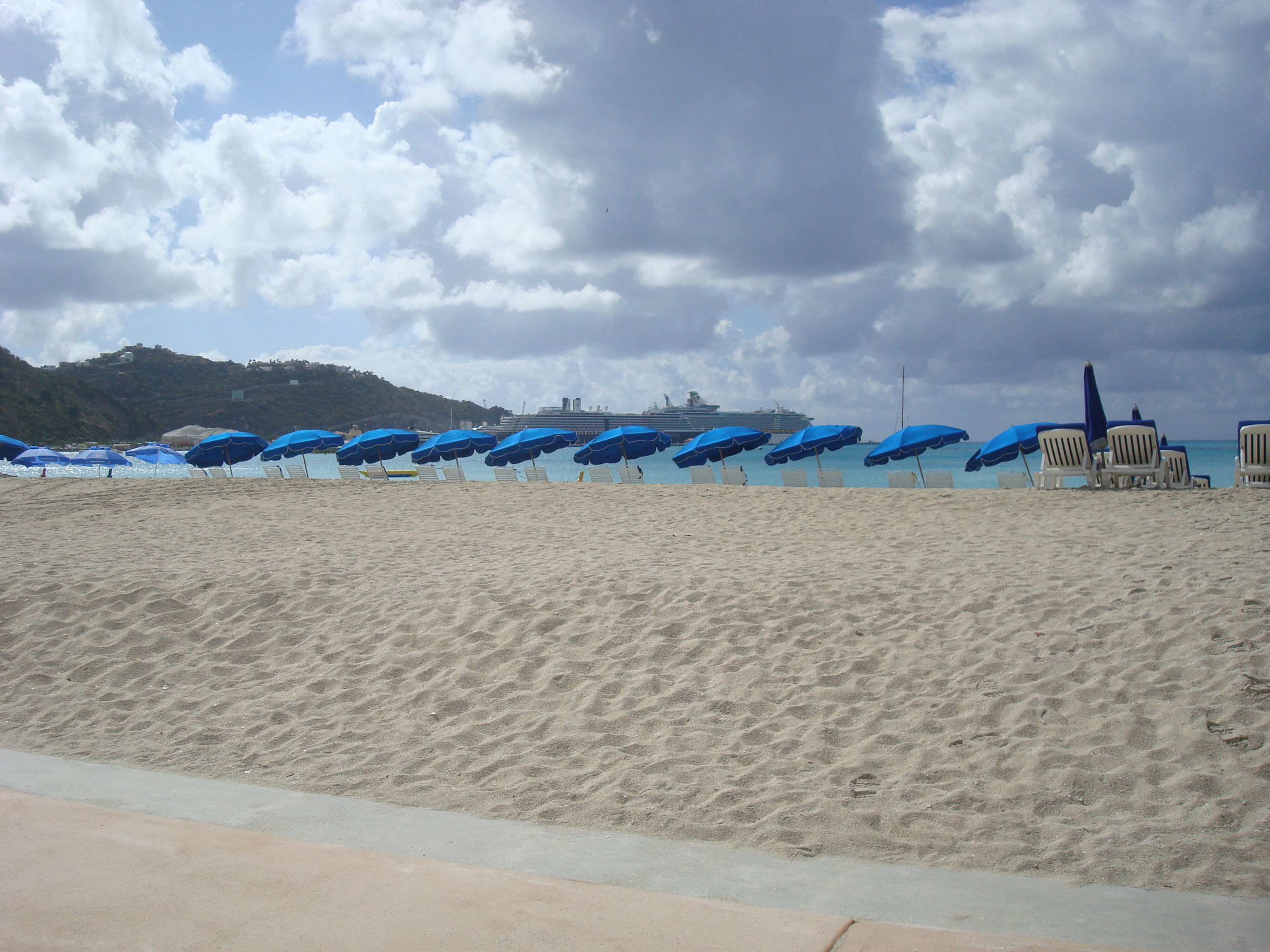
We love Phillipsburg. Stroll off the ship and along the cruise ship terminal. Don’t bother with a taxi: it’s a nice ten-minute walk into town. Follow the signs to the boardwalk and when you emerge into downtown, you’ll be on a beach! The town has done a terrific job of developing this board walk along which you’ll find an array of shops and fun restaurants.
Take a walk to the very end; if you’re beach people, you can rent a chair and umbrella with a bucket of beer and watch the waves. If you’re shopper, walk to the end of the board walk and then take one of the alley-ways (well-marked) to the next street and walk along it all the way back to the end where you started. This is where the duty-free shops are located.
Many cruise ship passengers never eat off the ship. It seems they feel that since the paid for their meals, why eat anywhere else? Well, because you may miss something wonderful. If you’re interested in a light lunch, try The Greenhouse near the beginning of the boardwalk. If you are a bit more discerning and want a really lovely experience, walk a bit further along to the Ocean Lounge at the Holland House Beach Hotel that opens right onto the board walk. You’ll have a
The boardwalk on the beach, Phillipsburg
table with a view, wonderful professional service and a meal to remember.
Ah, it’s so wonderful to think back on all the great experiences we’ve had. We haven’t decided on a destination for that winter vacation yet – we’re already booked on a European river cruise for April, but we’re exploring. Where are you going to escape the winter weather for a few weeks?
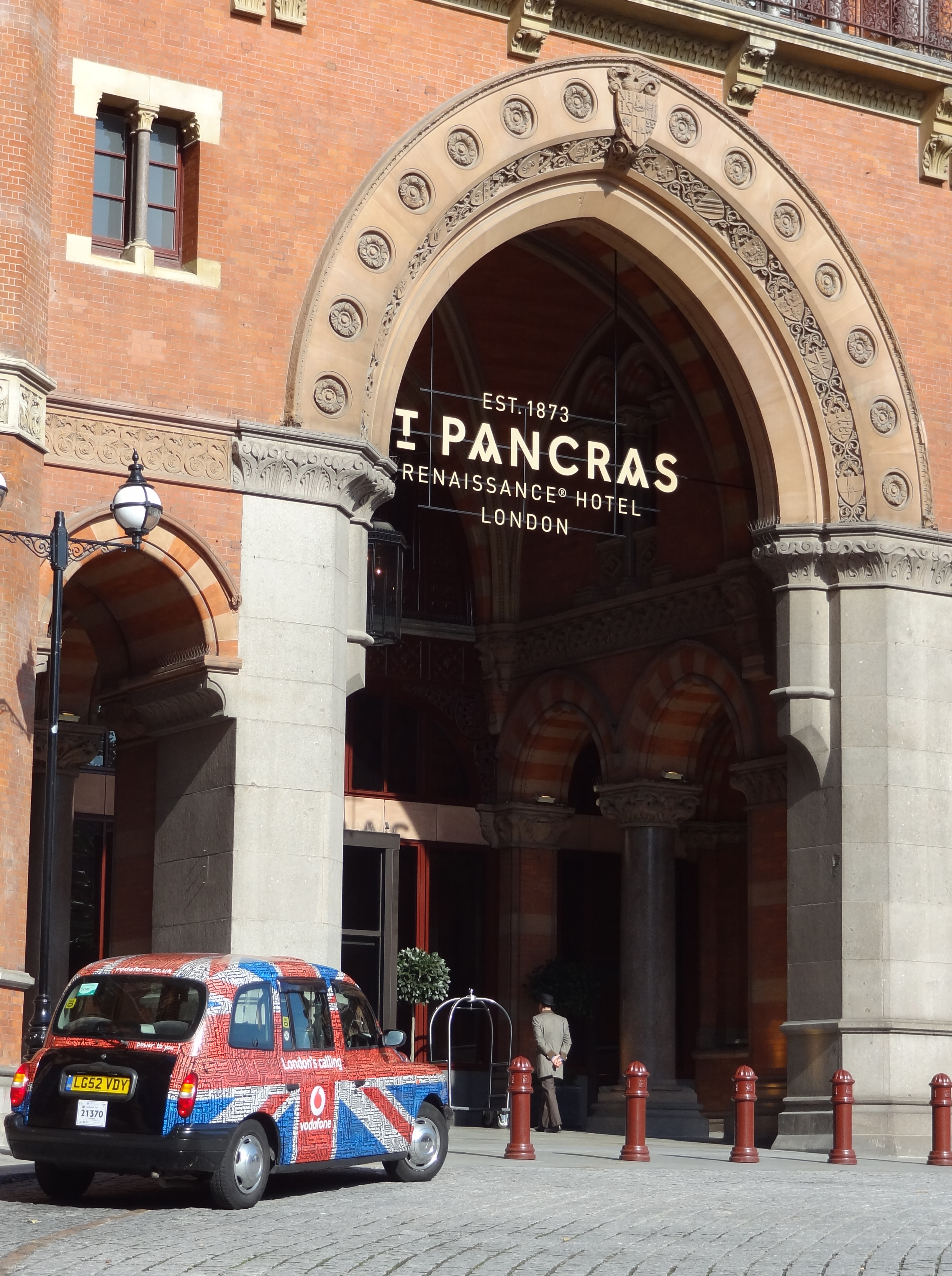
The Renaissance St. Pancras Hotel, a Marriott property in London, used to be both an old hotel and the train station. It has been fabulously restored.
There is an old adage of the seasoned – and discerning traveler – and that is this: never set foot on an airplane or in a hotel room without being a member of their frequent guest/flyer program. Even if you don’t travel often, or are taking that airline only because there isn’t an alternative just this once – you should still be collecting points of one sort or another. We gave this piece of advice to our then 20-year-old son when he began jetting around the world as a dancer with Les Ballet de Monte Carlo. So, even on airlines that they booked only once, he collected miles. Then, two years ago when he began preparations for relocating to London, he had enough frequent-flyer miles in several different accounts to redeem for many a weekend trip between Nice and London. But not all programs are created equal.
Our own hotel loyalty program memberships go back many, many years. Let’s go back about 20 years when we first found ourselves as frequent visitors to Toronto. Loyal to the Sheraton brand, we had only recently learned the lesson of joining various hotel loyalty programs when one weekend our travel agent (that was before the days of online bookings) couldn’t get us a room at the Sheraton downtown Toronto. He told us he’d put us as an equivalent downtown hotel , and we found ourselves checking into the Marriott at the Eaton Centre – there is no finer location when visiting Toronto. But it was Marriott’s staff that made us sit up and take note – and in fact, made us eschew the Sheraton for many years of travel there and far beyond, finding as we did the high quality of the staff training extended far outside of their Eaton Centre location. So over the years we found ourselves rising ever higher in the Marriott Rewards program which has frequently been voted one of the best in the world. And it’s not hard to see why.
With some 3700+ properties around the world under their various brands, it’s not hard to figure out that there would be a lot to choose from when trying to redeem points for nights. And we’ve had great luck doing so. What we also noticed is that as we rose through gold to platinum status, we were treated rather well at the properties. We worry, though, about how we’ll be treated when we have a year in which we don’t have as many nights at Marriott’s. Like this year when we’re prepping to sell our house and move, and have to stay around the bay here in Nova Scotia for many more months than we usually do. When we no longer hold platinum status will being a member be enough? We’re not so sure, and it’s all because of Starwood.
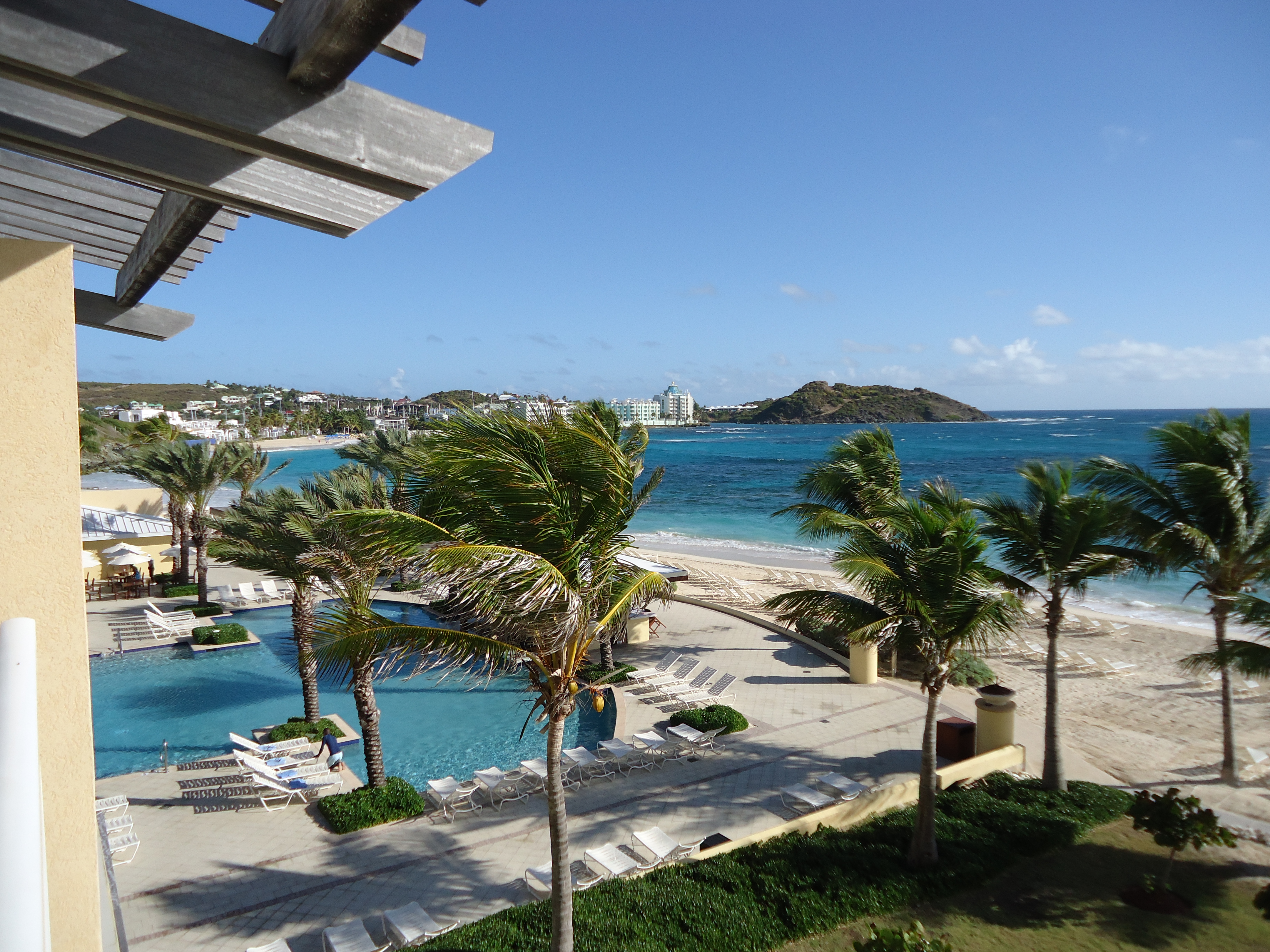
Last summer we planned a trip to the Blue Mountains area of Ontario to see our daughter in summer theatre in Collingwood. The nicest hotel on offer around those parts was the Westin Trillium, a Starwood property (who also owns Sheraton hotels among many other brands). So we dusted off our Starwood Preferred Guest (SPG) card which had not been used in some time, and made our reservations for a summer road trip.When we arrived to check in to the Westin Trillium we found ourselves really believing that we were, in fact, preferred guests. We did not have any ‘status’ in the program, and yet found ourselves feeling like we do when we’re greeted at a Marriott property as Platinum members! (Bear in mind that you have to stay 75 nights in one year to be platinum so well you should be treated like royalty: you are, after all, paying the salaries so to speak!). We were delighted, but wondered if this was just a pleasant surprise of this particular Westin. It wasn’t.The view from our oceanfront room at the Westin Dawn Beach on the island of Sint Maarten.
Just this past February we spent six days on the Island of Sint Maarten in the Caribbean and our hotel of choice there was the Westin Dawn Beach. Although we now had a paltry number points actually showing up on our membership screen at check-in, we were again treated preferentially. Then again in April, we stayed at the Westin in Dublin and felt the same wonderful treatment. The Starwood Preferred Guest program (SPG) is aptly named as far as we’re concerned. So where does that leave us in terms of our evaluation of loyalty programs?
The lesson we take away from this is that belonging to these programs is a good thing in the long run, but staying loyal can actually prove to be an obstacle to experiencing other brands and other types of accommodations. The same lesson would ring true for airline loyalty programs.
This year we had to take a couple of flights outside of our usual program – Air Canada’s Aeroplan program and its connection to Star Alliance. Add onto that the fact that we are likely to lose our particular elite status this year because we are putting off much of our travel until next year (and could not take all of our flights on Starr Alliance airlines), and we realize that we will no longer be treated as anything special. And on an airline that’s even worse!
Despite the fact that we have been high-level elite members for many years, because we won’t have as many miles racked up this year we will lose our perks entirely – no priority check-in, priority boarding, free checked baggage etc. So, where’s our incentive to continue to be loyal to Air Canada? Well, and this is a message to loyalty programs, there isn’t one. This means that for all intents and purposes, Air Canada has lost good customers. The next time we’re looking for a business-class ticket to London from Toronto, we are just as likely to book on British Airways. Over the years we would not have even considered it.
So here is the challenge for these programs: how are you going to find a way to keep your frequent flyers when they get to a point in their lives when they have the luxury of choice? Or when they have one year when they fly less frequently? Perhaps you need to consider how you might make us feel preferred, and not just members. Maybe the SPG program could give you a few pointers.





 The Discerning Travelers
You must be logged in to post a comment.